

Jewish Law
Torah Reading Etiquette and Halachot: A Practical Synagogue Guide
Learn the proper customs for aliyot, standing during Torah reading, holding and kissing the Torah scroll, speaking between aliyot, leaving the synagogue, and honoring the Sefer Torah according to halacha
- Living in accordance with Halacha
- | Updated
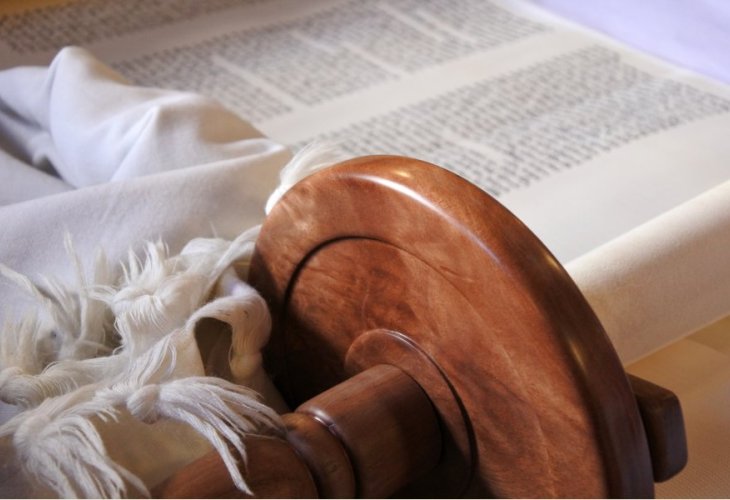 (Photo: Shutterstock)
Question: During the Torah procession on Shabbat, how should the chazzan hold the Torah scroll while reciting “Shema Yisrael,” “Echad,” and “Gadlu”?
Answer:
The chazzan should raise the Torah scroll during the recitation of “Shema Yisrael,” “Echad,” and “Gadlu.”
The sources explain that during “Gadlu,” the Torah must specifically be elevated. Some authorities write very strongly that failing to do so is a serious neglect of honor toward the Torah.
Some customs have the chazzan face the congregation during “Shema Yisrael” and then turn toward the Aron Kodesh for “Gadlu,” while others maintain that he continues facing the congregation throughout.
Question: If a baby is born, when does the father become obligated to receive an aliyah?
Answer:
After the birth of a child — even after a stillbirth — the father has precedence for an aliyah beginning:
Day 41 for a boy
Day 81 for a girl
This corresponds to the time when the korban would have been brought in the times of the Beit HaMikdash.
If that exact day is not a Torah-reading day, he should receive an aliyah at the next available Torah reading.
Some authorities maintain that even if he already received an aliyah earlier after the birth, he should still receive another aliyah at the proper time.
Question: According to the Mishnah Berurah, should one stand only during the Torah reading itself, or specifically during “Barchu”?
Answer:
There is no absolute obligation to stand during the Torah reading itself, although some are stringent and do so. However, according to the Mishnah Berurah, everyone should stand during:
“Barchu et Hashem Hamevorach”
The congregation’s response: “Baruch Hashem Hamevorach…”
At the same time, the teachings of the Arizal indicate that one may remain seated even during these responses, and many communities follow that custom.
Question: May those standing near the bimah lean against it during Torah reading?
Answer:
The baal koreh, the person receiving the aliyah, and the gabbai are all required to stand during Torah reading and should not lean on the bimah or another object.
Even partial leaning is generally discouraged unless there is significant need, such as illness, weakness, or old age.
If the Torah scroll is large and leaning slightly is necessary to read properly, leniency is permitted.
Question: Must the person receiving the aliyah hold the Torah scroll?
Answer:
Yes.
During the blessings, he should hold both wooden rollers (Atzei Chaim) with both hands.
During the reading itself, he should hold the right side of the Torah scroll with his right hand.
Some customs hold the parchment itself with a tallit or cloth rather than the wooden rollers.
Kissing the Torah Scroll
It is customary for the person receiving the aliyah to kiss the Torah scroll after the reading.
Some kiss it:
Before the final blessing
Others after the blessing
Some both before and after
A minority of communities do not have this custom at all.
Question: Must the person receiving the aliyah quietly read along with the baal koreh?
Answer:
Yes. The oleh should quietly follow along from the Torah scroll itself, softly enough that others cannot hear him.
Question: May someone leave the bimah using the same side from which he ascended?
Answer:
No. One should ascend using the shorter route and descend using the longer route. If both paths are equal, he should ascend from the right and descend from the opposite side.
Question: May someone leave the synagogue during Torah reading?
Answer:
Once the Torah scroll has been opened, one should not leave the synagogue.
However, for an important need, one may leave between aliyot if:
He already heard the Torah reading
Or he intends to return immediately
The halachic sources stress the great honor owed to Torah reading.
Question: May one speak between aliyot?
Answer:
Ordinary conversation is forbidden even between aliyot.
However:
Brief necessary comments
Saying “Mazal Tov”
Short mitzvah-related remarks
may be permitted.
One should also listen carefully to the “mi sheberach” recited for each oleh and answer Amen, thereby fulfilling the mitzvah of loving fellow Jews.
Question: May the Navi or Chumash used for the Haftarah be removed from the bimah before the final Haftarah blessings are completed?
Answer:
No. The sefer or book should remain on the bimah until the person reading the Haftarah completes all the blessings.

