

Raising Children
Why Letting Kids Be Bored Is Actually Good for Them
Boredom may seem frustrating in the moment, but psychologists say it can actually help children grow emotionally and creatively.
- Tehila Cohen
- | Updated
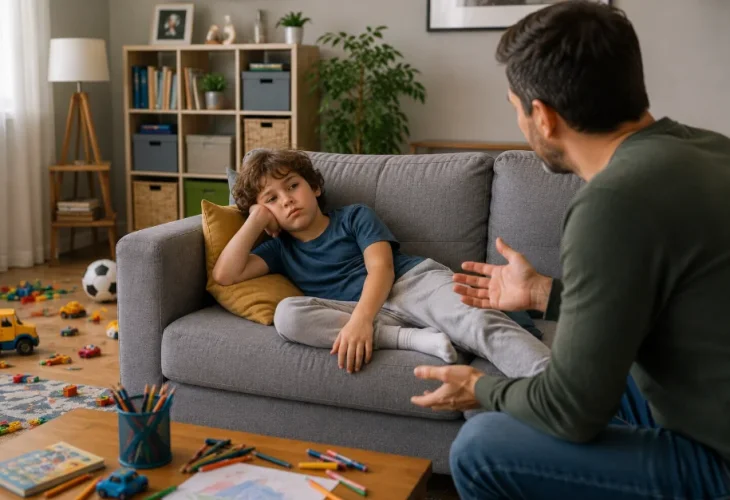
A child wanders around the house, sighs dramatically, and says in frustration:
“I’m bored.”
For many parents, that sentence immediately triggers a sense of responsibility. Suddenly, they begin offering games, crafts, snacks, activities, or entertainment ideas as quickly as possible, just so the child will not stay bored for even a moment.
But according to psychologists and educators, constantly rescuing children from boredom may actually prevent them from developing important emotional and creative skills.
Why Children Get Bored So Quickly Today
Modern children are surrounded by nonstop stimulation.
Screens, videos, games, music, activities, and constant entertainment fill much of their free time. As a result, the moment there is quiet, stillness, or a lack of stimulation, boredom arrives almost immediately.
But boredom itself is not necessarily a bad thing.
In fact, many experts explain that boredom is often the exact stage where imagination, creativity, and independent thinking begin to develop.
What Happens When Children Are Left to Figure Things Out
When children are not immediately entertained from the outside, their brains begin searching for something to create on their own.
It is often precisely during these moments that children:
- Invent imaginative games
- Create stories and fantasy worlds
- Build things from everyday objects
- Learn independent play
- Develop creativity and problem solving skills
A blanket suddenly becomes a tent. Pillows turn into obstacle courses. Chairs become trains, castles, or secret hiding places. Entire imaginary worlds begin to form from what originally looked like “nothing to do.”
The Mistake Many Parents Make
The problem begins when parents rush to solve every moment of boredom immediately.
Without realizing it, children may slowly learn that every uncomfortable feeling of emptiness must instantly be filled by outside entertainment instead of learning how to cope with it independently.
Of course, this does not mean ignoring a child completely or leaving them frustrated for long periods. Children still need warmth, attention, and emotional connection from parents.
But there is a major difference between being emotionally available and becoming a child’s personal entertainment team every free moment of the day.
Simple Responses That Encourage Independence
Sometimes, calm and confident responses can actually help children begin using their own creativity.
For example:
- “I’m sure you’ll figure something out.”
- “I wonder what creative idea you’ll come up with.”
- “Maybe your imagination will surprise you.”
These kinds of responses gently encourage independence without dismissing the child’s feelings.
Boredom Helps Build Important Life Skills
Learning how to handle boredom is actually an important emotional skill.
Children who are not constantly entertained gradually develop:
- Patience
- Creativity
- Independence
- Emotional resilience
- The ability to be alone with their thoughts
- Less dependence on outside stimulation
These skills become increasingly valuable in a world filled with constant noise and distraction.
Sometimes “I’m Bored” Means Something Else
At the same time, parents should remember that boredom is not always truly about activities.
Sometimes a child saying “I’m bored” is actually looking for connection, attention, comfort, or emotional closeness.
That is why it is important to listen carefully and understand what the child may really need in that moment.
But in many ordinary situations, giving children space to experience boredom may actually be one of the healthiest things parents can do for their development.

