

World News
Australian Spy Chief Says Antisemitism Was “Normalized” Before Bondi Jewish Massacre
Royal Commission hears Jewish security warnings were raised before the Chanukah attack as Australia links Iran to antisemitic violence in Australia
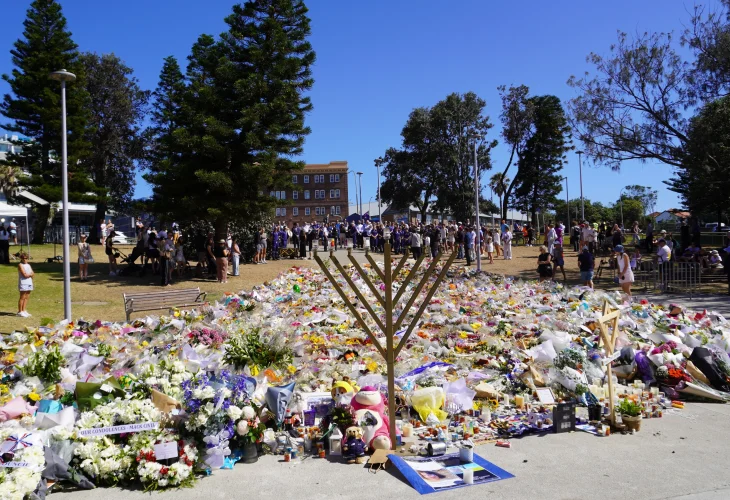 Bondi Beach (Shutterstock)
Australia’s domestic intelligence chief told a Royal Commission on Monday that antisemitism was allowed to spread unchecked across the country after the October 7 Hamas attack on Israel, creating an atmosphere that helped fuel violence against Jewish Australians before the deadly Bondi Beach massacre.
The testimony came during public hearings of the Royal Commission investigating the December 2025 terror attack on a Chanukah celebration in Bondi that killed 15 people. Mike Burgess, director-general of the Australian Security Intelligence Organization (ASIO), said antisemitic behavior escalated sharply in Australia after the outbreak of the Israel-Hamas War.
“Some of those violent aspects and those behaviors, including antisemitism that, in our view, were left unchecked, were therefore normalized and gave more permission for violence,” Burgess told the inquiry.
Burgess said the rise in antisemitic incidents contributed to ASIO’s decision to raise Australia’s national terrorism threat level to “probable” in August 2025. He said antisemitism evolved from intimidation and threats into direct attacks on Jewish people, synagogues, schools, businesses, and homes.
“Jewish Australians were on the receiving end,” he said.
The Royal Commission is examining both the Bondi attack itself and the broader climate surrounding it. During the hearings, the inquiry heard that the Jewish Community Security Group warned New South Wales Police before the Chanukah by the Sea event that the Jewish community faced a high risk of terrorism and requested a permanent police presence at the gathering. Police instead deployed a mobile patrol model.
11 people were shot within 29 seconds after the attackers opened fire at the event. The two attackers were identified as Sajid Akram and his son Naveed Akram. Sajid was killed by police at the scene, while Naveed was arrested after being wounded. Australian authorities allege the attack may have been inspired by ISIS ideology. Naveed Akram faces terrorism-related charges, including 15 counts of murder.
Burgess also used his testimony to describe what ASIO believes was a broader foreign-backed antisemitic campaign targeting Australian Jews. He said the agency concluded that Iran’s Islamic Revolutionary Guard Corps was behind attacks on a kosher restaurant in Sydney and the Adass Israel Synagogue in Melbourne. The assessment led Australia to expel Iran’s ambassador in August 2025. Tehran denied the allegations at the time and called them baseless.
Burgess said ASIO believes Iran was likely connected to additional antisemitic attacks as well, though investigators could not definitively attribute every incident to Tehran. “They use their network of proxies and agents to do their bidding, and that is to bring harm to Jewish people wherever they are in the world,” he said.
The hearings are part of a broader national inquiry into antisemitism and social cohesion launched after the Bondi massacre shocked Australia’s Jewish community and triggered calls for major changes in security policy. The Australian government has already adopted several interim recommendations from the commission, including expanded protection for Jewish institutions and stronger counterterror and foreign influence measures.
The Royal Commission is expected to submit its final report in December 2026.

