

Magazine
From Gambling Addiction to Faith: One Man’s Recovery Story
A successful soccer coach hid a dangerous gambling addiction for twenty years until crushing debt, prison, and rock bottom forced him to rebuild his life.
- Michal Arieli
- | Updated
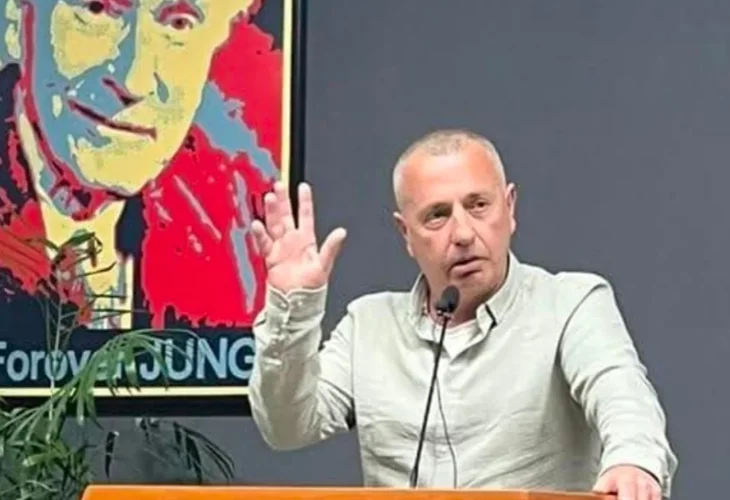 Shimon Ravivo
“In another month, I’ll mark ten years clean from gambling,” says psychotherapist Shimon Ravivo. He pauses for a moment, then adds: “For twenty years, from age 26 to 46, I was trapped in the cycle of addiction. I suffered deeply and paid an incredibly heavy price, until I finally found my way back and managed to break free.”
For Ravivo, the real achievement was not only escaping addiction, but remaining free from it over time.
“When I was deep inside it, I truly didn’t believe I could ever recover,” he says honestly. “The addiction controlled every part of my life. At the time, I was a successful soccer coach with a respected and profitable career. But between practices and games, I spent my days placing illegal bets over the phone. No one around me imagined that I was drowning in debt and being threatened by people from the gray market, until everything finally collapsed.”
Addiction Is a Disease
Looking back on his childhood, Ravivo describes a completely normal upbringing.
“My brother works for the local council, my sister is a teacher, and my father served in the military before going into agriculture,” he recalls. “On the surface, everything seemed perfectly ordinary. But as I got older, I began searching for excitement and meaning outside myself. That’s how I first got pulled into gambling, and little by little, I sank deeper into it.”
He explains that he never realized he had an addictive personality.
“The moment I discovered gambling, it completely drew me in because it gave me a sense of escape and temporary relief. It was exciting, challenging, and stimulating. Before I even understood what was happening, it had become a full blown addiction.”
Today, as someone who treats people struggling with addiction, Ravivo says the core patterns behind addiction are often very similar, no matter what form the addiction takes.
“An addicted person is usually searching for something external to make them feel good,” he explains. “Because they do not have a strong internal sense of self, they become dependent on outside things to fill that emptiness. That dependency slowly turns into addiction.”
He notes that emotional disconnection at home can sometimes play a role.
“In many homes, feelings simply are not discussed. There is silence instead of emotional conversation. Of course, there can be many different causes, but emotional disconnection is often part of the picture.”
Were you successful in the gambling you were involved in?
“Not consistently,” Ravivo admits. “Sometimes I would win, but afterward I would lose amounts that were much larger. In truth, it did not matter whether I was winning or losing because I had completely lost control. I simply could not stop.”
What’s the physiological explanation for that? Why would a person keep doing something that harms them?
“The explanation is that addiction is now recognized as a disease in every sense, even officially by the Ministry of Health,” Ravivo says. “A person using harmful substances knows they are damaging themselves, yet they still cannot stop. Every night they may promise themselves it is the last time, and by morning they are using again. The same pattern exists in all addictions. An addicted person feels trapped and powerless inside the addiction.”
When Faith Became Part of the Healing Process
“This can happen to anyone,” Ravivo emphasizes. “It does not matter where you come from or what kind of family you grew up in. Addiction exists even in the best families.”
How did you manage to get out in your own case?
“It was not an overnight change,” he says. “I went through a long process of emotional and spiritual healing. In the end, what pushed me toward recovery was reaching absolute rock bottom.”
Ravivo shares that he lost nearly everything. He lost money, his apartment, and went through a painful divorce. He also faced threats because of enormous debts owed to the gray market and even spent time in prison.
“Only when I realized there was almost nothing left of my life did I finally understand that I needed Hashem. I realized that only He could truly help me and rescue me. That awakening led me to seek treatment and begin the well known 12 step recovery program.”
According to Ravivo, reaching rock bottom forced him to recognize that he was not truly in control.
“As long as a person believes they can manage everything alone, they will continue relying only on themselves. Sometimes it takes complete brokenness before a person recognizes how much they need Hashem.”
The Long Road to Recovery
Ravivo spent six months in intensive treatment at home before continuing with private therapy. Once he achieved sobriety, he decided to study addiction recovery professionally so he could help others facing similar struggles.
“The beginning was especially difficult,” he says. “I created strict boundaries for myself. I avoided places, people, and anything connected to gambling because I feared falling back into addiction. Recovery happened slowly, step by step.”
One of the hardest sacrifices was leaving behind his longtime career in soccer coaching.
“Every part of that world reminded me of sports betting,” he explains. “After twenty years, I understood I needed to walk away completely and fully commit myself to recovery.”
Today, Ravivo believes faith became one of the greatest gifts of the entire process.
“I grew up in a traditional home, but for most of my life I did not truly believe in the Creator of the world,” he says. “During recovery, my connection with Hashem became much stronger. Today, Baruch Hashem, faith is a central part of my life and my family’s life as well.”
Was it all one steady upward climb?
“Not at all,” he says. “There were many moments when I felt myself slipping backward. Many people entering recovery expect to feel immediate freedom, but instead they often face pain, fear, and emotional struggles. That is why support during recovery is so important.”
Getting Your Life Back
During his recovery journey, Ravivo also began writing daily messages of encouragement and spiritual strengthening.
“At first I wrote them only for myself,” he says. “But after sharing them in groups, I realized how much they were helping other people too.”
Eventually, those writings became a book called Daily Strengthening, filled with daily guidance and encouragement throughout the year.
Today, alongside running a private clinic, Ravivo also owns the “Ruach BaKfar” treatment center in Kfar Saba.
“I see this work as a mission,” he says. “I want people to know there is always hope. Even from the lowest place, Hashem can lift a person up and help them grow.”
Do all the patients manage to recover and leave there clean?
“Unfortunately, not everyone becomes fully clean,” Ravivo says honestly. “But people who truly commit themselves to the process and stay with it usually succeed. Recovery gives life back not only to the person struggling with addiction, but also to their entire family. An addicted person feels like they have no life. Recovery gives them that life back.”

