

Personality Development
Rabbi Amit Kedar’s Unique Approach to Emotional Healing
Rabbi Amit Kedar explains the fascinating inner process behind the “Dimyonovea” method and the search for the soul’s deeper voice.
- Shira Dabush (Cohen)
- | Updated
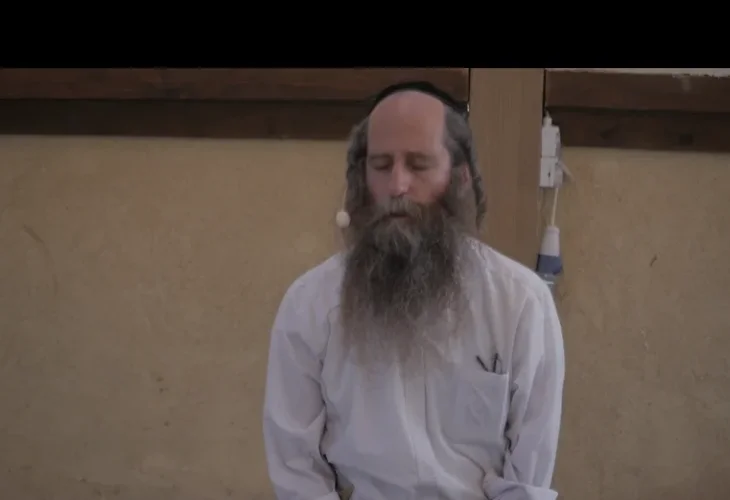 Rabbi Amit Kedar
From the moment we enter the world, and even before birth, we begin absorbing messages from our surroundings. First from parents and family, and later from society itself. Slowly, without even noticing it, we build an inner world made up of interpretations, fears, memories, beliefs, and emotional images.
“At every stage of life, we absorb more and more experiences,” explains Rabbi Amit Kedar, founder of the “Dimyonovea” method, educator, lecturer, and therapist. “But over time, many people also accumulate negative images and painful interpretations about themselves and the world around them.”
And according to Kedar, that is exactly where many inner struggles begin.
The Images That Shape Us
“The world of images we carry inside us eventually becomes the foundation of our self image,” Kedar explains. “And when that inner world contains more negative than positive images, a person struggles to genuinely accept themselves and others.”
The first stage of healing, according to the approach of Dimyonovea, is what Chassidic thought refers to as “clarifying the imaginative power.”
In practical terms, this means learning to separate between the deeper self and the childish emotional interpretations a person unconsciously collected throughout life.
“Beneath the external layers,” Kedar says, “there is a much deeper place inside the soul. Most people rarely reach it because everyday life is so noisy and busy. But that is where the real inner work begins.”
Learning to Listen to the Soul
According to Kedar, the process begins by identifying the emotional images and beliefs that prevent a person from becoming who they truly can be.
Only afterward can a person slowly begin replacing them with healthier and more authentic inner perceptions.
“At first, the voices of the soul are very quiet,” he explains. “But when a person finally gives them space, they gradually become clearer and stronger.”
Kedar connects this idea to the famous Gemara in Nidda, which teaches that a baby learns the entire Torah while still in the womb before an angel causes that knowledge to be forgotten before birth.
“According to Rabbi Nachman of Breslov,” Kedar says, “our journey in this world is really a search to rediscover something the soul once already knew.”
Painful Places Are Not the Goal
Kedar emphasizes that difficult emotions and painful memories naturally arise during this process, but he insists they are not the destination.
“People often think therapy is only about pain,” he says. “But beyond the pain there is also deep wisdom within the soul itself.”
The goal, according to him, is not simply analyzing suffering endlessly, but uncovering healthier and more mature ways of understanding ourselves and our experiences.
“The Answers Already Exist Within the Person”
One of the most unusual aspects of the Dimyonovea method is the role of the therapist.
Unlike guided imagery techniques where the therapist actively directs the patient using externally suggested images, Kedar says his approach works almost in the opposite direction.
“The process emerges from within the person outward,” he explains. “There is complete trust that the answers already exist inside the individual.”
In this model, the therapist intentionally steps away from the center and allows the patient’s own inner world to surface naturally.
“Any external interference can sometimes interrupt the truth trying to emerge,” Kedar says.
Because of that, the process moves at an intensely personal pace.
“There is no need to rush,” he explains. “The answers appear exactly when a person is emotionally ready to encounter them.”

From Combat Officer to Breslov Chassid
Kedar’s own personal journey is deeply connected to the method he eventually developed.
After serving as an officer in the Duchifat Battalion, he traveled to India like many newly discharged Israeli soldiers.
During that period, he became fascinated by questions surrounding body, soul, healing, and inner life.
Although he had originally planned to study psychology, he eventually chose natural medicine instead.
“When I truly understood that there is such a thing as a soul,” he recalls, “I realized that many of the things I had previously learned no longer fully matched what I was searching for.”
Later, through a baal teshuva Breslov Chassid who became his teacher, Kedar was introduced to Judaism and Chassidut on a deeper level.
Eventually, alongside intensive Torah study, his search led him toward Breslov teachings and a growing connection to prayer and inner spiritual work.
How the Method Helps Singles Struggling Emotionally
Toward the end of the interview, Kedar was asked how his method may help older singles dealing with emotional exhaustion, fear, and repeated disappointment.
According to him, many singles live inside an exhausting emotional contradiction.
“On one hand, a person desperately wants to get married,” he explains. “But on the other hand, there may also be fearful inner voices resisting vulnerability, closeness, or change.”
Instead of fighting those fears aggressively, the method encourages people to listen carefully to them.
Within Dimyonovea, those inner voices are often transformed into symbolic mental images or characters, allowing a person to create dialogue with them rather than simply suppressing them.
“Once there is an image,” Kedar explains, “a separation is created. And once there is separation, dialogue becomes possible.”
According to him, this process often reveals that even frightening or negative inner voices contain hidden strengths, fears, longings, and unmet emotional needs beneath the surface.
“And gradually,” he says, “through the dialogue between all these inner voices, the deeper voice of the soul begins to emerge.”
A Search for the Authentic Self
Today, the Dimyonovea Institute trains hundreds of therapists annually, while Kedar himself continues teaching, lecturing, and working in education.
But at the heart of his approach remains one central belief:
That beneath the noise, fear, confusion, and emotional layers people accumulate throughout life, there still exists a deeper and healthier inner self quietly waiting to be rediscovered.

