

Israel News
Trump’s Board Of Peace Prepares First Gaza Visit As Ceasefire Plan Remains Stalled
Board of Peace officials requested IDF approval for a Gaza visit despite Hamas disarmament, funding and postwar plans still stalled
- Brian Racer
- | Updated
 Shutterstock
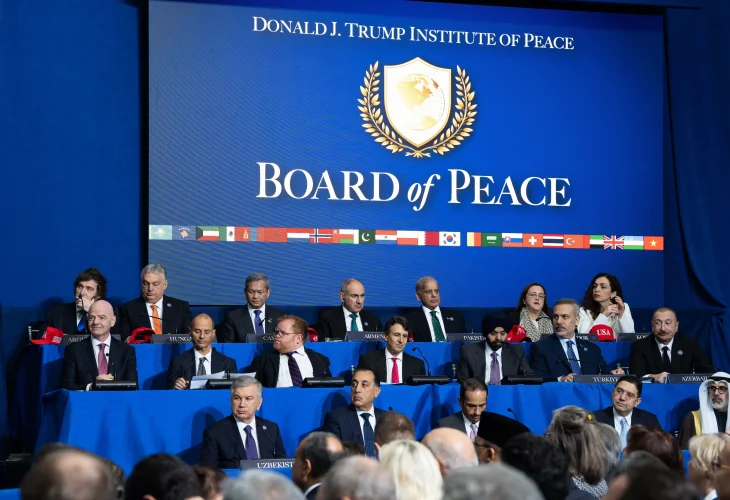
Representatives of US President Donald Trump’s Board of Peace are preparing to enter the Gaza Strip for the first time in the coming days, according to a KAN News report Wednesday, in what could become the clearest sign yet that Washington is attempting to move its postwar Gaza plan into implementation.
KAN reported that representatives of Board of Peace director-general Nickolay Mladenov submitted an official request for IDF approval ahead of the visit. The report said representatives connected to the planned multinational stabilization force are also expected to visit Gaza next month.
The Board of Peace is not a formal international body like the United Nations, but a developing US-led framework built around several groups involved in postwar Gaza planning. Those include Mladenov’s diplomatic team, Palestinian technocrats meant to eventually administer Gaza, international reconstruction and aid advisers, and a proposed multinational stabilization force. It remains unclear which of those representatives would be part of the planned Gaza delegation, and KAN did not identify the officials expected to enter the Strip.
The Board of Peace was launched earlier this year as the centerpiece of Trump’s postwar Gaza strategy. The initiative calls for Hamas to disarm, Israeli forces to gradually withdraw from Gaza, reconstruction to begin under international supervision, and governance to transition to a Palestinian technocratic administration backed by Arab and international partners.
Last week, Mladenov published the core elements of the Board of Peace’s roadmap, saying the objective is to “move Gaza out of a permanent cycle of war and humanitarian collapse toward recovery, reconstruction and Palestinian self-governance.”
But despite months of announcements, international pledges and diplomatic negotiations, nearly every major component of the plan remains stalled.
The central dispute remains Hamas’s refusal to disarm. In a recent briefing to the United Nations Security Council, Mladenov said “the principal obstacle to full implementation remains Hamas’ refusal to accept verified decommissioning.”
The Board of Peace has repeatedly stated that Hamas’s disarmament is “not negotiable” and says progress on reconstruction, governance and international deployment cannot move forward until that issue is resolved.
KAN also quoted a Board of Peace source as saying Hamas “has not internalized that it must disarm,” adding: “We consider the elimination of senior figures in the terrorist organization's military wing part of the process of disarming Hamas.”
Hamas has rejected the Board of Peace’s accusations and framework. Hamas spokesperson Hazem Qassem said the initiative “reflects continued adoption of the Israeli position and serves as an attempt to justify further Israeli escalation.”
At the same time, implementation problems extend far beyond the ceasefire itself.
Under the plan, Gaza is supposed to eventually be administered by the National Committee for the Administration of Gaza (NCAG), a 12-member Palestinian technocratic body created under the Board of Peace framework. However, the committee has not yet entered Gaza, and the broader international stabilization force envisioned under the plan has also not deployed.
Funding has become another growing issue. The Financial Times reported this week that a World Bank-linked fund established for the Board of Peace had reportedly received “zero dollars” despite international pledges totaling billions.
Board of Peace officials disputed the characterization, saying donor countries are using alternative funding channels instead of the World Bank mechanism.
According to reports, Morocco has provided funding for parts of the Board of Peace administrative structure, while a UAE-backed program to train a new Gaza police force remains frozen. US aid earmarked for Gaza reconstruction under the initiative has also reportedly not yet been deployed.
A Board of Peace spokesperson told the Financial Times that reconstruction contracts have not been awarded because “we’re not, like, hoarding money in a bank account and then awarding contracts for things that can’t be delivered.”
The planned Gaza visit now appears set to become an early test of whether the Trump administration’s postwar Gaza framework is finally beginning to move beyond planning stages. But major questions remain unresolved, including Hamas disarmament, Israeli security control, international troop deployment, governance transition and the flow of reconstruction funding into Gaza.

