

Magazine
The Arab Family That Has Protected a Synagogue for Over 100 Years
When the last Jew left Shfaram, he entrusted the synagogue’s keys to his neighbors. More than 100 years later, the same family still protects it.
- Michal Arieli
- | Updated
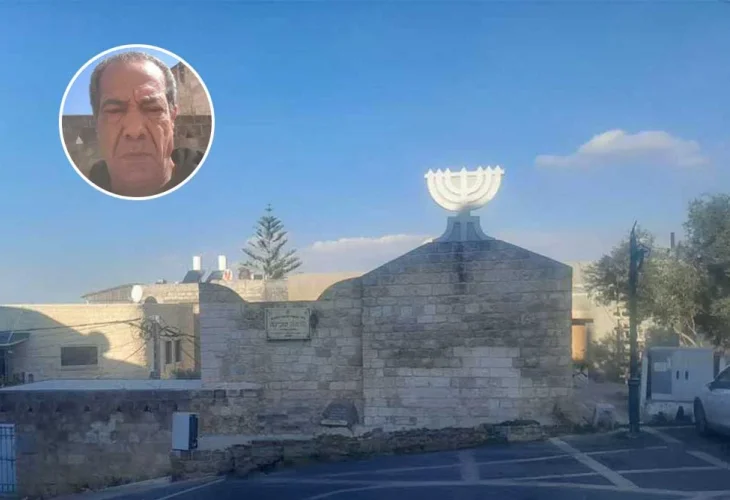 The synagogue in Shfaram (in the circle: Aadel Jaafari)
It is hard to find another synagogue in Israel located within an Arab city whose keys have been held by an Arab family for more than a century, whose caretaker is Arab by birth, and whose regular cleaning is handled by local Arab women.
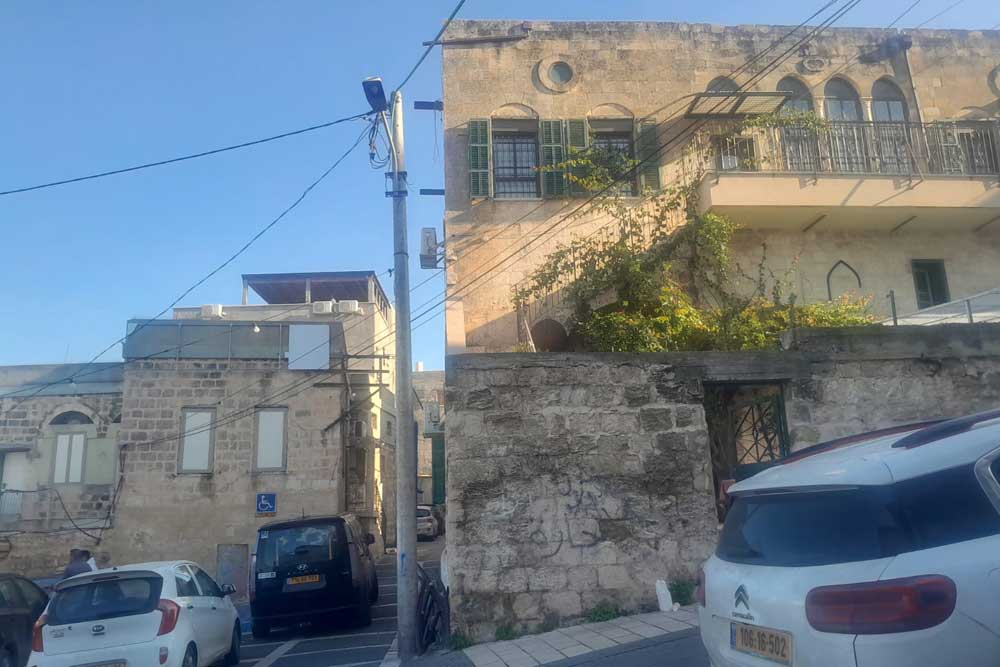
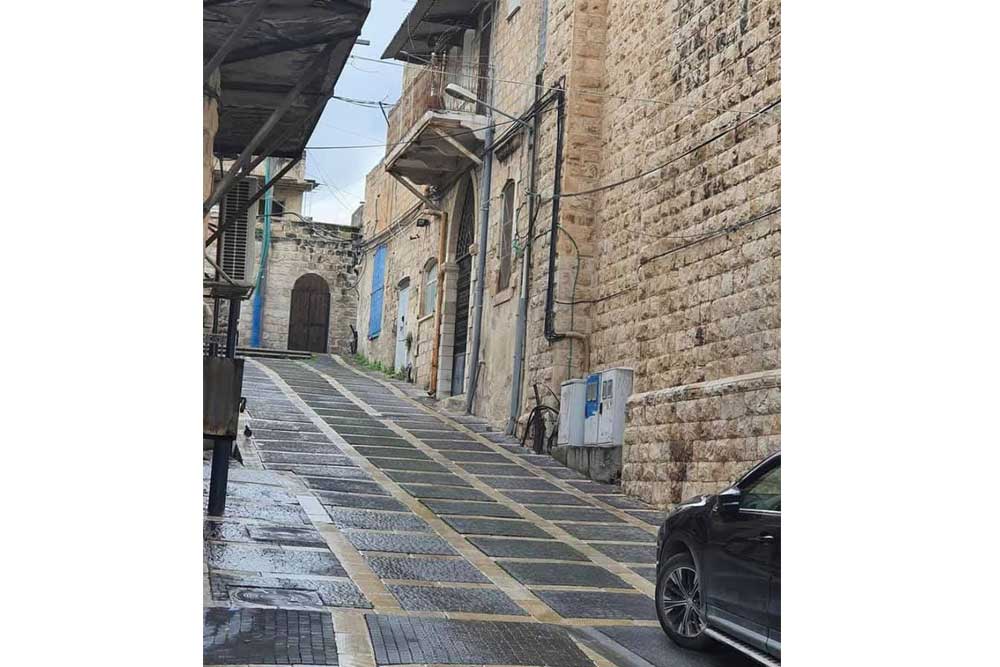
Yet that is exactly the story of Machaneh Shechinah, the ancient synagogue of Shfaram. In this northern city, where Muslims, Christians, and Druze live side by side, residents have preserved a remarkable reminder of a Jewish community that once flourished there.
The Hebrew sign at the entrance still reads, "Beit Knesset Machaneh Shechinah." Before the last Jew left Shfaram in the early 1920s, he entrusted the synagogue's key to his Arab neighbors. More than one hundred years later, that same family is still guarding the building, maintaining it, and welcoming Jewish visitors who come to pray.
The Guardian of the Synagogue
Visitors arriving at the synagogue are often greeted by Aadel Jaafari, who proudly refers to himself as the synagogue's guardian.
In fluent Hebrew, he welcomes visitors and asks, "Would you like to go inside? Should I open it for you? You're welcome to pray."
Jaafari's connection to the synagogue stretches back generations.
"My grandfather bought the last house from a Jewish family that left Shfaram in 1922," he explains. "At first, he didn't realize the building had been a synagogue, so he brought his goats inside. Then the goats began dying one after another."
Concerned, his grandfather consulted a local sheikh, who suggested that perhaps he was disturbing something sacred. Remembering that the building had belonged to a Jewish family, he sought advice from a rabbi, who explained the significance of the structure.
"From that moment, my grandfather removed the goats, cleaned the building thoroughly, and treated it as a synagogue," Jaafari says.
Since then, the family has never used the building for any personal purpose. Instead, they have devoted themselves to maintaining and preserving it.
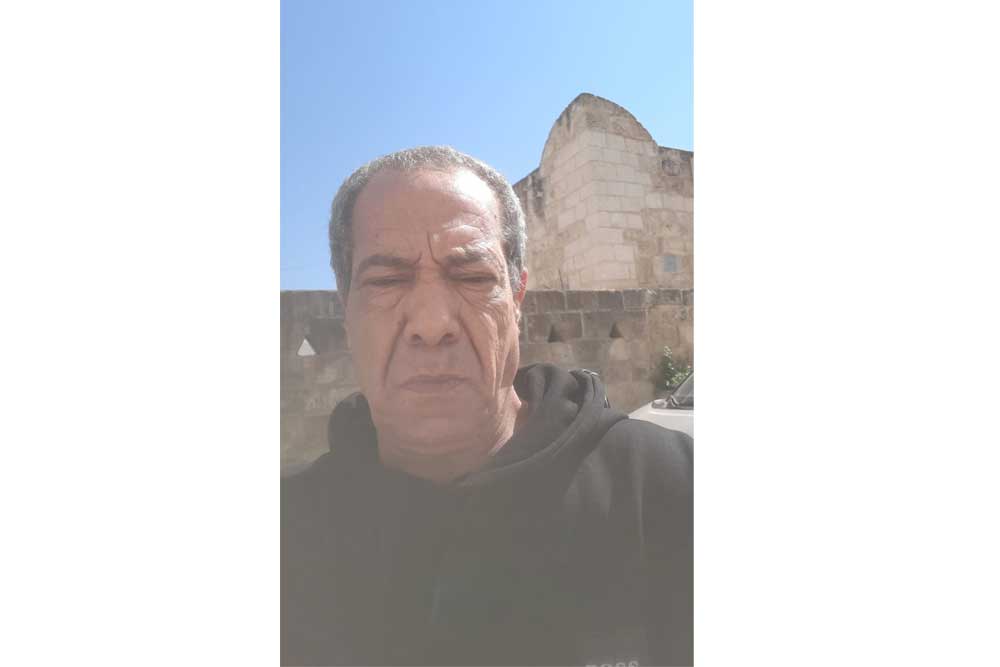 Aadel Jaafari, who holds the synagogue’s keys today.
Restoring a Piece of History
According to Jaafari, a major restoration project began in the 1950s under the direction of architect Meir Ben Uri, with assistance from Israel's Ministry of Religious Affairs. The work included renovations throughout the building as well as the redesign of the Holy Ark.
Years later, another major restoration effort was launched.
"I still remember when Ariel Sharon visited," Jaafari recalls. "My father explained that many people came to pray there, but no one was investing money in maintaining the building. If nothing was done, it would eventually collapse."
A unique agreement followed. The state would cover half the renovation costs, while Jaafari's father personally funded the other half.
"My father shook Sharon's hand, and from that point everything changed. Major renovations were carried out, and the synagogue became beautiful once again. Our family is very proud to have played a part in that."
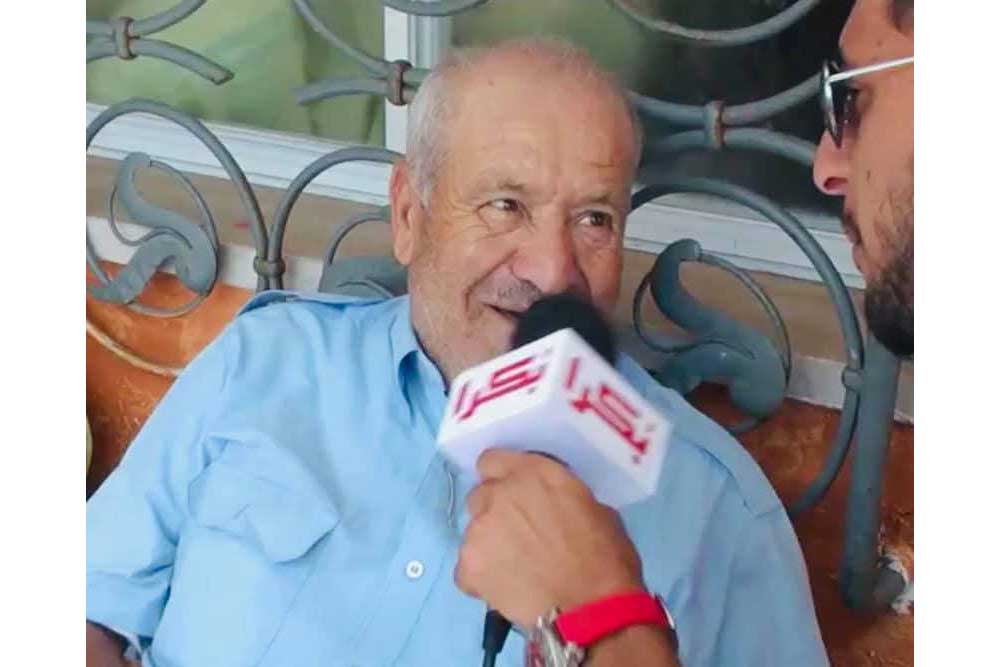 Aadel Jaafari’s father, who funded half the restoration.
A Key Passed From Generation to Generation
The synagogue remains active today, attracting visitors from across Israel.
Some come to pray, while others visit for bar mitzvah celebrations, family gatherings, or simply to experience a unique piece of Jewish history.
The building is not left open at all times, however.
"There are valuable items inside," Jaafari explains. "We don't want random people wandering in."
Instead, the key remains with the family. It was once held by his grandmother, then his father, and today it is in his hands.
"One day I will pass it on as well," he says. "The key will always remain with our family."
The concern about security is not merely theoretical.
In 1985, thieves posing as scribes stole an ancient Torah scroll from the synagogue. According to Jaafari, the scroll was believed to be more than a thousand years old.
"My father and our entire family searched everywhere for it," he recalls. "Sadly, it was never recovered. I still remember opening it and seeing the parchment. It felt alive. It was truly special."
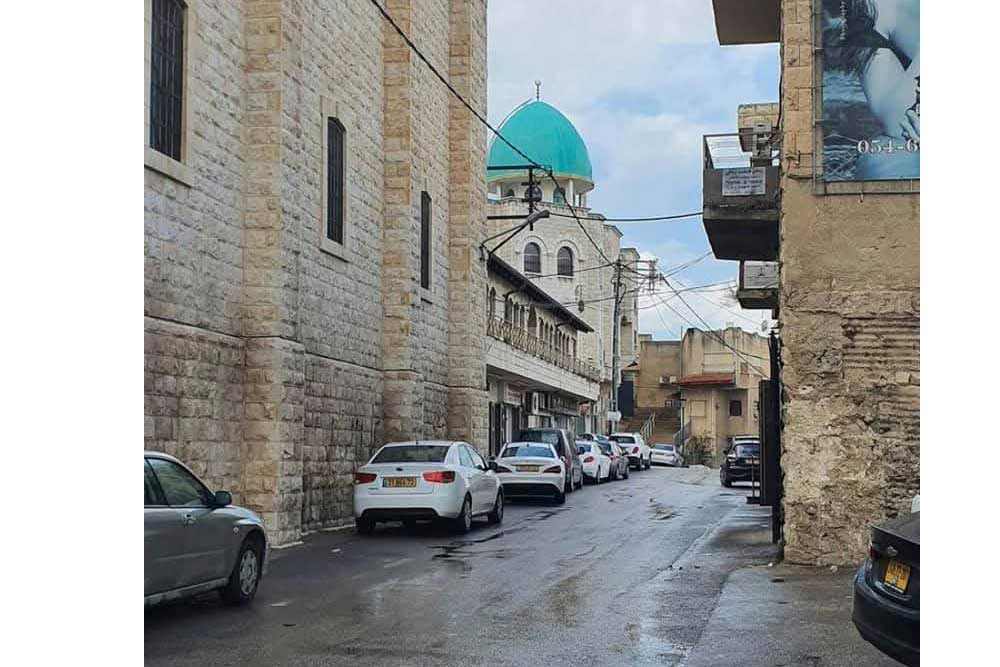
The Women Who Keep It Clean
Keeping the synagogue in good condition requires ongoing care.
That responsibility falls largely to Jaafari's aunt and three other local women, who take turns cleaning the building.
"Every week one of them comes, cleans the synagogue, and locks it afterward," he says.
Their work is entirely voluntary, part of the family's long-standing commitment to preserving the site.
"I Don't Take Any Payment"
Professionally, Jaafari works in construction, desalination, and power infrastructure. But caring for the synagogue is something entirely separate.
When asked whether he receives compensation for all the time and effort he invests, he seems genuinely surprised.
"Why should I be paid?" he asks. "I do it out of kindness and humanity."
He explains that when people once offered his father money for guarding the synagogue, his father refused.
"He would say, 'I do it for the mitzvah.' And that's exactly how I feel."
The family has spent decades opening and locking the building, cleaning it, maintaining it, and even contributing their own money toward renovations.
"We do it with love," Jaafari says. "We want there to be more kindness in the world."
More Than a Building
Over the years, Jaafari has welcomed countless visitors, including rabbis, Chassidim, and descendants of Jewish families who once lived in Shfaram.
His father often spoke fondly of the city's former Jewish residents and the friendships they shared.
"My father's best friends were Jewish children," he says. "They played together growing up."
Eventually, the family even organized gatherings with descendants of those former residents, helping reconnect people with their roots.
Although Jaafari does not describe himself as particularly religious, he speaks openly about his faith.
"I believe very much in God," he says. "I feel that He watches over us in a special way."
Then he pauses before offering a reflection that seems to capture the spirit of the synagogue itself.
"I think that no matter who we are, Jews, Muslims, or Druze, in the end we all pray to the same One. If people lose their humanity and their desire to help others, it becomes very easy to lose our way."
For more than a century, one family in Shfaram has quietly lived by those words, protecting a synagogue that is not their own and preserving a remarkable chapter of Jewish history for future generations.

