

Magazine
“For Every Tree Uprooted, I Plant Ten More”: A Farmer's Answer to War
After suffering devastating losses during the war, one Israeli farmer made a remarkable pledge: every uprooted tree would be replaced by ten new ones.
- Michal Arieli
- | Updated
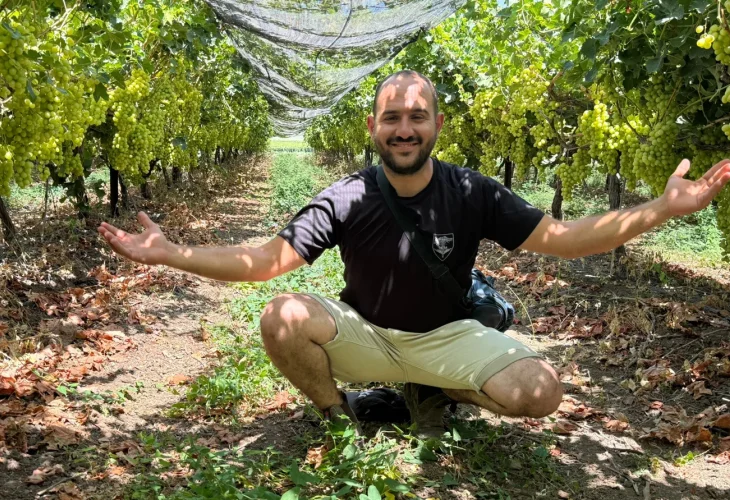 Dan Binyahu Swissa
As missile sirens echoed across Israel during the recent war with Iran, farmer Dan Binyahu Swissa found himself facing a painful reality that many farmers know all too well: years of hard work can be damaged in an instant.
But instead of focusing on what was lost, he chose to focus on what comes next.
"For every tree that was uprooted, we're planting ten more," he says. "There is no chance we will let our enemies harm us, and no chance they will damage even a single crop on the soil of Israel."
For Swissa, farming has never been just a profession. It is a mission, an expression of faith, and a lifelong commitment to the Land of Israel. Even in the face of war, economic uncertainty, and the challenges of observing the mitzvot connected to the land, he remains determined to keep planting.
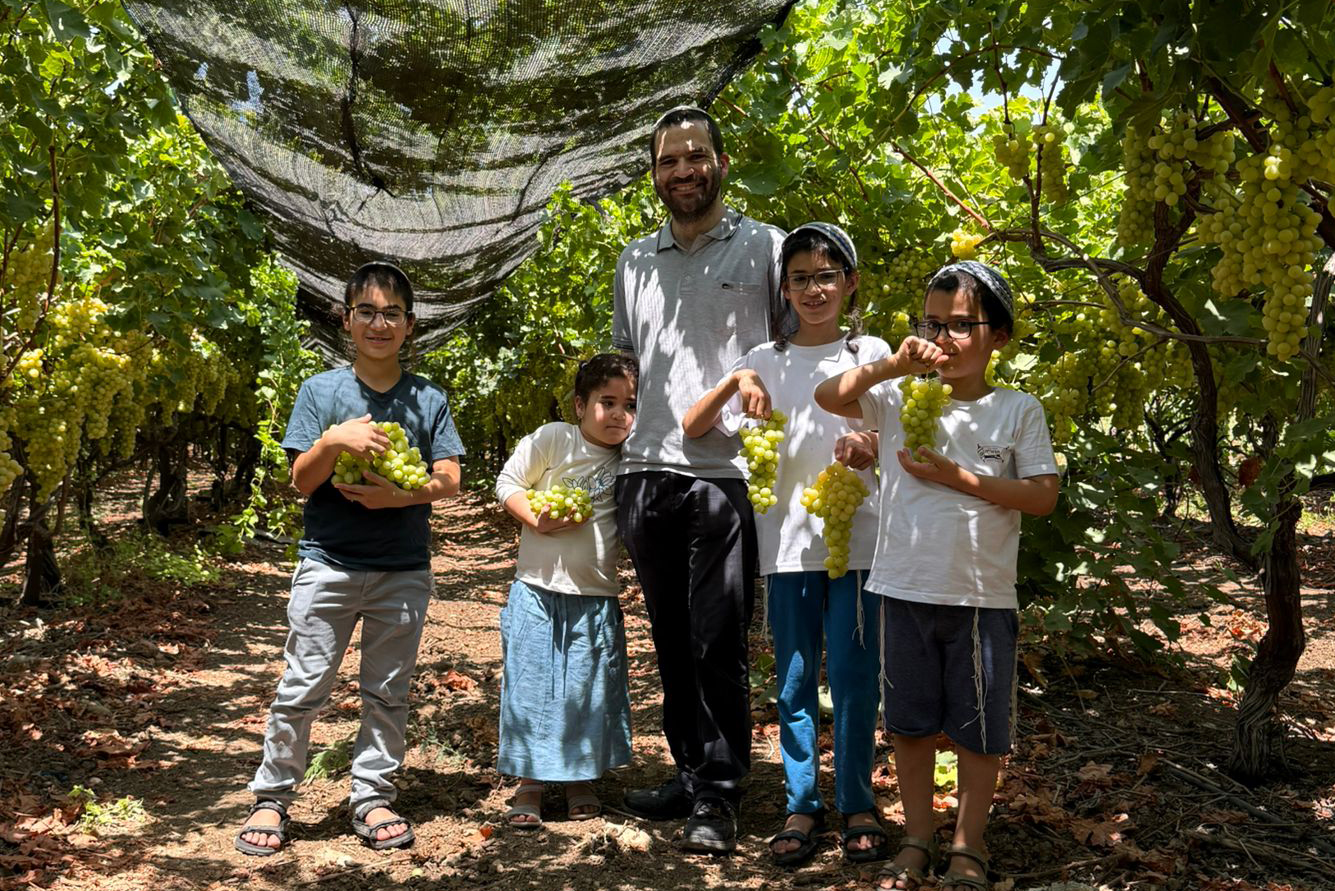 Dan with his children
Rebuilding After the War
The recent war left its mark on agricultural areas across the country.
"Unlike many farmers, I have growing areas in several parts of Israel," Swissa explains. "Mainly in Moshav Beit Uziel, but also in Gush Etzion, Moshav Kfar Aviv, and other locations. To destroy a tree, you don't need a direct hit. A missile fragment or even nearby shrapnel can cause enough damage to make the tree unusable."
Again and again, he found himself forced to uproot trees he had spent years nurturing.
For a farmer, few things are more painful.
Yet today, as many Israelis are rebuilding and returning to routine, Swissa is focused on growth.
"I'm planting," he says with satisfaction. "That's our answer."
A Life Built on Faith
Farming was woven into Swissa's life from childhood.
He grew up in a farming family and was raised in a home where faith was not merely discussed but lived.
"My father always spoke about faith and about our mission to bring light into the world through agriculture," he recalls.
That perspective continues to guide him today.
"We plant, irrigate, and care for the crops, but after that, everything is in the hands of the Creator. There is no direct connection between how much we invest and what we ultimately receive."
According to Swissa, faith is not an addition to farming. It is what makes farming possible.
"I don't think I could survive in agriculture without faith," he says. "You can invest millions of shekels in crops without knowing how much fruit will grow, what quality it will be, or what price you'll receive for it."
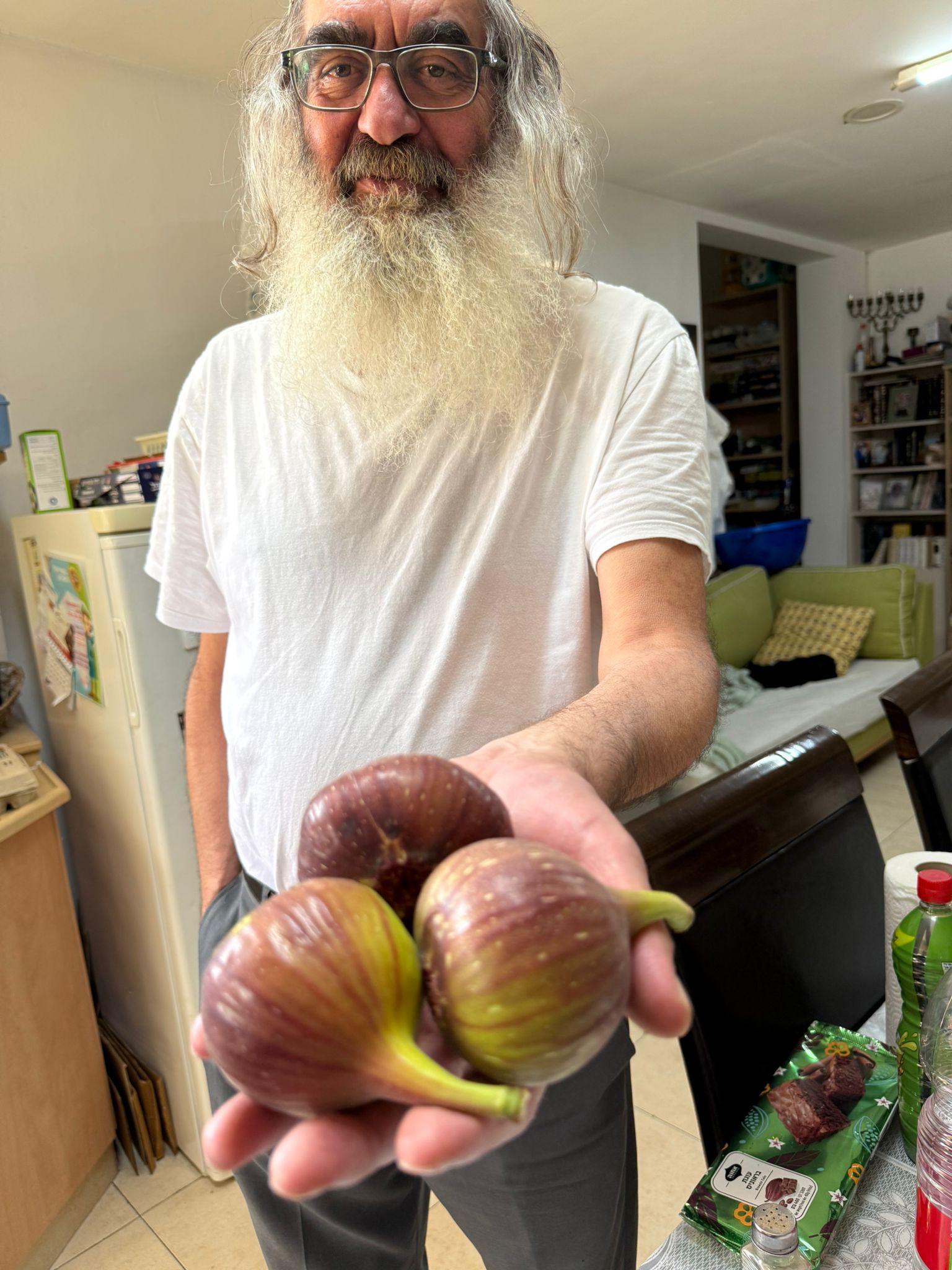 Dan's father, who is also a farmer
An Education in Faith Every Day
Swissa started his own farming business at just 16 years old. A year later, he married his wife, who became his full partner in both life and agriculture.
Today, the couple are raising four children.
People often imagine that life in the fields is peaceful and carefree, but Swissa says reality is very different.
"There isn't a day when I don't wake up wondering what will happen with the fields," he says. "No other profession makes you feel so strongly how little is actually under your control."
As someone who naturally seeks stability, he admits that farming constantly challenges him.
"But you learn to see the beauty in it. Every day is a lesson in faith in the most practical and tangible way."
Why He Refuses to Leave Agriculture
Many people argue that farming has no future in Israel.
Government policies, imported produce, labor shortages, and economic pressures have caused many farming families to leave the industry. In many cases, children choose not to continue their parents' work.
Swissa understands the frustration.
"The reality is difficult," he admits. "Sometimes produce is imported from abroad, and local farmers are left with large quantities that no one wants."
Yet he has never considered changing careers.
"I didn't choose agriculture because it's easy. I chose it because I believe our purpose in this land is to learn Torah and work the soil of Israel. This is part of who we are as a people."
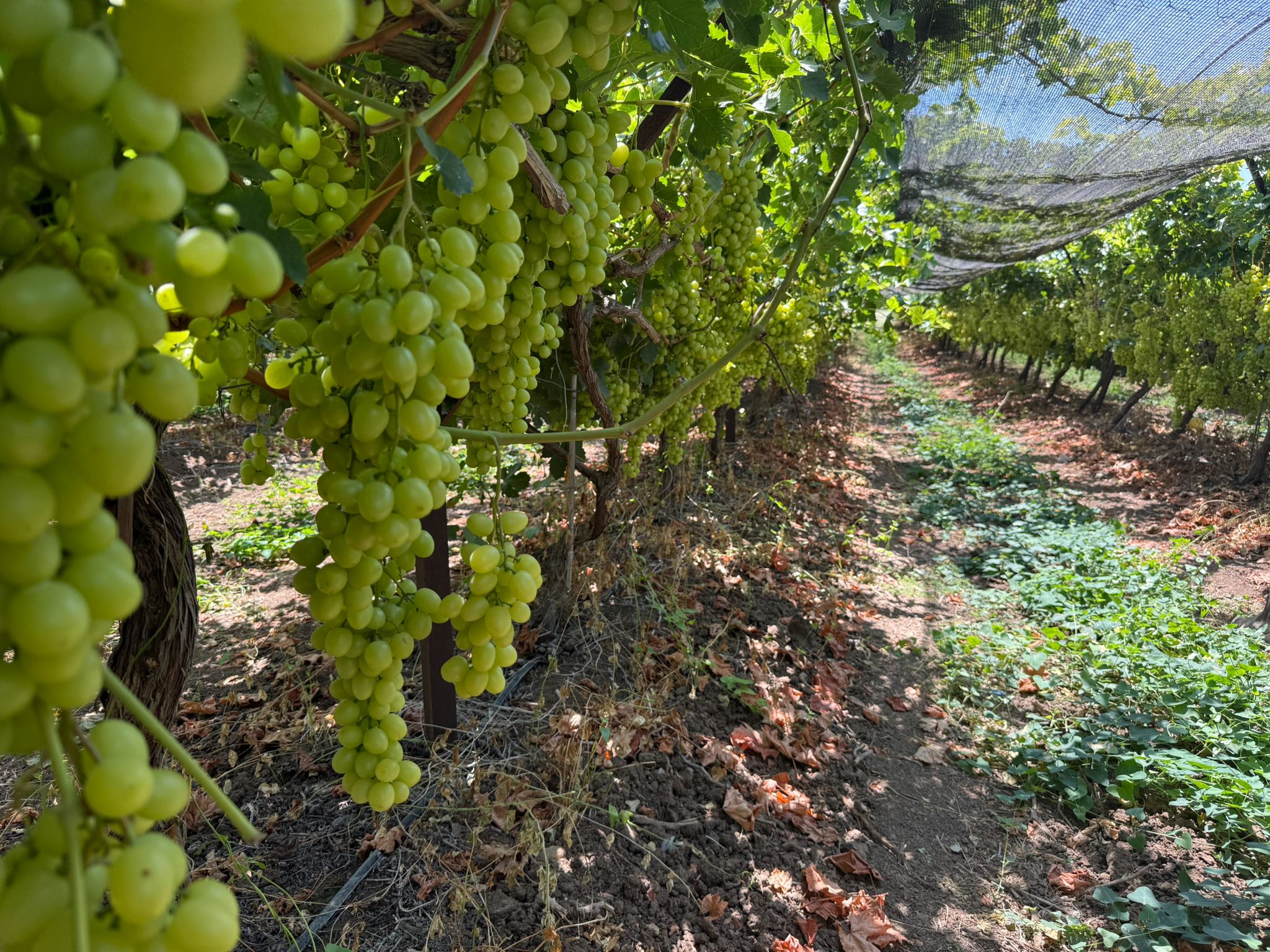
The Challenge of a Religious Farmer
For Swissa, farming comes with another layer of responsibility: observing the mitzvot connected to the land.
"Being a religious farmer is not simple," he says.
He refuses to harvest on Shabbat, regardless of the financial consequences.
"There are crops that need to be harvested every day. If you wait until after Shabbat, they can become excess produce that is no longer marketable."
Yet he remains unwavering.
Even more challenging, he says, is the mitzvah of Shemitta.
"During Shemitta, you stop and shut everything down after years of planning and investment. It goes against all logic."
For fruit growers, the challenge is particularly significant. The orchards still require maintenance and expenses continue, but there is no profit from the fruit.
Looking ahead to the next Shemitta year, Swissa hopes to observe it in its fullest form.
"I believe completely in Hashem's blessing and in the abundance He promises to those who observe Shemitta."
Walking Away From Millions
Until recently, Swissa believed that Shemitta was the greatest challenge a farmer could face.
Then the war began.
Like many farmers, he relied heavily on foreign workers. When the fighting broke out, the Thai workers who made up much of Israel's agricultural workforce returned home.
The result was devastating.
"We were left with about 60 dunams of vegetables that we simply couldn't harvest," he says.
At first, he considered recruiting volunteers. Eventually, an organization stepped in, harvested the produce, and distributed it to families in need.
The financial loss was enormous.
"In my estimation, we lost several million shekels."
Yet Swissa refuses to view it as a loss.
"We didn't receive money, but we received a tremendous merit," he says. "That is part of the light Hashem shines upon us."
Planting Against All Odds
Out of that same faith came the decision that has become his personal response to the war.
For every tree destroyed, ten more will be planted.
It is a statement of resilience, faith, and determination.
"There is nothing in the world that will stop us from making the land bloom," Swissa says. "The more they try to harm us, the more we will continue to grow and move forward."
For him, planting is about far more than agriculture.
It is an act of hope.

