

Psalms Chapters - Easy Reading Psalms
Psalms (Tehillim): The Complete Guide to the Book of Psalms
Everything You Need to Know — Hebrew Texts, All 150 Psalms Explained, Famous Chapters, Tehillim for Healing, Jewish Customs & Liturgy
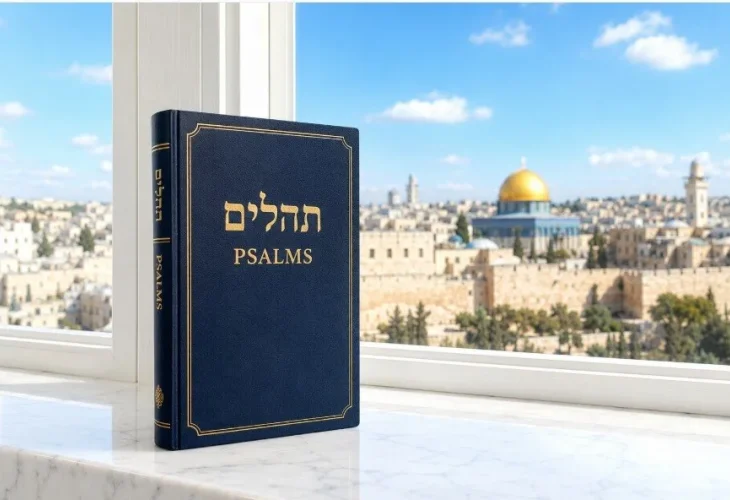
The Book of Psalms — known in Hebrew as Tehillim (תְּהִלִּים), "Songs of Praise" — is one of the most beloved and widely recited books in all of Jewish scripture. Its 150 chapters span the full range of human experience: joy and grief, gratitude and despair, majesty and intimacy, communal celebration and solitary cry. For millennia, Jews in every generation have turned to Tehillim in moments of need, in daily prayer, in times of crisis and times of blessing. The Book of Psalms is the prayer book of the Jewish soul.
This complete guide covers who wrote the Psalms, how the book is structured, the full Hebrew text and English translation of the most famous psalms, how Tehillim is recited in Jewish tradition, what to say when reciting for the sick, how the Psalms are used in daily liturgy, and a full index of all 150 chapters.
What are the Psalms?
The Psalms are 150 sacred poems and songs contained in the biblical book known in Hebrew as Sefer Tehillim — the Book of Praises. They form the third section of the Hebrew Bible (Tanakh), in the part known as Ketuvim (Writings), and they constitute the longest book in the entire Bible by chapter count.
The Psalms were composed across many centuries — from the era of the desert wanderings through the period of the First Temple, and in some cases during and after the Babylonian exile. They were gathered, edited, and arranged into their final form under the inspiration of the Holy Spirit (ruach hakodesh), and the Talmud (Bava Batra 14b) teaches that David compiled the entire Book of Psalms.
At their core, the Psalms are conversations between the human being and God. They are prayers and songs rather than narratives or legal codes. They speak directly, personally, sometimes in anguish and sometimes in soaring praise — and it is this directness that has made them the language of Jewish prayer for over three thousand years.
Psalms vs. Tehillim — The Same Book, Two Names
The word Psalms comes from the Greek psalmoi, meaning "songs sung to a harp" — a translation of the Hebrew mizmor, the heading used for many individual psalms. The English name entered the language through the Greek Septuagint translation of the Hebrew Bible.
The Hebrew name Tehillim (תְּהִלִּים) means "praises" or "hymns," from the root hallel — the same root as Hallelujah ("praise God"). Both names refer to exactly the same biblical book, with the same 150 chapters in the same order.
Who Wrote the Book of Psalms?
King David — The Primary Author
Jewish tradition identifies King David as the primary author of the Book of Psalms and its compiler and editor, based on the Talmud (Bava Batra 14b–15a), the superscriptions of the psalms themselves, and the testimony of the Prophets. David is credited with composing 73 of the 150 psalms — those bearing the superscription "l'David" ("of David"). He is described in Scripture as "the sweet singer of Israel" (2 Samuel 23:1).
David's psalms span his entire life: from his days as a shepherd (Psalm 23), through his flight from Saul (Psalms 57, 142), his military victories (Psalm 18), his profound sin and repentance (Psalm 51), and his old age (Psalm 71). His psalms are deeply autobiographical and simultaneously universal — his personal experience of God became the spiritual vocabulary of the entire Jewish people.
The Talmud (Bava Batra 14b) teaches that "David wrote the Book of Psalms by the hands of ten elders" — meaning he compiled a book gathering the psalms of earlier and contemporaneous authors alongside his own compositions.
The Other Ten Authors
The Talmud (Bava Batra 14b–15a) names ten authors whose psalms appear in the book, which David incorporated into the collection:
- Adam HaRishon — identified by the Talmud as the author of Psalm 92 ("A Song for the Shabbat Day").
- Malki-Tzedek — the priest-king of Salem (Genesis 14:18).
- Avraham Avinu — the Patriarch Abraham.
- Moshe Rabbeinu — Moses; the superscription of Psalm 90 explicitly reads "A prayer of Moses, the man of God" — the only psalm directly attributed to Moses.
- Heiman HaEzrachi — a sage renowned for wisdom (1 Kings 5:11); identified in the superscription of Psalm 88.
- Yedutun (Jeduthun) — one of David's Temple musicians; his name appears in the superscriptions of Psalms 39, 62, and 77.
- Asaf — another of David's chief Temple musicians; Psalms 73–83 form the "Asaph collection."
- The three sons of Korah — a guild of Temple singers; Psalms 42–49, 84–85, and 87–88 bear their name.
Beyond these, Solomon's name appears in the superscription of Psalms 72 and 127, and Psalm 89 is attributed to Eitan HaEzrachi.
What the Classic Commentators Say
The Jewish interpretive tradition has produced centuries of rich commentary on the Book of Psalms. Five voices are most central to the traditional Jewish understanding:
Rashi (Rabbi Shlomo Yitzchaki, 11th century, France) — the most widely studied commentator on Psalms. On the very first verse of Psalm 1, Rashi explains that "Ashrei ha'ish" ("Happy is the man") refers to one who separates himself from the way of sinners even before he is tempted to join them — teaching that true happiness begins with deliberate avoidance of negative influence. Rashi's approach is primarily linguistic and contextual, clarifying difficult Hebrew words and connecting each psalm to its historical setting in David's life.
Radak (Rabbi David Kimchi, 12th–13th century, Provence) — wrote the most comprehensive medieval commentary on all 150 psalms. On Psalm 22 — "My God, my God, why have You forsaken me?" — the Radak explains that David composed this psalm to express the anguish of all Israel in exile, and that the psalm's conclusion in praise demonstrates that even the deepest cry of abandonment contains within it the seed of ultimate trust. The Radak combined precise grammatical analysis with philosophical depth, and his commentary became the standard reference for the plain meaning of the text.
Ibn Ezra (Rabbi Abraham ibn Ezra, 12th century, Spain) — brought a rigorous grammatical and philosophical approach to Psalms. On Psalm 90 — "A Prayer of Moses, the man of God" — Ibn Ezra notes that Moses is the only prophet explicitly identified by name in a psalm superscription, and that the phrase "man of God" (ish ha'Elohim) signals a level of prophetic attachment to the divine that is unique in all of scripture. Ibn Ezra often challenged conventional readings and offered bold new interpretations of difficult verses.
Metzudat David and Metzudat Tzion (Rabbi David Altschuler, 18th century) — two companion commentaries that together provide the most accessible classical explanation of Psalms. Metzudat David explains the meaning of each verse in plain language; Metzudat Tzion clarifies difficult or rare Hebrew words. Together they are printed in virtually every standard Hebrew Tehillim edition and are the first commentaries most students consult.
The full commentaries of Rashi, Radak, Ibn Ezra, and Metzudat David on all 150 psalms are available at [Internal link: Sefaria.org] and at Hidabroot's Torah library [Internal link: Hidabroot Torah library].
How Many Psalms Are There?
There are 150 psalms in the Book of Psalms, organized into five books. The longest is Psalm 119 (176 verses — the longest chapter in the entire Bible); the shortest is Psalm 117 (2 verses — the shortest chapter in the entire Bible).
The Five Books of Psalms
The Midrash (Bereishit Rabbah 1:4) notes that just as Moses gave Israel five books of Torah, so David gave Israel five books of Psalms. Each book concludes with a doxology:
| Book | Psalms | Closing Doxology |
|---|---|---|
Book 1 | 1–41 | "Blessed is the Lord, God of Israel, from everlasting to everlasting. Amen and Amen." (41:14) |
Book 2 | 42–72 | "Blessed is the Lord God… Here end the prayers of David son of Jesse." (72:18–20) |
Book 3 | 73–89 | "Blessed is the Lord forever. Amen and Amen." (89:53) |
Book 4 | 90–106 | "Blessed is the Lord God of Israel… Amen. Hallelujah." (106:48) |
Book 5 | 107–150 | Psalm 150 — "Let all souls praise God. Hallelujah." |
Tehillim Treasures: Episode #1 Chapters 1 & 2 - Rabbi Yechiel Spero
Longest and Shortest Chapters
Psalm 119 — 176 verses, the longest chapter in the entire Hebrew Bible. It is an elaborate alphabetical acrostic: 22 sections of 8 verses each, one for each letter of the Hebrew alphabet, with every verse in each section beginning with the same Hebrew letter. Every one of its 176 verses refers to the Torah using one of eight synonyms: Torah, testimony (eidut), statutes (chukkim), commandments (mitzvot), judgments (mishpatim), word (davar/imrah), way (derech), and precepts (pikudim). Because of its alphabetical structure and its comprehensive praise of Torah, Psalm 119 is traditionally recited for the elevation of the soul of the departed (illui neshamah), with the sections corresponding to the letters of the deceased's Hebrew name recited in sequence.
Psalm 117 — 2 verses, the shortest chapter in the entire Bible. A brief but universal call: all nations are summoned to praise God, for His kindness to Israel is great and His truth endures forever.
Famous Psalms — Hebrew Text, Translation & Meaning
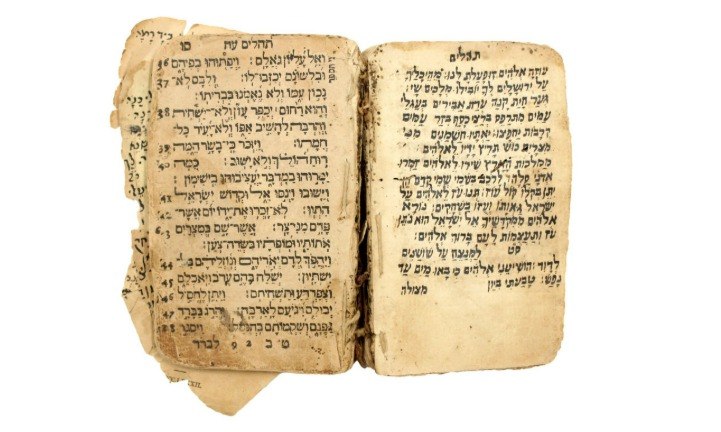 Antique Tehillim printed in Amsterdam, 1705
Several psalms have become universally beloved across generations. Here are the most famous — with their full Hebrew text (with vowels), English translation, and explanation of their meaning and use in Jewish tradition.
Psalm 23 — "The Lord Is My Shepherd"
Hebrew opening: יְהוָה רֹעִי לֹא אֶחְסָר
Psalm 23: Six verses of complete trust in God. Recited at the bedside of the sick, at times of bereavement, on Shabbat at the third meal, and whenever one needs to find calm in darkness. The most recited psalm in the world.
מִזְמוֹר לְדָוִד. יְהוָה רֹעִי לֹא אֶחְסָר: בִּנְאוֹת דֶּשֶׁא יַרְבִּיצֵנִי עַל מֵי מְנֻחוֹת יְנַהֲלֵנִי: נַפְשִׁי יְשׁוֹבֵב יַנְחֵנִי בְמַעְגְּלֵי צֶדֶק לְמַעַן שְׁמוֹ: גַּם כִּי אֵלֵךְ בְּגֵיא צַלְמָוֶת לֹא אִירָא רָע כִּי אַתָּה עִמָּדִי שִׁבְטְךָ וּמִשְׁעַנְתֶּךָ הֵמָּה יְנַחֲמֻנִי: תַּעֲרֹךְ לְפָנַי שֻׁלְחָן נֶגֶד צֹרְרָי דִּשַּׁנְתָּ בַשֶּׁמֶן רֹאשִׁי כּוֹסִי רְוָיָה: אַךְ טוֹב וָחֶסֶד יִרְדְּפוּנִי כָּל יְמֵי חַיַּי וְשַׁבְתִּי בְּבֵית יְהוָה לְאֹרֶךְ יָמִים:
A psalm of David. The Lord is my shepherd; I shall not want. He makes me lie down in green pastures; He leads me beside still waters. He restores my soul; He guides me in paths of righteousness for the sake of His name. Even though I walk through the valley of the shadow of death, I will fear no evil — for You are with me; Your rod and Your staff, they comfort me. You prepare a table before me in the presence of my enemies; You anoint my head with oil; my cup overflows. Surely goodness and lovingkindness will follow me all the days of my life, and I will dwell in the house of the Lord forever.
Meaning and use: In six verses, David moves from green pastures and still waters through the valley of the shadow of death — not circumventing darkness, but walking through it with God. The psalm is recited on Shabbat at the third meal, at the bedside of the sick, and at times of bereavement, because its message is precisely suited to the hardest moments: not that God removes the darkness, but that He is present within it.
Psalm 121 — "I Lift My Eyes to the Mountains"
Hebrew opening: אֶשָּׂא עֵינַי אֶל הֶהָרִים
Psalm 121: Eight verses of divine guardianship — the most comforting protection psalm in the Bible. Recited for travelers, the sick, soldiers, and at times of transition. God "will guard your going out and your coming in, from this time forth and forever."
שִׁיר לַמַּעֲלוֹת. אֶשָּׂא עֵינַי אֶל הֶהָרִים מֵאַיִן יָבֹא עֶזְרִי: עֶזְרִי מֵעִם יְהוָה עֹשֵׂה שָׁמַיִם וָאָרֶץ: אַל יִתֵּן לַמּוֹט רַגְלֶךָ אַל יָנוּם שֹׁמְרֶךָ: הִנֵּה לֹא יָנוּם וְלֹא יִישָׁן שׁוֹמֵר יִשְׂרָאֵל: יְהוָה שֹׁמְרֶךָ יְהוָה צִלְּךָ עַל יַד יְמִינֶךָ: יוֹמָם הַשֶּׁמֶשׁ לֹא יַכֶּכָּה וְיָרֵחַ בַּלָּיְלָה: יְהוָה יִשְׁמָרְךָ מִכָּל רָע יִשְׁמֹר אֶת נַפְשֶׁךָ: יְהוָה יִשְׁמָר צֵאתְךָ וּבוֹאֶךָ מֵעַתָּה וְעַד עוֹלָם:
A Song of Ascents. I lift my eyes to the mountains — from where will my help come? My help comes from the Lord, the Maker of heaven and earth. He will not let your foot slip; your guardian will not slumber. Behold, the guardian of Israel neither slumbers nor sleeps. The Lord is your guardian; the Lord is your shade at your right hand. The sun will not strike you by day, nor the moon by night. The Lord will guard you from all evil; He will guard your soul. The Lord will guard your going out and your coming in, from this time forth and forever.
Meaning and use: The opening question — "from where will my help come?" — is answered immediately and with complete certainty: from the Lord. The psalm's eight verses constitute a crescendo of divine guardianship, from protecting one's footstep to guarding one's soul, from this moment through all eternity. Recited for travelers, for the sick, before surgery, and for soldiers — wherever a person is going out into uncertainty and needs to be reminded that they do not go alone.
Psalm 91 — "He Who Dwells in the Shelter of the Most High"
Hebrew opening: יֹשֵׁב בְּסֵתֶר עֶלְיוֹן
Psalm 91: The great psalm of divine protection. Recited as part of the bedtime Shema, for soldiers and travelers, and for anyone facing danger. The final verses are God Himself speaking — a direct divine promise of rescue to one who loves and trusts Him.
יֹשֵׁב בְּסֵתֶר עֶלְיוֹן בְּצֵל שַׁדַּי יִתְלוֹנָן: אֹמַר לַיהוָה מַחְסִי וּמְצוּדָתִי אֱלֹהַי אֶבְטַח בּוֹ: כִּי הוּא יַצִּילְךָ מִפַּח יָקוּשׁ מִדֶּבֶר הַוּוֹת: בְּאֶבְרָתוֹ יָסֶךְ לָךְ וְתַחַת כְּנָפָיו תֶּחְסֶה צִנָּה וְסֹחֵרָה אֲמִתּוֹ: לֹא תִירָא מִפַּחַד לָיְלָה מֵחֵץ יָעוּף יוֹמָם: מִדֶּבֶר בָּאֹפֶל יַהֲלֹךְ מִקֶּטֶב יָשׁוּד צָהֳרָיִם: יִפֹּל מִצִּדְּךָ אֶלֶף וּרְבָבָה מִימִינֶךָ אֵלֶיךָ לֹא יִגָּשׁ: רַק בְּעֵינֶיךָ תַבִּיט וְשִׁלֻּמַת רְשָׁעִים תִּרְאֶה: כִּי אַתָּה יְהוָה מַחְסִי עֶלְיוֹן שַׂמְתָּ מְעוֹנֶךָ: לֹא תְאֻנֶּה אֵלֶיךָ רָעָה וְנֶגַע לֹא יִקְרַב בְּאָהֳלֶךָ: כִּי מַלְאָכָיו יְצַוֶּה לָּךְ לִשְׁמָרְךָ בְּכָל דְּרָכֶיךָ: עַל כַּפַּיִם יִשָּׂאוּנְךָ פֶּן תִּגֹּף בָּאֶבֶן רַגְלֶךָ: עַל שַׁחַל וָפֶתֶן תִּדְרֹךְ תִּרְמֹס כְּפִיר וְתַנִּין: כִּי בִי חָשַׁק וַאֲפַלְּטֵהוּ אֲשַׂגְּבֵהוּ כִּי יָדַע שְׁמִי: יִקְרָאֵנִי וְאֶעֱנֵהוּ עִמּוֹ אָנֹכִי בְצָרָה אֲחַלְּצֵהוּ וַאֲכַבְּדֵהוּ: אֹרֶךְ יָמִים אַשְׂבִּיעֵהוּ וְאַרְאֵהוּ בִּישׁוּעָתִי:
He who dwells in the shelter of the Most High, in the shadow of the Almighty he will rest. I say of the Lord: He is my refuge and my fortress, my God in whom I trust. For He will save you from the hunter's snare, from the destructive pestilence. With His pinion He will cover you, and under His wings you will take refuge; His truth is a shield and armor. You will not fear the terror of the night, nor the arrow that flies by day; The pestilence that walks in darkness, nor the destruction that ravages at noon. A thousand may fall at your side, and ten thousand at your right — but it will not come near you. You will only look with your eyes and see the recompense of the wicked. Because you have made the Lord, who is my refuge — the Most High — your dwelling place, No evil will befall you, and no affliction will come near your tent. For He will command His angels to guard you in all your ways. They will carry you on their hands, lest your foot strike a stone. You will tread upon lion and serpent; you will trample the young lion and the viper. Because he has set his love upon Me, I will rescue him; I will elevate him, for he knows My name. He will call upon Me and I will answer him; I am with him in distress — I will deliver him and honor him. With long life I will satisfy him, and I will show him My salvation.
Meaning and use: Psalm 91 moves from a third-person description of protection (verses 1–13) to God speaking directly in the first person (verses 14–16) — placing the divine promise at the center. The psalm is recited as part of the bedtime Shema, for soldiers before deployment, for travelers, and for children at night.
Psalm 130 — "Out of the Depths"
שִׁיר הַמַּעֲלוֹת. מִמַּעֲמַקִּים קְרָאתִיךָ יְהוָה: אֲדֹנָי שִׁמְעָה בְקוֹלִי תִּהְיֶינָה אָזְנֶיךָ קַשֻּׁבוֹת לְקוֹל תַּחֲנוּנָי: אִם עֲוֹנוֹת תִּשְׁמָר יָהּ אֲדֹנָי מִי יַעֲמֹד: כִּי עִמְּךָ הַסְּלִיחָה לְמַעַן תִּוָּרֵא: קִוִּיתִי יְהוָה קִוְּתָה נַפְשִׁי וְלִדְבָרוֹ הוֹחָלְתִּי: נַפְשִׁי לַאדֹנָי מִשֹּׁמְרִים לַבֹּקֶר שֹׁמְרִים לַבֹּקֶר: יַחֵל יִשְׂרָאֵל אֶל יְהוָה כִּי עִם יְהוָה הַחֶסֶד וְהַרְבֵּה עִמּוֹ פְדוּת: וְהוּא יִפְדֶּה אֶת יִשְׂרָאֵל מִכֹּל עֲוֹנֹתָיו:
A Song of Ascents. Out of the depths I have called to You, O Lord. O Lord, hear my voice; let Your ears be attentive to the voice of my supplications. If You, O Lord, should mark iniquities — O Lord, who could stand? But with You there is forgiveness, that You may be revered. I wait for the Lord; my soul waits, and for His word I hope. My soul waits for the Lord more than watchmen for the morning — more than watchmen for the morning. O Israel, hope in the Lord, for with the Lord there is lovingkindness, and with Him is abundant redemption. And He will redeem Israel from all its iniquities.
Meaning and use: Eight verses of remarkable theological compression — opening in absolute desolation and arriving, without minimizing anything, at the declaration that precisely because God forgives, He is to be feared and revered. Recited at Tashlich on Rosh Hashanah, in Selichot, and whenever one needs to cry out to God from genuine need.
Other Famous Psalms — Brief Guide
Psalm 22 ("My God, my God, why have You forsaken me?") — The great lament that begins in total desolation and ends in universal praise. A model of the lament form: the cry of abandonment is itself directed to God, making it an act of profound faith.
Psalm 27 ("The Lord is my light and my salvation") — Recited twice daily from Elul through Hoshana Rabbah. Two distinct parts: serene confidence and vulnerable petition. Concludes: "Wait for the Lord; be strong and let your heart take courage."
Psalm 51 ("Have mercy on me, O God") — The most famous penitential psalm, David's repentance after Bathsheba. Contains the plea: "Create in me a clean heart, O God; renew a steadfast spirit within me."
Psalm 145 (Ashrei — "Tehillah L'David") — The only psalm with the superscription "Tehillah" (hymn of praise). An alphabetical acrostic recited three times daily. The Talmud (Berachot 4b) teaches that whoever recites it three times daily is assured of a place in the World to Come.
Psalm 150 — The grand finale of the entire Psalter: all instruments, all creation, all breath — "Let all souls praise God. Hallelujah."
Structure of the Book of Psalms
The five-book structure reflects an intentional theological architecture mirroring the five books of the Torah.
Book 1 (Psalms 1–41) — David's personal experience: youth, flight from Saul, trust and lament. Psalm 1 functions as a prologue contrasting the path of the righteous with the path of the wicked.
Book 2 (Psalms 42–72) — Shifts to more universal themes, using the divine name Elohim more frequently. Includes the Sons of Korah collection (42–49), Asaph psalm (50), and the Davidic collection (51–72). Closes: "Here end the prayers of David son of Jesse."
Book 3 (Psalms 73–89) — The most theologically challenging book, dominated by the Asaph collection (73–83) and Sons of Korah (84–88). Grapples with national suffering, the destruction of the Temple, and the apparent failure of the Davidic covenant.
Book 4 (Psalms 90–106) — Opens with Moses' psalm (90) and contains the enthronement psalms (93–99). After the grief of Book 3, this book anchors trust in God's eternal sovereignty — He was King before David and remains King after.
Book 5 (Psalms 107–150) — A grand movement from thanksgiving to universal praise. Contains the Hallel collection (113–118), the Songs of Ascent (120–134), the Hallel HaGadol (136), and the final five Hallelujah psalms (146–150).
What Does "Selah" Mean in Psalms?
Selah: The word "Selah" (סֶלָה) appears 71 times in the Book of Psalms. Most commentators understand it as a musical pause or interlude — a moment of silence and reflection. The Radak interpreted it as meaning "forever" or "eternally true." When reciting Tehillim, Selah is pronounced as written.
The word Selah (סֶלָה) is one of the most mysterious terms in the entire Hebrew Bible. It appears 71 times in the Book of Psalms — distributed across all five books — and three times in the Book of Habakkuk, always at significant moments in the text.
The most widely accepted interpretation among classical Jewish commentators is that Selah is a musical direction — a signal to the Levitical musicians to pause, play an interlude, or increase the volume of the instruments while the congregation pauses to reflect on the words just sung. The Septuagint (the ancient Greek translation of the Hebrew Bible) rendered it as diapsalma — "musical interlude."
The Radak (Rabbi David Kimchi, 12th–13th century) understood Selah as a term meaning "forever" or "eternally" — affirming that the statement preceding it is permanently and absolutely true. For example, Psalm 3 concludes: "Salvation is the Lord's; Your blessing is upon Your people — Selah" — meaning: this truth is eternal, without end.
The Talmud (Eruvin 54a) associates the word with the root salal — "to lift up" — suggesting an elevation of voice or spirit at that moment in the prayer.
In practical terms, when reciting Tehillim today, Selah is simply pronounced as written. Many communities pause briefly at each Selah as a moment of silent reflection before continuing to the next verse.
Types of Psalms
Hymns of Praise (Tehillot): Calls to praise God as Creator, King, Redeemer. Examples: 8, 19, 29, 33, 100, 103, 104, 113, 117, 145–150.
Laments and Petitions: The largest category. Individual laments (3, 22, 51, 69, 88, 130, 142) and communal laments (44, 74, 79, 80, 83). Even the darkest laments are addressed to God — making them acts of faith.
Psalms of Trust and Confidence: Short, serene expressions of security. Examples: 11, 16, 23, 62, 121, 131.
Thanksgiving Psalms (Hodayot): Recounting a specific deliverance. Examples: 18, 30, 32, 34, 40, 66, 107, 116, 118, 138.
Royal / Messianic Psalms: Concerned with the king, carrying a messianic dimension. Examples: 2, 20, 21, 45, 72, 89, 101, 110, 132.
Historical Psalms: Extended narratives recounting God's saving acts. Examples: 78, 105, 106, 135, 136.
Wisdom Psalms: Meditations on the way of the righteous vs. the wicked. Examples: 1, 37, 49, 73, 112, 127, 128.
Songs of Ascent (Shir HaMaalot): Psalms 120–134 — recited by pilgrims ascending to Jerusalem and by the Levites on the fifteen steps of the Temple (Mishnah Sukkah 5:4).
Penitential Psalms: The traditional grouping of seven: Psalms 6, 32, 38, 51, 102, 130, and 143 — recited during the Selichot season and at times of personal repentance.
Psalms for Specific Situations
Psalms for Healing (Refuah)
Psalm 6 — "Have mercy on me, O Lord, for I am faint; heal me." The first penitential psalm.
Psalm 13 — "How long, O Lord?" — despair transformed into trust.
Psalm 20 — "May the Lord answer you in the day of trouble" — widely recited for those in distress and illness.
Psalm 30 — "I will exalt You, O Lord, for You have raised me up" — thanksgiving after rescue from illness and near-death. Recited daily before morning prayer.
Psalm 88 — The darkest psalm; recited for those suffering with no apparent relief.
Psalms 102 and 103 — God's compassion for the afflicted: "He heals all your diseases" (103:3).
Additional psalms for healing: 16, 17, 22, 28, 31, 32, 33, 37, 38, 39, 41, 49, 55, 56, 116, 118, specific sections of Psalm 119, 142, 143.
Psalms for Protection (Shmirah)
Psalm 91 — Pre-eminent psalm of protection. Part of the bedtime Shema. Full text above.
Psalm 121 — "The Lord will guard your going out and your coming in." Full text above.
Additional psalms for protection: 17, 20, 27, 31, 35, 57, 59.
Psalms for Livelihood (Parnassah)
Psalm 23 — "The Lord is my shepherd; I shall not want." Psalm 34 — "Those who seek the Lord will not be lacking in any good thing." Psalm 62 — True security comes only from God. Psalm 65 — Hymn to God's bounty: "You crown the year with Your goodness."
Additional psalms: 85, 107, 126.
Psalms for Repentance (Teshuvah)
The seven penitential psalms (6, 32, 38, 51, 102, 130, 143) are the classic grouping. Psalm 51 is the centerpiece; Psalm 130 is the signature prayer of the High Holiday season; Psalm 25 combines confession and petition.
Tehillim for the Sick — The Exact Practice
Which Psalms to Recite for the Sick
The psalms most commonly recited for a sick person are: Psalms 6, 20, 22, 23, 28, 30, 31, 32, 37, 38, 39, 41, 49, 55, 56, 57, 69, 86, 88, 89, 90, 91, 102, 103, 104, 107, 116, 118, 119 (specific sections), 121, 128, 130, 142, 143. Many communities recite the full monthly cycle (all 150) on behalf of a critically ill person.
How to Mention the Sick Person's Name
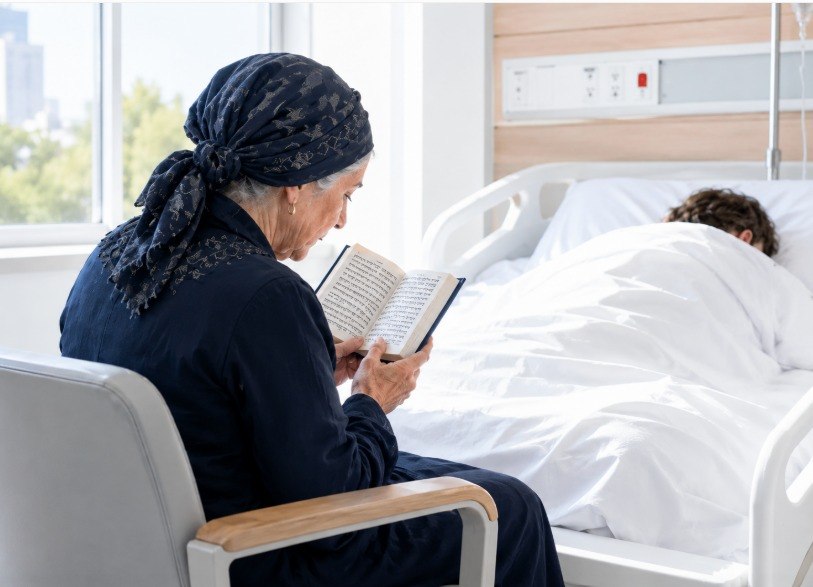
After completing the psalms, the following prayer is recited. Insert the person's Hebrew name and their mother's Hebrew name where indicated:
יְהִי רָצוֹן מִלְּפָנֶיךָ יְהוָה אֱלֹהֵינוּ וֵאלֹהֵי אֲבוֹתֵינוּ שֶׁתִּשְׁלַח מְהֵרָה רְפוּאָה שְׁלֵמָה מִן הַשָּׁמַיִם, רְפוּאַת הַנֶּפֶשׁ וּרְפוּאַת הַגּוּף לְ**[שֵׁם הַחוֹלֶה] בֶּן/בַּת [שֵׁם אִמּוֹ/אִמָּהּ]**, בְּתוֹךְ שְׁאָר חוֹלֵי יִשְׂרָאֵל
May it be Your will, O Lord our God and God of our ancestors, that You speedily send a complete recovery from Heaven — a healing of the soul and a healing of the body — to [the sick person's Hebrew name, son/daughter of their mother's Hebrew name], among all the sick of Israel.
Notes:
- The sick person is identified by their Hebrew first name and their mother's Hebrew name.
- For a man: "[Name] ben [mother's name]" | For a woman: "[Name] bat [mother's name]"
Tehillim for the Departed — Yahrtzeit and Mourning
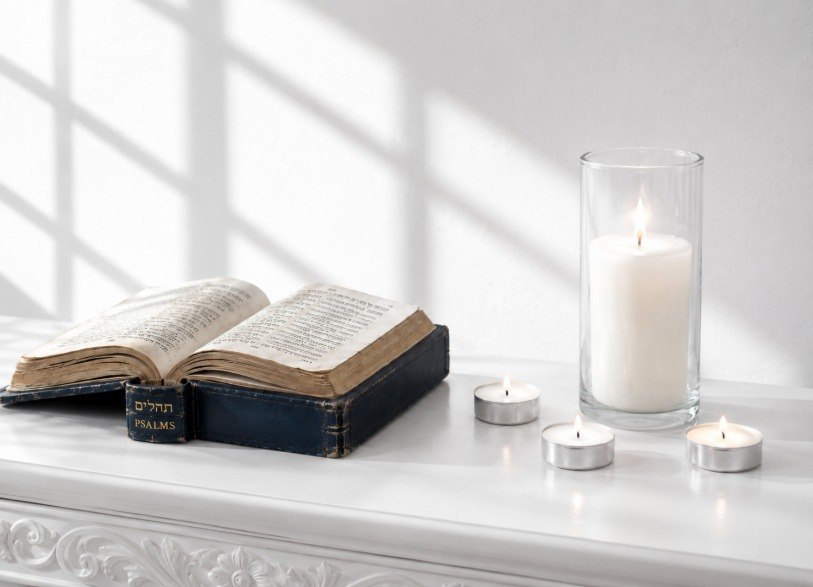 Open Tehillim and yahrtzeit candles on a memorial table
Tehillim for the Soul of the Departed (Illui Neshamah)
Tehillim is recited for a departed person throughout the period of mourning (shiva, shloshim, and the twelve months of kaddish), on the yahrtzeit (anniversary of passing), and during the Yizkor memorial service on Yom Kippur.
The specific custom most widely practiced is reciting Psalm 119 using the letter-sections corresponding to the Hebrew letters of the deceased's name. For example, for someone named David (דָּוִד), the sections beginning with ד (Dalet), then ו (Vav), then ד (Dalet) are recited. The letters of the word נְשָׁמָה (neshamah — soul) are also added after the name-letters.
Psalms Traditionally Recited for the Departed
Commonly recited: Psalms 16, 17, 23, 32, 90, 91, 104, 130. Many communities also recite the full daily Tehillim portion throughout the mourning period.
At the Graveside
The custom at many gravesites is to recite Psalm 91 and Psalm 16 ("You will not abandon my soul to the grave"), followed by El Maleh Rachamim and Kaddish. Psalm 23 is also widely recited at graveside services.
Reciting Tehillim — The Jewish Tradition
Daily Tehillim Cycles
The Monthly Tehillim Cycle: 150 psalms divided into 30 daily portions — one per day of the Hebrew month — allowing the entire Book of Psalms to be completed every month. Available in most printed Tehillim editions with each day's portion clearly marked.
Monthly cycle (30-day cycle): The most widely practiced format. On the 29th day of a short month, the final two portions are combined.
Weekly cycle (7-day cycle): 150 psalms divided into seven portions — one for each day of the week — completing the entire book weekly.
Daily recitation: Some individuals — particularly the very pious and those in times of special need — recite the entire Book of Psalms each day.
Tehillim Groups
A widespread practice is the formation of Tehillim groups (chaburot Tehillim), in which participants each take responsibility for a portion of the monthly cycle, ensuring the entire book is completed collectively each day. The Chida (Rabbi Chaim Yosef David Azulai, 18th century) formally described and encouraged this institution in his writings.
Reciting in Times of Need
- Illness — community gathers to recite on behalf of the sick, using the formula above.
- Communal danger — at times of national crisis, rabbinical authorities call for communal Tehillim recitation.
- For the soul of the departed — throughout the mourning period and on yahrtzeit.
- Erev Rosh Hashanah — in many communities, the entire Tehillim is recited communally before the New Year.
All 150 Psalms — Complete Index
Book 1: Psalms 1–41
1 — The two paths: the righteous who meditates on Torah vs. the wicked who are like chaff. Prologue to the entire book. 2 — God's anointed king against the nations; "Kiss the son, lest He be angry." Royal and messianic psalm. 3 — Morning prayer: David's flight from Absalom. "I lie down and sleep; I wake again, for the Lord sustains me." 4 — Evening prayer: "In peace I will lie down and sleep, for You alone, O Lord, make me dwell in safety." 5 — Morning petition for entry into God's house; prayer against deceivers and falsehood. 6 — First penitential psalm: "Have mercy on me, O Lord, for I am faint; heal me." 7 — Plea for divine justice against persecutors. 8 — Wonder at creation and human dignity: "What is man that You are mindful of him?" 9–10 — Unified acrostic psalm praising God's justice; prayer against the wicked who oppress the poor. 11 — Confidence in God when the wicked threaten: "The Lord is in His holy Temple." 12 — Lament over a world of deceivers; God's promise to protect the poor. 13 — "How long, O Lord? Will You forget me forever?" — despair transformed into trust. 14 — "The fool says in his heart there is no God." Paralleled by Psalm 53. 15 — "Who may dwell on Your holy mountain?" — an ethical portrait of the righteous person. 16 — "You will not abandon my soul to the grave" — trust in God as the psalmist's eternal portion. 17 — Righteous man's prayer for vindication: "Keep me as the apple of Your eye." 18 — David's great hymn of thanksgiving after all his enemies were defeated (parallel in 2 Samuel 22). 19 — Two poems: the heavens declare God's glory; then praise of the Torah as perfect, reviving the soul. 20 — Community prayer for the king in battle; widely recited for those in distress. 21 — Thanksgiving for the king's military victory. 22 — "My God, my God, why have You forsaken me?" — great lament turning to universal praise. 23 — "The Lord is my shepherd; I shall not want." Full Hebrew text and English above. 24 — "The earth is the Lord's and all it contains." Recited on Sunday. 25 — Acrostic psalm of penitence and guidance: "For Your name's sake, O Lord, pardon my iniquity." 26 — Protestation of integrity: "I have walked in my integrity." 27 — "The Lord is my light and my salvation." Recited daily from Elul through Hoshana Rabbah. 28 — Prayer not to be swept away with the wicked; praise when God answers. 29 — "Give unto the Lord, O sons of the mighty" — the seven thunders. Recited on Shabbat morning. 30 — Thanksgiving after rescue from illness and near-death. Recited at the opening of daily morning prayer. 31 — "Into Your hands I commend my spirit" — trust in God amid suffering. 32 — "Happy is one whose transgression is forgiven." Second penitential psalm. 33 — Praise to the Creator who rules history; no king is saved by his army. 34 — Acrostic: "I will bless the Lord at all times." Practical wisdom and trust. 35 — Lament against enemies who persecute without cause. 36 — The wickedness of sinners vs. God's vast lovingkindness. 37 — "Delight in the Lord and He will give you the desires of your heart." Wisdom psalm. 38 — Third penitential psalm: severe suffering; confession of sin. 39 — The brevity of life before God: "Make me know my end." 40 — Praise for deliverance: "I delight to do Your will, my God." 41 — "Blessed is one who considers the poor." Final psalm of Book 1.
Book 2: Psalms 42–72
42–43 — Unified psalm: "As the deer pants for streams of water, so my soul pants for You, O God." Exile and longing. 44 — National lament: "Rouse Yourself! Why do You sleep, O Lord?" 45 — Royal wedding ode: "My heart overflows with a noble theme." 46 — "God is our refuge and strength, a very present help in trouble." 47 — "Clap your hands, all peoples." Recited seven times before the shofar on Rosh Hashanah. 48 — Praise of Zion, the city of God. 49 — Wisdom psalm on the futility of wealth: "Man is like the beasts that perish." 50 — God summons Israel to true worship: "Offer to God a sacrifice of thanksgiving." 51 — "Have mercy on me, O God" — David's repentance. Greatest penitential psalm. 52 — Against the boastful wicked: "But I am like a green olive tree in the house of God." 53 — Parallel of Psalm 14 with Elohim instead of HaShem. 54 — Petition for deliverance from enemies who do not set God before them. 55 — "Cast your burden on the Lord and He will sustain you." Lament over betrayal. 56 — "When I am afraid, I will trust in You." 57 — Morning prayer: "Awake, my glory; I will awaken the dawn." 58 — Prayer against unjust rulers and corrupt judges. 59 — Prayer for deliverance from violent enemies: "But I will sing of Your strength." 60 — National lament after military defeat: "Through God we shall do valiantly." 61 — "Lead me to the rock that is higher than I." 62 — "My soul waits in silence for God alone." Steadfast trust. 63 — "O God, You are my God; eagerly I seek You." Morning devotion. 64 — Petition against those who plot in secret. 65 — Hymn to God's bounty in nature: "You crown the year with Your goodness." 66 — "Shout joyfully to God, all the earth." National and personal thanksgiving. 67 — "May God be gracious to us and bless us." 68 — Processional hymn: "Let God arise, let His enemies be scattered." 69 — Intense lament: "Save me, O God, for the waters have come up to my neck." 70 — Brief urgent plea for help (parallel to Psalm 40:14–18). 71 — Prayer of an elderly man: "Do not cast me off in the time of old age." 72 — Prayer for the righteous king: "May his name endure forever."
Book 3: Psalms 73–89
73 — "Truly God is good to Israel" — the problem of the prosperity of the wicked; resolved in the sanctuary. 74 — National lament over the destruction of the Temple. 75 — "God is the judge; He puts down one and lifts up another." 76 — "In Judah God is known; His name is great in Israel." 77 — "My voice calls to God, and He will hear me." Lament and meditation on past miracles. 78 — Great historical psalm: God's faithfulness through Israel's wilderness rebellions. 79 — National lament over the destruction of Jerusalem. 80 — "Restore us, O God; cause Your face to shine, and we shall be saved." 81 — Call to worship; God's plea for Israel to walk in His ways. 82 — "God stands in the divine assembly" — rebuke of unjust judges. 83 — Prayer against a coalition of Israel's enemies. 84 — "How lovely is Your dwelling place, O Lord of Hosts!" — longing for the Temple. 85 — Prayer for national restoration: "Kindness and truth have met; righteousness and peace have kissed." 86 — Personal lament and petition: "Teach me Your way, O Lord." 87 — Praise of Zion as the mother city of all nations. 88 — The darkest psalm — unrelieved lament with no resolution. 89 — The great Davidic covenant psalm: praise followed by lament over apparent failure. Closes Book 3.
Book 4: Psalms 90–106
90 — "A prayer of Moses" — "Lord, You have been our dwelling place in all generations." 91 — "He who dwells in the shelter of the Most High." Full Hebrew text and English above. 92 — "A Song for the Shabbat Day." Recited every Shabbat morning. 93 — "The Lord reigns; He is clothed with majesty." Enthronement psalm. 94 — "O Lord, God of vengeance, shine forth!" Prayer against the wicked. 95 — "Come, let us sing to the Lord." Recited on Friday evening in Kabbalat Shabbat. 96 — "Sing to the Lord a new song." Kabbalat Shabbat. 97 — "The Lord reigns; let the earth rejoice." Kabbalat Shabbat. 98 — "Sing to the Lord a new song, for He has done wonders." Kabbalat Shabbat. 99 — "The Lord reigns; let the peoples tremble." Kabbalat Shabbat. 100 — Mizmor L'Todah: "Shout joyfully to the Lord." Psalm of thanksgiving; recited on weekday mornings. 101 — David's pledge of righteous rule: "I will walk in the integrity of my heart." 102 — "A prayer of the afflicted man" — intense lament with hope for Zion's restoration. 103 — "Bless the Lord, O my soul" — praise for forgiveness, healing, and God's compassion. 104 — Magnificent praise of God as Creator: a survey of all creation. 105 — God's covenant faithfulness from Abraham through the Exodus. 106 — "We have sinned with our fathers." Israel's history of rebellion and God's mercy. Closes Book 4.
Book 5: Psalms 107–150
107 — "Give thanks to the Lord for He is good" — four redemptions: from desert, prison, illness, and sea. 108 — Composite psalm from Psalms 57 and 60; morning confidence. 109 — Prayer against a false accuser: "But I am prayer." 110 — "The Lord said to my lord: Sit at My right hand." Royal and priestly oracle. 111 — Acrostic praise of God's works: "The beginning of wisdom is fear of the Lord." 112 — Acrostic portrait of the righteous man: "He will not be afraid of evil tidings." 113 — First Hallel psalm: "Praise, O servants of the Lord" — God raises the poor from the dust. 114 — Hallel: "When Israel went out from Egypt" — nature trembles before God. 115 — Hallel: "Not to us, O Lord, not to us, but to Your name give glory." 116 — Hallel: "I love the Lord because He hears my voice." Thanksgiving for rescue from death. 117 — Hallel: The shortest psalm in the Bible — 2 verses. 118 — Hallel: Great thanksgiving for victory: "The stone the builders rejected has become the chief cornerstone." 119 — The longest psalm (176 verses): alphabetical acrostic of praise to the Torah. Recited for the elevation of the departed soul, using letter-sections corresponding to the letters of the deceased's Hebrew name. 120 — First Song of Ascent (Shir HaMaalot): "I called to the Lord in my distress and He answered me." 121 — "I lift my eyes to the mountains." Full Hebrew text and English above. 122 — "I was glad when they said to me: Let us go to the house of the Lord." 123 — "I lift my eyes to You" — prayer for mercy amid contempt. 124 — "If the Lord had not been on our side" — thanksgiving for escape. 125 — "Those who trust in the Lord are like Mount Zion." Steadfast protection. 126 — "When the Lord returned the captives of Zion, we were like dreamers." Recited before Birkat HaMazon on weekdays. 127 — "Unless the Lord builds the house, its builders labor in vain." Attributed to Solomon. 128 — "Happy is everyone who fears the Lord" — blessing for family and home. 129 — Israel's testimony of survival: "Much have they afflicted me from my youth — yet they have not prevailed." 130 — "Out of the depths I call to You." Full Hebrew text and English above. 131 — "My heart is not proud" — brief psalm of childlike humility. 132 — Prayer for the fulfillment of God's covenant with David and the Temple. 133 — "How good and pleasant it is for brothers to dwell together in unity." 134 — "Bless the Lord, all servants of the Lord who stand by night." Shortest of the Songs of Ascent. 135 — Praise of God above all gods; historical survey of Exodus miracles. 136 — Hallel HaGadol: "Give thanks to the Lord for He is good — His steadfast love endures forever." Each of the 26 verses repeats this refrain. 137 — "By the rivers of Babylon we sat and wept when we remembered Zion." Great lament of exile. 138 — "I will give You thanks with all my heart." Thanksgiving before kings. 139 — "O Lord, You have searched me and known me." The most profound meditation on God's omniscience in all of Scripture. 140 — Petition against violent and treacherous men. 141 — Evening prayer: "May my prayer be set before You as incense." 142 — "When David was in the cave" — prayer of utter isolation: "I pour out my complaint before Him." 143 — Seventh penitential psalm: "My spirit grows faint within me." 144 — Prayer for victory and national blessing: "Happy are the people whose God is the Lord." 145 — Ashrei: alphabetical acrostic of praise. "The Lord is good to all." Recited three times daily. 146 — "Praise the Lord, O my soul" — trust in God, not in princes or mortal men. 147 — God rebuilds Jerusalem, heals the brokenhearted, and governs the forces of nature. 148 — Universal call to praise from every corner of creation — angels, sun and moon, mountains, kings, children. 149 — "Sing to the Lord a new song; His praise in the assembly of the faithful." 150 — The grand finale: "Let all souls praise God. Hallelujah." The crescendo of the entire book.
How to Read Psalms — A Practical Guide
Before You Begin — The Opening Declaration
Most Tehillim editions include a brief introductory declaration of intent recited before beginning:
הִנְנִי מוּכָן וּמְזֻמָּן לְקַיֵּם מִצְוַת עֲשֵׂה שֶׁל וּבוֹ תִדְבָּק, עַל יְדֵי אֲמִירַת תְּהִלִּים.
I am ready and prepared to fulfill the positive commandment of "and to Him you shall cleave" through the recitation of Psalms.
Intention (Kavanah)
The most important element in reciting Tehillim is kavanah — directing one's heart to God. The Vilna Gaon wrote that Tehillim recited with concentration and attention to the meaning of the words is immeasurably more powerful than recitation without awareness. Before beginning, have clearly in mind the purpose: for healing, for a specific person, for repentance, or for general closeness to God.
Language
Tehillim is ideally recited in the original Hebrew. However, reciting in one's own language with genuine understanding is always preferable to reciting Hebrew without comprehension. Many bilingual editions are available; Sefaria.org provides free access to all 150 psalms in Hebrew and English.
Posture and Setting
Tehillim may be recited anywhere and at any time — walking, sitting, during day or night. A synagogue or place of cleanliness and quiet is preferred when possible.
Sitting vs. Standing
There is no halachic requirement to stand while reciting Tehillim. Sitting is the standard practice; the posture of rest is considered appropriate for the deep, reflective engagement that Tehillim invites.
At Night
The prevalent mainstream Ashkenazi practice permits recitation of Tehillim at night without restriction. Many Sephardic communities are more careful on this point, particularly past midnight. Follow community custom or consult a rabbi.
The Closing Yehi Ratzon
Most Tehillim editions include a closing prayer to be recited after completing a portion or the entire book:
יְהִי רָצוֹן מִלְּפָנֶיךָ יְהוָה אֱלֹהֵינוּ וֵאלֹהֵי אֲבוֹתֵינוּ שֶׁיִּהְיוּ פְּסוּקֵי תְהִלִּים שֶׁאָמַרְנוּ לְפָנֶיךָ כְּאִלּוּ אֲמָרָם דָּוִד מֶלֶךְ יִשְׂרָאֵל עָלָיו הַשָּׁלוֹם, וּבִזְכוּתוֹ וּבִזְכוּת הַשִּׁירִים וְהַתִּשְׁבָּחוֹת שֶׁאָמַר לְפָנֶיךָ תְּכַפֵּר לָנוּ עַל כָּל עֲוֹנוֹתֵינוּ.
May it be Your will, O Lord our God and God of our ancestors, that the verses of Psalms we have recited before You be considered as if they were spoken by King David, may peace be upon him; and through his merit and the merit of the songs and praises that he recited before You, may You forgive all our transgressions.
The Psalms in Jewish Liturgy
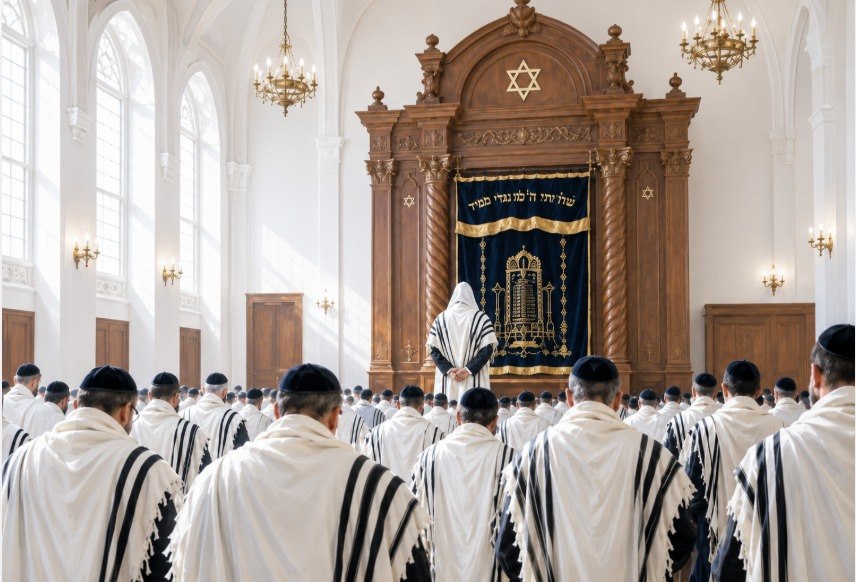 Jewish congregation praying Shacharit in a synagogue
Pesukei D'Zimra (Verses of Song): The preparatory section of Shacharit is built almost entirely from Psalms — including Psalm 30 (introduction), Psalm 84, Psalm 145 (Ashrei), and then Psalms 146, 147, 148, 149, and 150 in sequence. On Shabbat and festivals, Psalm 136 (Hallel HaGadol) is added.
Ashrei (Psalm 145): Recited three times daily. The Talmud (Berachot 4b) teaches that whoever recites it three times daily is assured of a place in the World to Come.
Kabbalat Shabbat: Friday evening — Psalms 95, 96, 97, 98, 99 (enthronement psalms), Psalm 29, and then Psalms 92 and 93.
Hallel: Psalms 113–118 — recited on Rosh Chodesh, the three pilgrimage festivals, and all eight days of Hanukkah.
Hallel HaGadol (Psalm 136): Its 26-verse refrain is recited on Shabbat and festival mornings and forms part of the Passover Haggadah Seder.
Daily Psalms (Shir Shel Yom): Each day has its own psalm — as the Levites sang in the Temple:
| Day | Psalm | Opening |
|---|---|---|
Sunday | Psalm 24 | "The earth is the Lord's and all it contains" |
Monday | Psalm 48 | "Great is the Lord and highly praised in the city of our God" |
Tuesday | Psalm 82 | "God stands in the divine assembly" |
Wednesday | Psalm 94 | "O Lord, God of vengeance, shine forth" |
Thursday | Psalm 81 | "Sing joyfully to God our strength" |
Friday | Psalm 93 | "The Lord reigns; He is clothed with majesty" |
Shabbat | Psalm 92 | "A Song for the Shabbat Day" |
Bedtime Shema: Psalm 91 is recited as part of the bedtime Shema.
Before Rosh Hashanah Shofar: Psalm 47 is recited seven times before the shofar blowing.
Psalm 20 (Ya'ancha): Recited on Monday and Thursday after the Torah reading, and widely recited for those in need.
Songs of Ascent (Psalms 120–134): Recited in various liturgical contexts, including in many Ashkenazi communities from after Sukkot through Passover, between Mincha and Maariv on Shabbat afternoons.
Watch: Tehillim Video Library
Classical Sources:
- Babylonian Talmud, Bava Batra 14b–15a — the ten authors of Tehillim; David's role as compiler.
- Babylonian Talmud, Berachot 4b — the special merit of reciting Psalm 145 three times daily.
- Midrash Tehillim (Shocher Tov) — midrashic commentary on all 150 psalms.
- Midrash Bereishit Rabbah 1:4 — the five books of Psalms parallel to the five books of Torah.
- Mishnah Sukkah 5:4 — the Levites and the fifteen Songs of Ascent.
- Talmud Yerushalmi, Shabbat 16:1 — recitation of Tehillim on Shabbat.
- Rambam (Maimonides), Mishneh Torah, Hilchot Tefillah — the structure of daily prayer incorporating Psalms.
- Shulchan Aruch, Orach Chayim, chapters 51–54 — laws of Pesukei D'Zimra and the daily psalms.
- Shulchan Aruch, Yoreh De'ah 335 — visiting the sick and praying for recovery; the formula for a sick person's name.
- Rabbi Moshe Isserles (Rema), glosses to the Shulchan Aruch — Ashkenazi liturgical customs.
- Rabbi Chaim Yosef David Azulai (Chida), Moreh B'Etzba — the monthly Tehillim cycle and the institution of Tehillim groups.
Contemporary References:
- Sefaria (sefaria.org) — full Hebrew text of all 150 psalms with classical commentaries (Rashi, Radak, Metzudat David, Ibn Ezra) and translations.
- Chabad.org — articles on Tehillim customs, daily cycle, specific psalms, and the bedtime Shema.
- My Jewish Learning (myjewishlearning.com) — overview articles on the Book of Psalms.
- Orthodox Union (OU.org) — liturgical use of Psalms.
- Encyclopaedia Judaica — entries on Psalms, Tehillim, Hallel, Songs of Ascent, penitential psalms, and Psalm 119.
- ArtScroll Tehillim — widely used English-Hebrew edition with introductions and commentary.
For guidance on specific Tehillim recitations for individual situations — illness, mourning, yahrtzeit, or communal need — consult a qualified rabbi or a comprehensive Tehillim edition with halachic notes.
Questions & Answers
+What are the Psalms?
+Who wrote the Book of Psalms?
+How many Psalms are there?
+What is the longest psalm?
+What is the shortest psalm?
+What is the difference between Psalms and Tehillim?
+Which psalms are recited for healing?
+What is the prayer to say for a sick person?
+Which psalm is best for protection?
+What is Ashrei?
+What are the Songs of Ascent?
+What is the monthly Tehillim cycle?
+Which psalms are recited on Shabbat?
+What are the seven penitential psalms?
+Which psalm is recited at Tashlich?
+How do you recite Tehillim for the departed?
+Can Tehillim be recited at night?
+What is Psalm 119 about?
+What does "Selah" mean in Psalms?
+Why are the Psalms divided into five books?
+Why do Jews recite Psalms (Tehillim)?

