

Parents and Children
The Hidden Cost of Shame: When Pride Prevents Us from Accepting Help
How shame can cloud judgment, keep people trapped in hardship, and prevent them from receiving the support they desperately need
- Rebbetzin Penina Leshem
- | Updated
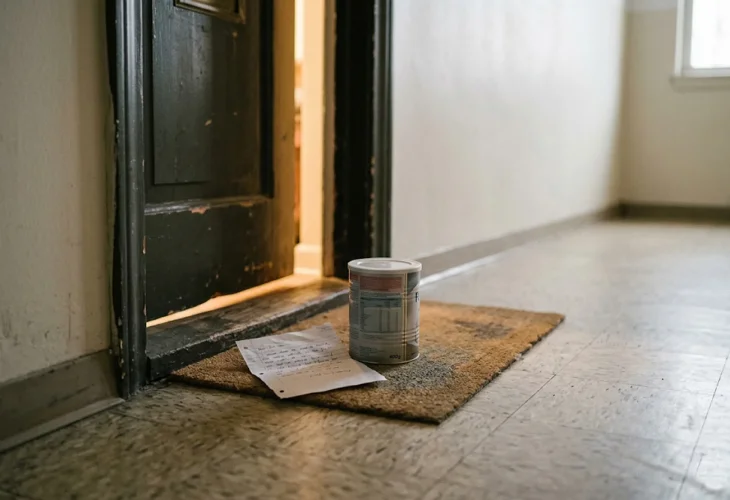
I was still a young elementary school girl when my father's phone rang.
My father, Rabbi Zamir Cohen, answered the call. On the other end of the line was the sound of a crying baby.
I could not hear what the caller was saying. I could not hear my father's response either. But the moment he hung up, he placed some money in my hand and asked me to run to the nearest grocery store and buy a container of infant formula.
"Quickly," he urged, as he scribbled an address on a small piece of paper. The family lived only a few streets away.
"Run there, knock on the door, and bring them the formula," he said.
Even with my child's understanding, I grasped what was happening. A baby was crying from hunger, and his mother had no formula to feed him. There was no money. The father had called for help, urgently.
But the story did not end there.
With the rustling bag in my hand and the long-awaited formula inside, I hurried to the family's home. Even before reaching the door, I could hear the baby crying. I knocked quickly.
The door opened just a crack.
The mother stood there and quietly but firmly said, "Thank you, but we're managing. We don't need any help."
And then she closed the door.
I remained standing outside.
The bag was still in my hand, and my heart was aching for the hungry baby on the other side of the door.
That was my first encounter with good people who genuinely needed help but could not bring themselves to accept it.
Because of shame.
At the time, I had no idea that as an adult I would encounter countless stories just like this one.
The Hidden Power of Shame
Shame.
How much damage can be caused by that one emotion.
Shame has a way of clouding our judgment and pushing us toward decisions that are neither wise nor healthy, all in an effort to protect ourselves from feeling vulnerable.
Sometimes we would rather suffer than allow someone to see that we are struggling.
Sometimes we would rather go without than admit that we need help.
And often, the people who pay the highest price are not only ourselves, but those who depend on us.
A Conversation I Will Never Forget
Several years ago, a sweet eleventh-grade student knocked on the door of my office at school.
She quietly closed the door behind her, sat down across from me, and suddenly burst into tears.
Before continuing, I should mention how important it is for principals and teachers to build genuine relationships with their students. Young people need to know there is someone they can turn to when life becomes overwhelming, someone they trust enough to share their struggles with.
Through her tears, she said:
"Principal, I don't know if this is something you can help with, but we have no food at home. None."
As the story unfolded, I learned that her mother had been hospitalized due to a serious illness. Her father was desperately trying to keep the family afloat on his own, but he was overwhelmed.
There was bread in the house.
Only bread.
No soup.
No cooked meals.
No warm dinners.
No cakes or homemade treats.
And this had been going on for more than a year.
As we continued talking, I realized that the younger children had essentially been without proper care for over a year as well. Laundry was piling up. The house was disorganized. There was no routine, no structure, and no individual attention for the children.
The family was falling apart.
"Thank You, But No Thank You"
I called the father.
With genuine sensitivity and understanding, I asked for his permission to arrange temporary support: financial assistance, hot meals, and practical help around the house until, God willing, his wife recovered and returned home.
He refused.
Firmly.
Determinedly.
"Thank you, but no thank you," he said. "I'll manage. And whatever I can't manage, we'll deal with. I can't accept charity."
I hung up the phone with a heavy heart.
Once again, I saw how powerful shame can be.
Here was a devoted father, trying his best under impossible circumstances. Yet his fear of receiving help was preventing him from accepting exactly what his family needed.
When Pride Becomes a Burden
There is a healthy kind of dignity that every person deserves to preserve.
But there is also a form of shame that becomes destructive. It convinces us that accepting help is a weakness. It tells us that struggling alone is more honorable than allowing others to support us. It whispers that we must appear strong, even when everything is falling apart.
The tragedy is that this kind of shame often prevents us from making the most responsible and compassionate choices for ourselves and for those we love.
Sometimes the strongest thing a person can do is say:
"I need help."
And sometimes the greatest act of courage is allowing someone else to carry part of the burden.
Why does this happen? Why does shame have such power over us? And how can we learn to overcome it?
That, God willing, is a discussion for another article.

