

Behind the News
Iran’s Goal Is Survival—and U.S. Pressure Has Not Forced It to Yield
Recent strikes have inflicted heavy damage, but intelligence assessments suggest Iran remains focused on preserving the regime and outlasting Washington
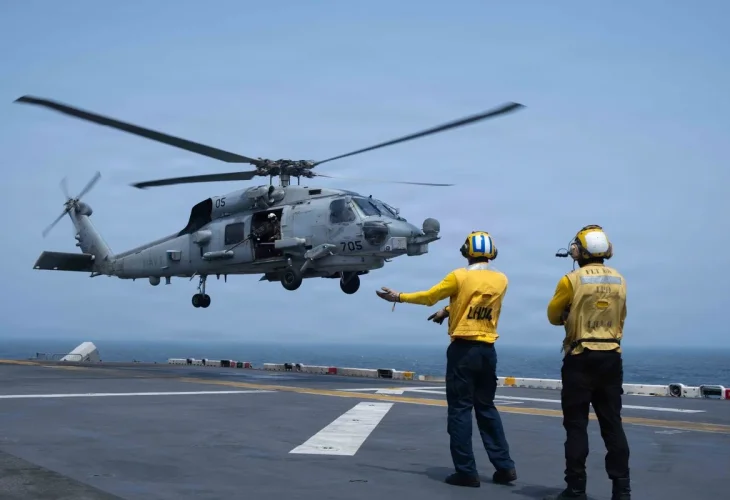 Centcom
The United States completed its tenth consecutive round of strikes against Iranian targets on Monday, but new reporting suggests American officials remain doubtful that additional military pressure will quickly force Iran to surrender.
The conflict is increasingly becoming a contest between two different definitions of success. Washington is trying to stop Iranian attacks, destroy missile and nuclear capabilities, protect American forces and restore freedom of navigation. Iran’s leadership has a narrower objective: preserve the Islamic Republic, retain enough military power to impose costs and avoid accepting terms it considers existential.
The Washington Post reported yesterday that current and former U.S. officials, along with intelligence assessments, have cast doubt on the assumption that expanding the strikes will compel Iran to capitulate. Jonathan Panikoff, a former U.S. deputy national intelligence officer for the Middle East, said the regime has repeatedly shown that its “number one priority” is its own survival.
An earlier CIA assessment, first reported in early May, reached a related conclusion about Iran’s economic endurance. The analysis reportedly estimated that Iran could withstand a U.S. naval blockade for at least 90 to 120 days, and possibly longer, before experiencing substantially deeper economic hardship.
The assessment did not reportedly predict that the regime would collapse after four months. It measured how long Iran could absorb the economic effects of the blockade before conditions became significantly worse. Severe hardship, however, would not necessarily force the government to surrender.
Iran’s governing structure has continued functioning despite the deaths of senior leaders and major damage to military infrastructure. The leadership completed a rapid succession process, while the IRGC and other security institutions retained control over the state, communications networks and internal enforcement.
Earlier U.S. intelligence assessments also found that Iran’s government was not in imminent danger of collapse. The opposition remains divided and has not demonstrated that it can replace the ruling system or take control of the institutions responsible for security and administration.
Iran has preserved control through far more than arrests and internet restrictions. Its security forces have repeatedly opened fire on protesters, killed people in the streets, carried out executions and imprisoned suspected opponents. The regime has shown that it is willing to use lethal force against its own population to prevent unrest from threatening the institutions that keep it in power.
The regime has also retained enough military capability to continue attacking American forces and regional targets. Over the past two weeks, Iranian missiles and drones have struck or threatened U.S. bases, shipping routes and energy facilities, killing and wounding American troops despite repeated U.S. strikes.
Estimates of Iran’s remaining missile inventory differ. Some intelligence reporting suggested that Iran retained a substantial portion of its prewar arsenal and mobile launchers, while the commander of U.S. Central Command disputed the specific percentages. The available evidence nevertheless shows that Iran has been weakened but remains capable of extending the conflict and imposing additional costs.
The economic pressure is also growing. Restrictions on oil exports and shipping are cutting into Iran’s main source of foreign currency, while inflation, shortages and infrastructure damage are placing additional strain on the country.
Iran, however, used the earlier ceasefire period to move large quantities of oil and build a temporary financial buffer. It has also relied on sanctions-evasion networks developed over years of international pressure, potentially extending the period during which the government can continue operating.
At the same time, Iran and its allies are increasing the cost of the war for other countries. Yesterday, the Houthis announced a maritime blockade against Saudi oil shipments through Bab el-Mandeb, while Iranian attacks and threats around the Gulf continued to disrupt shipping and energy markets.
These actions allow Iran to pressure Washington, Gulf states and the global economy even while its own military and economy suffer damage.
U.S. officials on the other hand, have described several overlapping goals, including defending American forces, halting Iranian missile and drone attacks, degrading Iran’s military and nuclear programs, reopening strategic waterways and forcing Iran back into negotiations. Destroying equipment, however, is not the same as securing political concessions from a regime whose primary objective is remaining in power.
Qatar is currently advancing a proposed ten-day pause following the latest escalation. Iran has acknowledged receiving ceasefire proposals, while the United States says diplomacy remains possible if Iranian attacks stop.
The central question is whether American pressure can force meaningful concessions before Iran’s economic position deteriorates further, or whether Iran can keep the regime intact long enough for the regional, military and political costs to push Washington toward another pause.

