

Health and Nutrition
White Spots on Your Nails? Here's What They Really Mean
Many people blame calcium deficiency, but the real cause is usually something else entirely.
- Tehila Cohen
- | Updated
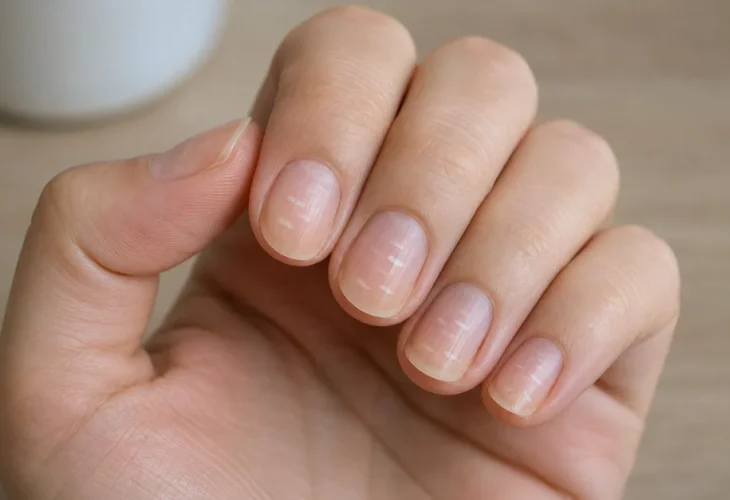
Most of us have noticed them at some point: tiny white spots appearing on our fingernails seemingly out of nowhere. Many people immediately assume it's a sign of a calcium deficiency, but in reality, that's usually not the case.
In fact, these little marks are often completely harmless and have a much simpler explanation. Understanding what causes them, and when they might signal something more serious, can help you know when to relax and when to pay closer attention.
What Are Those White Spots?
The medical term for white spots on the nails is leukonychia, and it's an extremely common phenomenon.
In most cases, the spots develop after minor trauma to the nail or the nail matrix, the area where the nail is formed and grows. The injury may be so small that you don't even remember it happening.
A minor bump, repeated pressure on the nail, an aggressive manicure, or removing gel polish improperly can all lead to the appearance of white spots weeks later. Because nails grow slowly, the marks often show up long after the original injury occurred.
The good news is that these spots are usually harmless. As the nail grows, they gradually move toward the tip of the nail and eventually disappear.
When Should You Be Concerned?
While occasional white spots are generally nothing to worry about, other nail changes deserve attention.
If you notice changes in the shape, thickness, or texture of the nail, persistent discoloration, pain, crumbling, or the nail lifting away from the nail bed, it may indicate an underlying condition that should be evaluated by a healthcare professional.
In these cases, the issue is usually not related to simple leukonychia.
Could It Be Nail Fungus?
One common cause of nail changes is fungal infection.
Nail fungus occurs most often in the toenails and tends to thrive in warm, moist environments. Unlike harmless white spots, fungal infections typically cause nails to become thickened, yellowish, brittle, rough, or crumbly over time.
Because nail fungus generally does not resolve on its own, proper medical treatment is often needed to eliminate the infection and prevent it from spreading.
The Effect of Gel Polish on Nail Health
Gel manicures have become increasingly popular, but repeated treatments can sometimes weaken the nails over time.
The problem is not usually the gel polish itself, but the way it is applied and removed. Excessive filing, harsh chemical products, and peeling off gel polish can damage the nail surface and increase the risk of breakage.
Many people believe nails need to "breathe," but nails are actually made of dead cells and do not require oxygen. However, the nail matrix and the surrounding skin can become irritated or damaged by repeated aggressive treatments.
For this reason, experts recommend having gel polish removed professionally whenever possible and allowing occasional breaks between treatments to help maintain healthy nails.
Can Stress and Nutrition Affect Your Nails?
Sometimes, changes in the nails can reflect what's happening elsewhere in the body.
Stress, poor nutrition, and certain vitamin or mineral deficiencies may affect nail growth and appearance. While white spots alone are rarely a sign of a nutrient deficiency, persistent changes in nail health can occasionally provide clues that something is out of balance.
Because nails grow slowly, they often reflect changes that occurred weeks or even months earlier.
Simple Ways to Protect Your Nails
Healthy nails start with good daily habits.
Avoid peeling off nail polish or gel products, wear gloves when using strong cleaning chemicals, and keep your feet dry after bathing or exercising. If you regularly get gel manicures, consider giving your nails occasional breaks between treatments.
Most importantly, pay attention to ongoing changes. If a nail consistently changes color, shape, or texture, or if the problem does not improve over time, it's worth consulting a dermatologist for a professional evaluation.
The Bottom Line
In most cases, those little white spots on your nails are nothing more than evidence of a minor injury that happened weeks earlier. They're common, harmless, and usually disappear as the nail grows.
However, your nails can also provide valuable clues about your overall health. Knowing the difference between a harmless spot and a sign of something more serious can help you keep both your nails and your health in good condition.

