

The Three Weeks (Bein HaMetzarim)
The Three Weeks: 25 Surprising Facts You May Not Know
As Tisha B'Av approaches, explore fascinating facts from Chazal about Jerusalem, the Beit HaMikdash, and the people who witnessed its fall.
- Rabbi Yaakov Ma'avri
- | Updated
 (Photo: shutterstock)
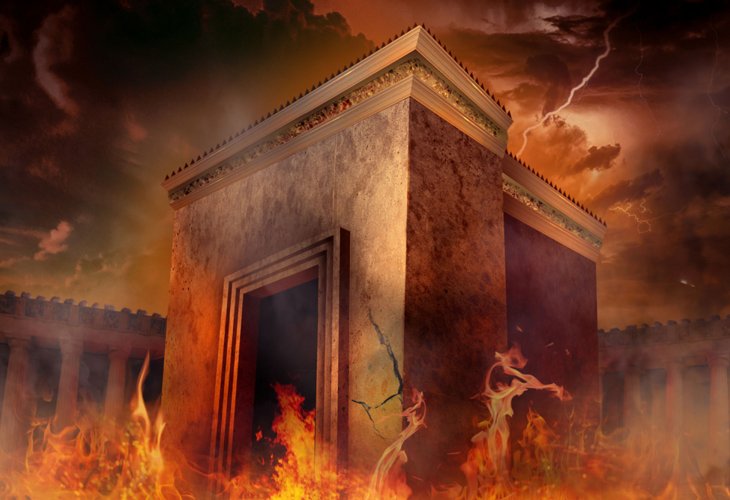
The Seventeenth of Tammuz marks the beginning of the Three Weeks, a period of mourning that culminates with Tisha B'Av, the day both the First and Second Temples were destroyed. While many are familiar with the major events of this season, Chazal recorded dozens of lesser-known stories and traditions that shed new light on the Temple, Jerusalem, and the people who lived through these dramatic chapters of Jewish history.
Here are 25 fascinating facts you may never have heard before.
1. Which Fast Takes Priority?
If a person's medical condition does not allow them to fast on both the Seventeenth of Tammuz and Tisha B'Av, the preferred fast is the Seventeenth of Tammuz. On Tisha B'Av, however, they should avoid eating as they normally would and limit themselves as much as their health permits.
2. Can You Order Furniture During the Three Weeks?
In general, ordering new furniture during the Three Weeks is discouraged, even if delivery will only take place after Tisha B'Av. An exception may be made when delaying the purchase would result in a significant financial loss.
3. Why Did Nebuchadnezzar Live Among the Animals?
Sefer Chasidim explains that Nebuchadnezzar lived among the animals for seven years because he destroyed the Beit HaMikdash, whose construction had taken seven years.
4. Which Major City Was Destroyed Before the First Temple?
According to traditional sources, Nineveh was destroyed 19 years before the destruction of the First Beit HaMikdash.
5. How Skilled Were People Before the Destruction?
A Midrash relates that a baker once told a mother he could teach her son to make 500 different kinds of wheat bread within five years, illustrating the remarkable craftsmanship that existed in those times.
6. What Material Was Lost After the Destruction?
The Jerusalem Talmud describes a special type of white glass that no longer existed after the destruction of the Temple. According to the description, it was so flexible that it could fold without breaking.
7. Why Didn't Nebuchadnezzar Want to Destroy the Temple Himself?
A Midrash teaches that Nebuchadnezzar feared punishment from Hashem for destroying the Beit HaMikdash, so he sent his general, Nevuzaradan, to carry out the task instead.
8. Did Most Jews Return During the Second Temple Era?
According to the Chida, most Jews remained in the Diaspora during the Second Temple period, living in places such as Babylonia, Spain, and Yemen rather than returning to the Land of Israel.
9. What Did Nebuchadnezzar Think About Repentance?
Nebuchadnezzar reportedly warned his generals that the God of Israel accepts sincere repentance and instructed them not to give the Jewish people time to pray and return to Hashem.
10. How Old Was Daniel When He Was Taken to Babylon?
Traditional sources state that Daniel was only 14 years old when he was taken captive by Nebuchadnezzar.
11. How Did Nevuzaradan Increase Marriage Among the Jews?
According to the Midrash, Jewish women sought marriage during the siege because Nevuzaradan had instructed his soldiers not to harm married women.
12. How Large Was Bar Kochba's Army?
The Jerusalem Talmud describes Bar Kochba as commanding an army of hundreds of thousands of soldiers during the revolt against Rome.
13. What Was Bar Kochba's Real Name?
His actual name was Shimon bar Koziba. The name "Bar Kochba" was later associated with him because of messianic expectations surrounding his leadership.
14. How Strong Was Bar Kochba?
Various Midrashic accounts describe extraordinary feats of strength attributed to Bar Kochba, portraying him as an exceptionally powerful warrior.
15. Who Ultimately Defeated Him?
The Talmud records that Bar Kochba's downfall came after leading sages determined that he did not possess the qualities expected of the Messiah.
16. Did the Ten Martyrs Actually Die?
Some lesser-known sources suggest that although the Ten Martyrs underwent sentencing and experienced the terror of impending execution, events unfolded differently than commonly assumed.
17. What Did Jerusalem's Defenders Eat During the Siege?
One source describes defenders boiling straw for food while continuing to fight from Jerusalem's walls during the siege.
18. Who Accompanied Vespasian to Jerusalem?
Traditional accounts mention that another regional ruler accompanied Vespasian when he arrived to besiege Jerusalem.
19. Why Did Titus Replace Vespasian?
When Vespasian returned to Rome, Titus took command of the campaign and continued the siege against Jerusalem.
20. What Image Appeared in the Second Temple?
Some historical traditions claim that Persian influence during the Second Temple period led to the placement of an image representing Shushan within the Temple complex.
21. Which Stones Still "Weep" for the Temple?
A fascinating tradition relates that copper columns connected to the Beit HaMikdash continued to "weep" every year on Tisha B'Av.
22. Who Was Nebuchadnezzar's Stepfather?
According to Midrashic sources, Hiram, king of Tyre, married Nebuchadnezzar's mother.
23. How Many Synagogues Were in Jerusalem?
The Midrash states that Jerusalem contained 480 synagogues before the destruction, each with facilities for Torah learning.
24. Why Was the Western Wall Never Destroyed?
One tradition teaches that the Western Wall endured because its foundation was originally laid by King David himself.
25. Why Are Some Communities Uprooted?
The Midrash teaches that communities that fail to properly support Torah education and teachers place their future at risk.
Remembering What Was Lost
The Three Weeks and Tisha B'Av are not only about mourning the past. They are an opportunity to reflect on the greatness of what once existed and to strengthen our hope and prayers for the rebuilding of the Beit HaMikdash.
As we learn about the people, events, and traditions connected to the destruction, we deepen our connection to Jerusalem and our longing for redemption.

