

Torah Personalities
When Baba Sali Asked for Rain in the Middle of Summer
Why did Baba Sali ask Heaven for rain not once, but twice? The answer reveals a profound lesson about faith and devotion to Hashem.
- Rabbi Avraham Yitzchak
- | Updated
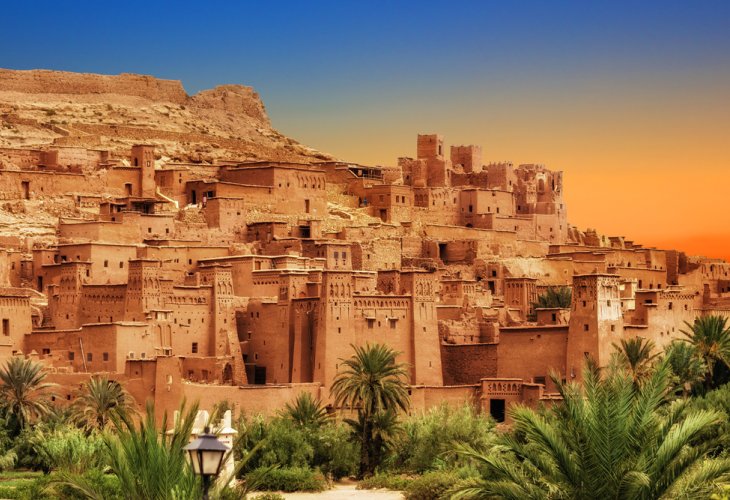
Throughout the generations, countless stories have been told about our teacher, Rabbi Yisrael Abuchatzeira, known as Baba Sali, of blessed and saintly memory. His life was filled with holiness, unwavering faith, and extraordinary devotion to Hashem.
Sometimes, a single story is enough to offer a glimpse into the spiritual greatness of a towering tzaddik.
A Mikveh Built Through Faith
It happened in one of the small towns of Morocco. Baba Sali arrived there and discovered that there was no proper mikveh for ritual purity. Instead, the local Jewish community had been relying on the river.
At the time, tensions between France and Morocco were high, and the French defense minister had established a military camp along the riverbank. As a result, the river could no longer serve as a substitute for a mikveh.
Baba Sali immediately approached the leaders of the community and insisted that a proper mikveh be built.
Work began at once, and within two months the mikveh was completed.
There was only one problem. It was the month of Tammuz. The summer heat was intense, especially in Morocco, and there seemed to be no possibility of rain to fill the mikveh.
Baba Sali lifted his eyes toward Heaven and prayed:
“Master of the Universe, it cannot be that a Jewish community should exist without a mikveh. We have done our part and built it. Please, now do Yours and bring us rain.”
The moment the tzaddik finished praying, clouds filled the sky and a heavy rain began to fall.
Refusing to Compromise on Halacha
Yet another concern soon emerged.
During construction, a channel had been dug to carry water from the river into the mikveh. The water flowed through the channel and entered the mikveh through a small faucet.
This troubled Baba Sali greatly. According to the opinion of Rabbi Yehuda Ayash, of blessed memory, cited in the responsa Beit Yehuda, such a faucet could invalidate the mikveh water. Although the accepted halacha does not follow that ruling, Baba Sali did not want the mikveh to fall short even according to the view of such an important Torah authority.
One of his students, Rabbi Yechiya Dahan, of blessed memory, pleaded with him:
“Rebbe, the mikveh is unquestionably kosher. Hashem has already performed a miracle for us by sending rain in the middle of summer. How can we ask for another miracle? Let us not rely on miracles.”
But Baba Sali remained firm. He instructed the community to empty the mikveh and correct the issue.
Once the repairs were completed, Baba Sali again lifted his eyes to Heaven and said:
“Rabbi Yehuda Ayash, we emptied the mikveh so that it would be kosher even according to your opinion. Please, fulfill your mission and bring us more rain.”
And once again, despite the scorching heat of Tammuz, rain fell from the heavens and filled the mikveh.
“It Comes From My Simplicity”
Even in his younger years, Baba Sali had already become known as a person through whom salvations came.
Reports of his greatness eventually reached Rabbi Shmuel Halevi Wosner, of blessed memory, who wished to understand who this remarkable sage truly was.
Rabbi Wosner traveled to Baba Sali’s home. As he waited, he heard people sharing incredible stories about the rabbi. Looking at Baba Sali, dressed simply in a jellabiya and offering blessings to visitors, Rabbi Wosner thought to himself:
“He appears to be a simple man. Perhaps it is through this simplicity that he succeeds.”
When Rabbi Wosner finally entered, Baba Sali asked him which sugya he was studying. Rabbi Wosner mentioned a particular topic, and the two immediately began discussing it in depth.
Hours passed as they engaged in profound Torah analysis and pilpul.
Eventually, Rabbi Wosner asked for something to drink. What was brought to him? A glass of arak.
Then he turned to Baba Sali and asked:
“Tell me, where does all this knowledge come from?”
Baba Sali smiled and answered:
“It comes from my simplicity.”
The Greatness of Being Wholehearted
That brief response captures the essence of Baba Sali’s greatness. Despite his immense Torah scholarship and spiritual stature, he attributed everything to simple and wholehearted faith in Hashem.
This reflects the teaching of our sages (Shocher Tov on Psalm 119): “Do you want Hashem to be with you? Hold on to the simplicity of Abraham, for simplicity is precious before Hashem.”
May we merit to fulfill the verse, “You shall be wholehearted with Hashem your God” (Deuteronomy 18:13).
And may the merit of Baba Sali continue to protect and inspire all of Israel. Amen.

