

Israel News
Inside The Trump-Netanyahu Calls After Iran Struck Israel
Reported conversations reveal how US and Israel debated retaliation, escalation and a planned strike that was ultimately canceled
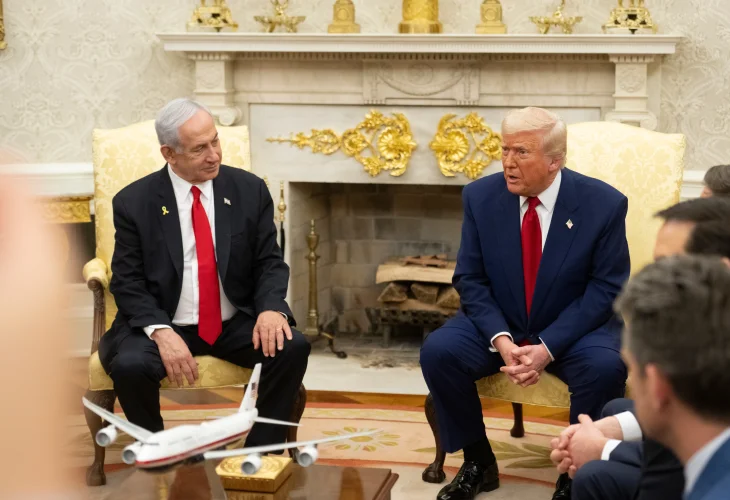 Shutterstock
Iran’s missile fire at Israel triggered a tense round of calls between Prime Minister Benjamin Netanyahu and President Donald Trump. Israel weighed how forcefully to respond, while the U.S. worked to prevent the exchange from becoming a renewed war.
The reported conversations revealed a sharp gap between the two governments during one of the most sensitive moments of the escalation. Israel argued that Iran had crossed a red line by firing directly at Israeli territory. Trump, who was publicly calling for an immediate ceasefire, pushed Netanyahu to keep the response limited and later stop a planned strike altogether.
The developments began Sunday afternoon, when Israel struck in Beirut’s Dahieh district. After the strike, U.S. officials conveyed that they were unhappy with the decision and warned Israel that Iran was likely to respond.
“Iran is serious — and it will respond,” was the message passed to Israel, according to Channel 12.
Israel’s response was that the strike had been limited and necessary. “This was a measured strike. We could not remain silent after the harm to residents of the north,” Israel told the Americans, according to the same report.
At around 10:00 p.m., Iran launched missiles toward Israel. Netanyahu was then in a limited security consultation with several ministers and senior defense officials. The missile fire immediately shifted the discussion to whether Israel should strike inside Iran, and how far it should go.
Netanyahu then spoke with Trump in what was described as a hard and tense call.
“I don’t want a new war,” Trump told Netanyahu, according to the reported quotes from the conversation.
Trump warned him not to respond inside Iran. “Don’t respond in Iran — it will only lead to escalation,” he said.
Netanyahu argued that Israel could not leave the Iranian attack unanswered. “The Iranians violated our sovereignty. We have to mark a red line,” he told Trump, according to the report.
Trump did not approve an Israeli strike, but his final message left room for different interpretations. “From my perspective, you do not have a green light, but you have your own calculations,” he reportedly told Netanyahu.
That ambiguity became central to what happened next. Israeli officials briefed on the call said Trump understood that Israel would respond. They also pointed to continued military coordination between the U.S. and Israel behind the scenes. Others said Trump believed Netanyahu had understood the warning and would not attack.
Netanyahu’s consultations did not end with Trump. He also held a marathon of calls with senior American officials, including Secretary of State Marco Rubio and the U.S. defense secretary. Those discussions reportedly went into the details of the targets Israel was considering.
Israel wanted a more significant strike. One option reportedly discussed was targeting energy facilities. The American answer was firm: no.
According to Israeli officials briefed on the Trump-Netanyahu call, the message was to “attack and close the incident.” In other words, the U.S. understood Israel wanted to act, but wanted the strike to be measured enough that it would not reopen the war.
Israel then carried out two strike waves inside Iran, reportedly around 3:00 a.m. and 7:00 a.m. Netanyahu later explained that Israel believed the response had been calibrated.
“We knew this was not a strike that would lead to war,” he reportedly said.
Iran responded with additional launches around 7:00 a.m. and again around 10:00 a.m. After what was described as its final launch, Iran contacted the Trump administration and said it was “ready for a ceasefire.”
Publicly, Trump was pressing the same message. On Truth Social, he wrote that Israel and Iran were moving toward an “immediate CEASEFIRE.” Later, he said both sides had to stop “shooting.”
But inside Israel, the decision-making had not ended. Israeli officials were preparing a broader strike in Iran whose exact details cannot be published. Netanyahu was in the command bunker approving plans, and aircraft were reportedly already prepared for takeoff.
Then Trump called Netanyahu again.
Israeli officials described the call as friendly. Other sources rejected that version. “The opposite. It was an instruction call,” one source said.
Trump’s message was direct: “You did what you did. Now hold your fire. We are going to an agreement.”
Netanyahu returned to the command bunker and told those present that the attack was being stopped. The aircraft did not take off. The planned strike was canceled at the last minute, leaving Israel’s response limited as Trump pushed to close the round and move back toward possible negotiations with Iran.

