

Magazine
After the Missiles Fell: Kyiv's Jewish Community Opens a New Kollel
After a devastating Russian attack left many Kyiv Jews homeless, the community responded by opening a new kollel for seniors, bringing hope and strength amid the war.
- Michal Arieli
- | Updated
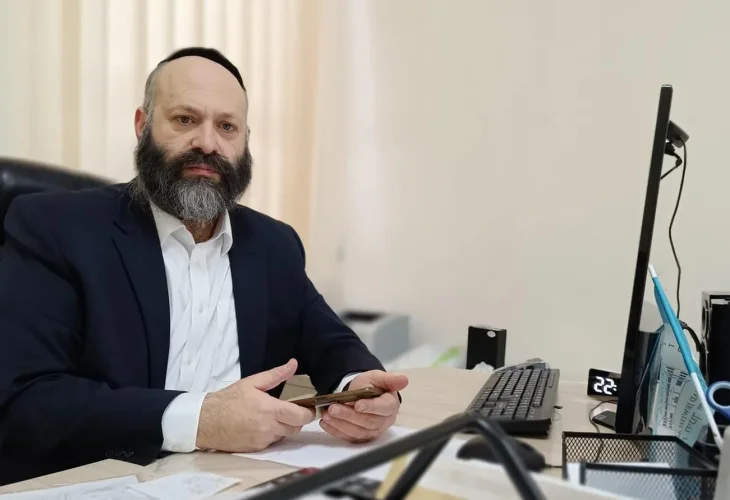 Rabbi Levenhertz
While thick smoke still hung over Kyiv and emergency crews were searching through the wreckage, the city's Jewish community made a remarkable decision. Just hours after one of the largest Russian attacks in recent months left many Jews homeless, community leaders chose not to wait for calmer days. Instead, they immediately established a new kollel for the city's senior citizens, creating a beacon of Torah and hope in the midst of destruction.
Homes Destroyed Overnight
The recent Shavuot holiday was shattered by the sound of massive explosions across Kyiv. According to the Ukrainian Air Force, Russia launched a large scale assault involving hundreds of drones and dozens of ballistic missiles, causing widespread destruction throughout the city.
The Jewish community was not spared.
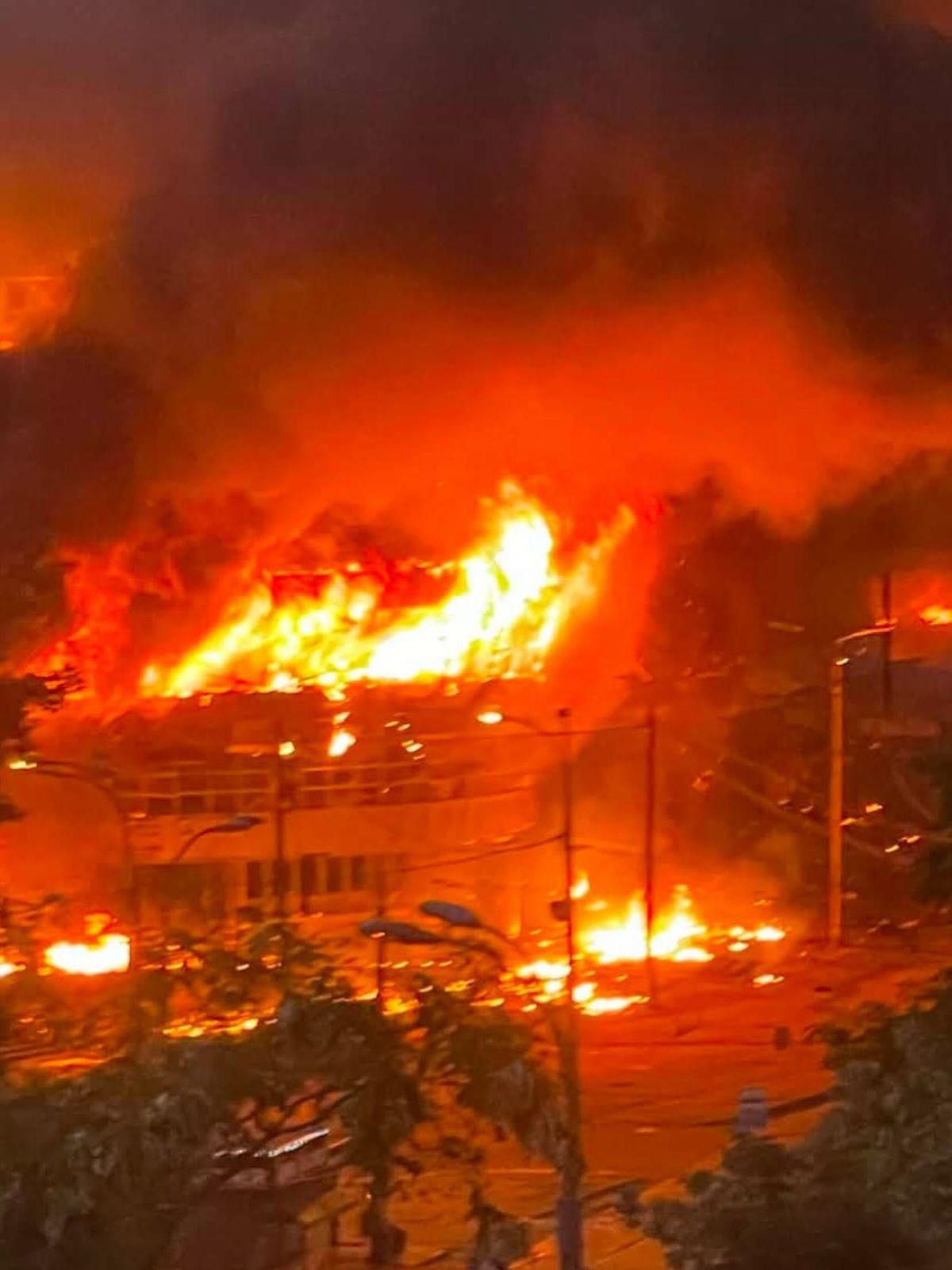 Massive fires in Kyiv following a direct hit
 Many community members suffered severe damage to their homes, while others lost everything and were left without a place to live.
"We are in the middle of this terrible war, and recently we have been going through nerve wracking days and nights of missiles and drones," says Rabbi Mordechai Levenhertz, a Chabad emissary and director of community activities in Kyiv.
"It is not like in Israel, where there is a siren, people enter a protected space, and a short time later things return to normal. Here, the sirens begin at around ten at night and often continue until seven in the morning. Throughout those hours there is a constant threat of missiles arriving from multiple directions."
Rabbi Levenhertz notes that even residents who have endured years of war were shocked by the scale of the latest attack.
"Many members of the community suffered serious damage to their homes. The building of one of our kollel members, Igor, was hit so badly that it became completely uninhabitable. Thank G-d, he escaped unharmed, but his apartment was destroyed and he had to relocate immediately.
"There are many others who have no water, no electricity, or homes that have been severely damaged. Some of the Jews I know literally have nowhere to return to."
Yet amid the devastation, the community made a surprising choice.
"Despite the uncertainty surrounding us, we have complete certainty that Jewish life must continue," Rabbi Levenhertz says. "After the difficult night we experienced, we understood that we could not wait any longer. We decided to establish the kollel immediately, specifically in the shadow of this situation, so that it could serve as an anchor of stability in the middle of chaos."
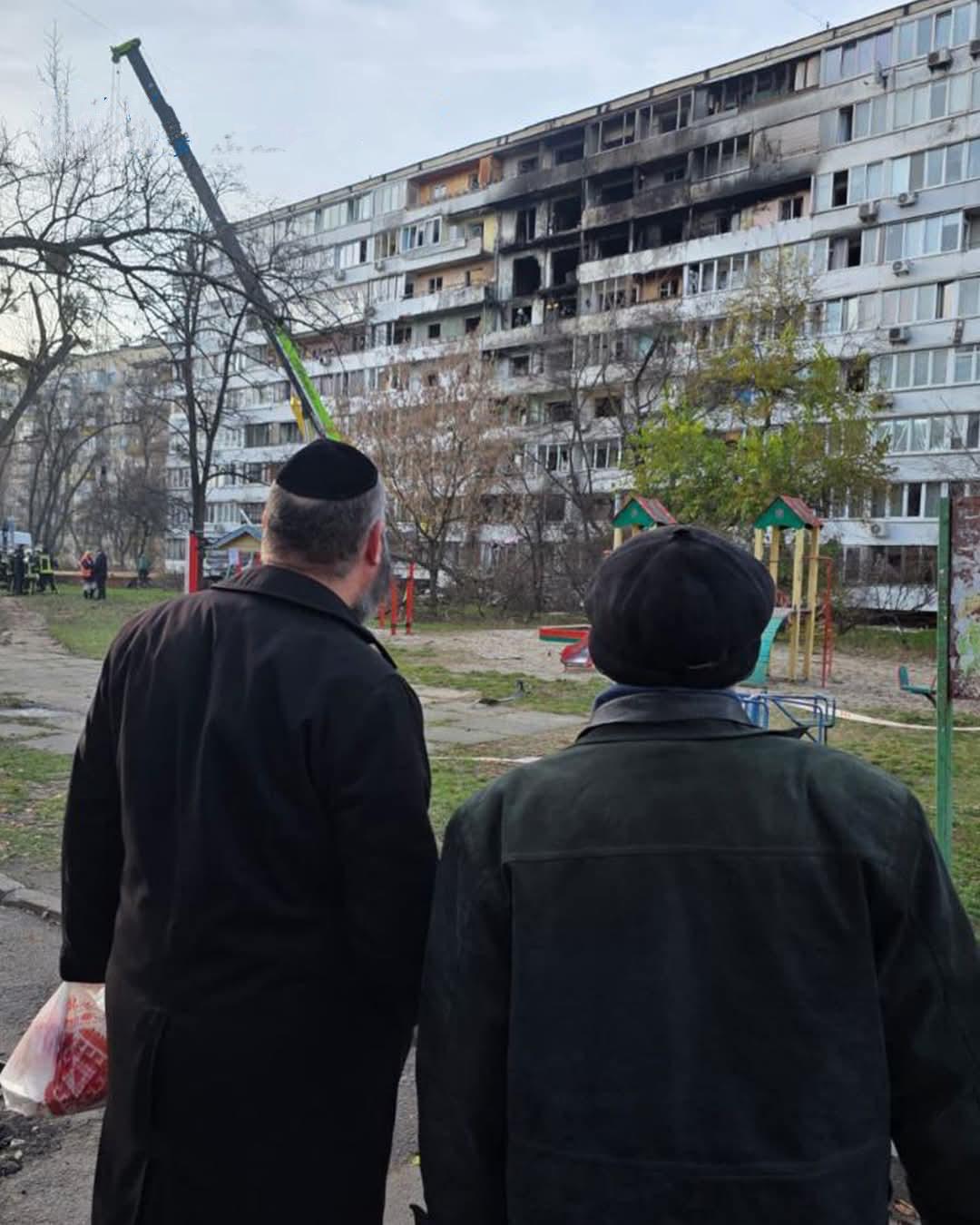 Outside a community member's home following a direct hit (Photo: Mordechai Levenhertz)
Learning Torah for the First Time
The new kollel, called Tiferet Levi Yitzchak, was established the day after Shavuot as part of an international network of senior kollelim bearing that name.
But according to Rabbi Levenhertz, it is much more than a place of study.
"It is a second home and a spiritual shelter for dozens of older Jews," he explains. "These are retirees who, in the later years of their lives, are becoming true Torah scholars. I am not exaggerating."
Most of the participants grew up under Communist rule, when Jewish education was largely inaccessible and Torah learning was virtually impossible.
"Many of them never opened a page of Gemara in their lives," Rabbi Levenhertz says. "Some never even used a siddur. Now, in the later stages of life, they are learning how to pray, studying Torah, and exploring the depth of the Gemara's discussions."
Some are taking even more dramatic steps.
"There are participants who never underwent brit milah. Through the kollel, they are now entering the covenant of Avraham Avinu."
One such participant is Vladimir.
"Only a few weeks ago, he heard about brit milah for the very first time," Rabbi Levenhertz recalls. "He approached me with tears in his eyes and said, 'I lived my entire life as a Jew who knew he was Jewish, but my body remained Communist. I want to leave this world as a complete Jew.'"
Despite his age and concerns about the procedure, Vladimir chose to undergo a brit milah and received his Jewish name with tremendous emotion.
Another participant, Boris, spent decades working as an engineer.
"When he was given a page of Gemara for the first time, he burst into tears," Rabbi Levenhertz says. "He gently touched the letters and told me, 'For fifty years I solved the most complex engineering problems, but I never learned to read the book of my own people. Today I truly began to live.'"
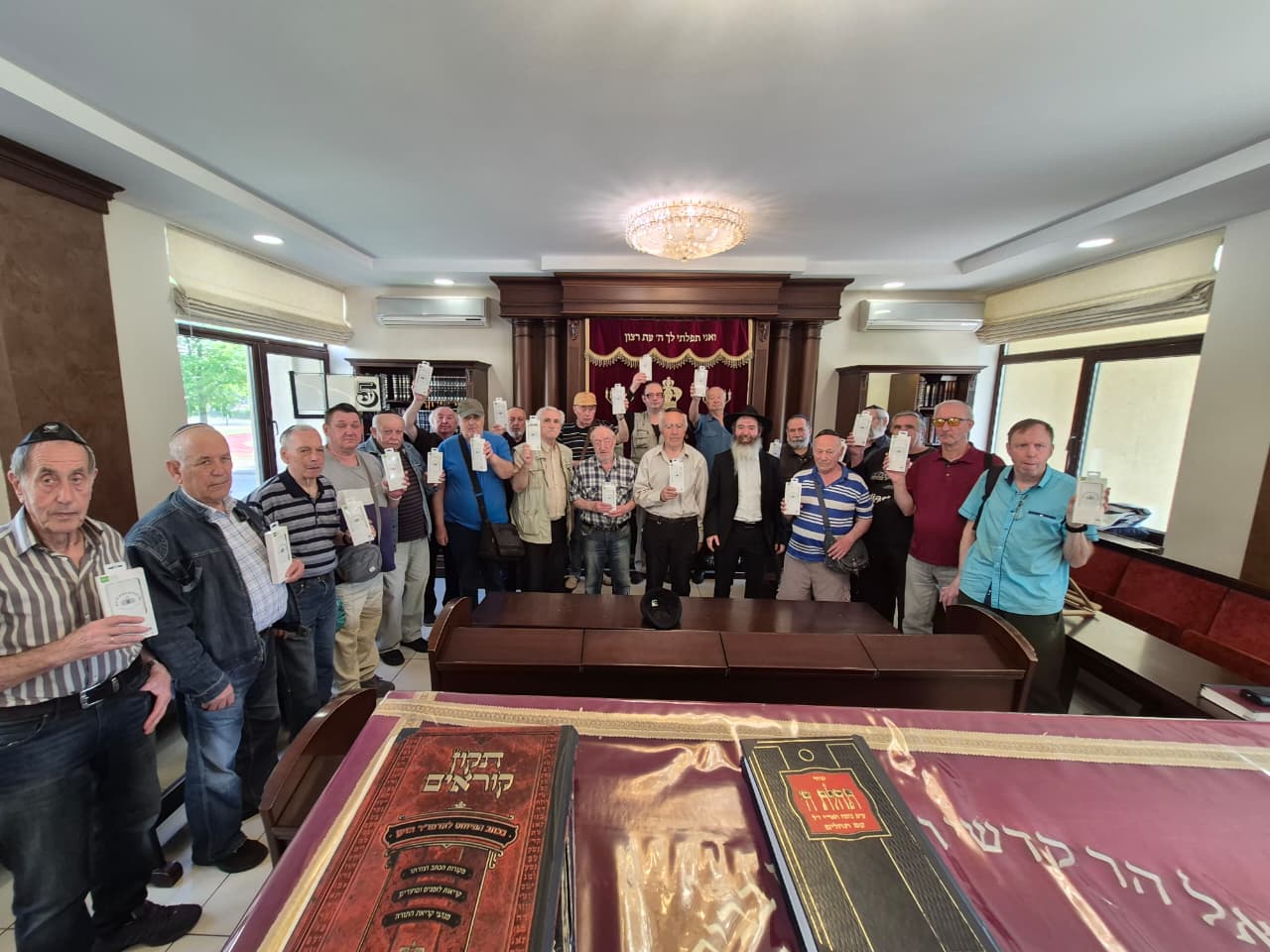 (Photo: Mordechai Levenhertz)
A Spiritual Shelter During Wartime
The kollel was designed specifically for the unique needs of Kyiv's older Jewish population.
If you walk through the city today, one thing quickly stands out: there are very few young people.
"Many young people left the country when the war began," Rabbi Levenhertz explains. "Others were drafted into the military. Many men between the ages of 25 and 60 avoid going out unnecessarily because of concerns about being called up. As a result, many elderly people are left isolated and alone."
The kollel addresses far more than spiritual needs.
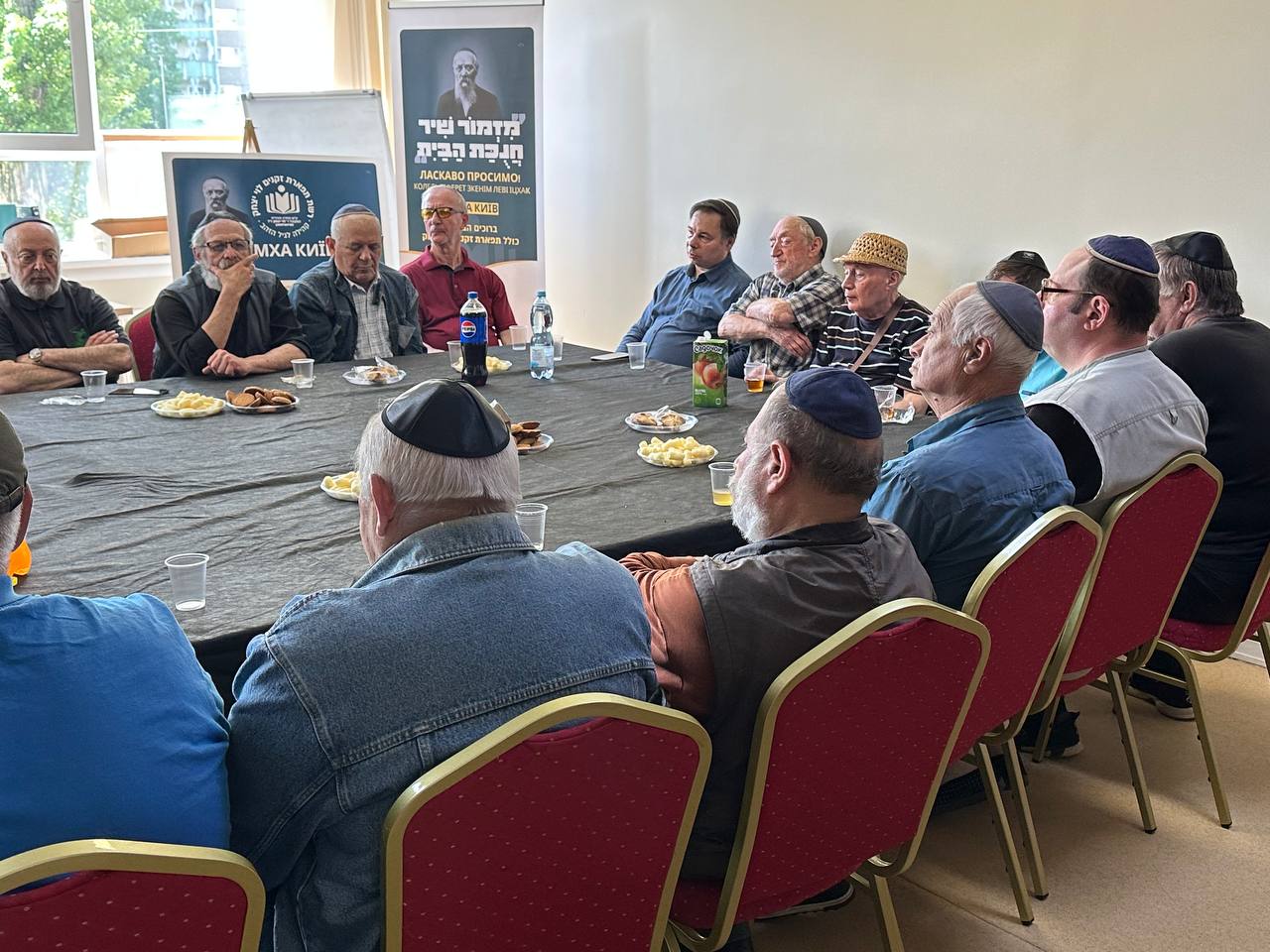
"There are daily classes and study sessions, but we also provide a social framework that helps ease the loneliness created by the war," Rabbi Levenhertz says.
The participants also receive a hot kosher lunch each day.
"That may sound simple, but it is truly life changing. Kosher food is expensive and difficult to obtain in Ukraine today. The ability to come, sit together, learn, eat, and encourage one another gives people tremendous strength."
 (Photo: Mordechai Levenhertz)
They Spend the Night Reading Tehillim
Since opening on the 8th of Sivan, the day after the massive attack, the kollel has remained active every day.
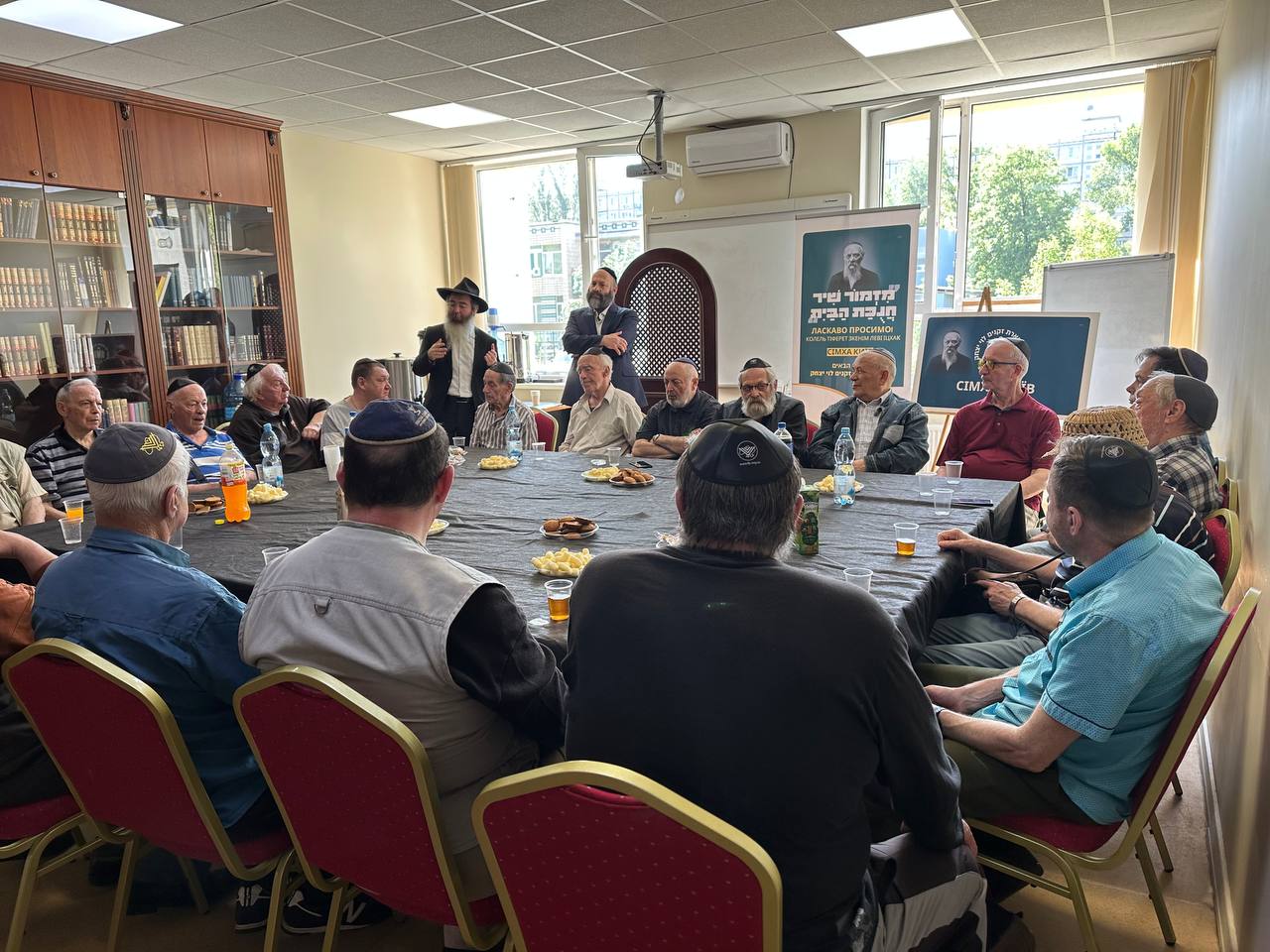
"What moves me most," Rabbi Levenhertz says, "is seeing these elderly Jews arrive every morning for Shacharit despite the exhausting nights they endure. There is almost never an absence."
Many spend entire nights in hallways or stairwells because their buildings lack proper shelters.
"They arrive with tired eyes and tell me that they spent the whole night reading Tehillim while listening to the explosions outside," he says.
"For many of them, this is something they never knew how to do in the past. They learned it through the community and discovered a source of strength they never had before."
According to Rabbi Levenhertz, the transformation is remarkable.
"They genuinely feel that prayer protects them. They understand that Torah has become the anchor holding them steady in the middle of uncertainty."
 (Photo: Mordechai Levenhertz)
The Spirit Cannot Be Destroyed
For Rabbi Levenhertz, the new kollel represents something far greater than a study hall.
"To see older Jews returning to their roots after so many years, surrounded by friends, Gemaras, and Torah learning, proves one thing," he says. "The Jewish spirit cannot be extinguished."
Even as missiles continue to threaten Kyiv and many families remain displaced, the sounds of Torah learning fill the kollel each day.
"We are grateful for the privilege of being part of something so meaningful," Rabbi Levenhertz concludes. "We pray that the wars here and in Israel will come to an end, and that we will merit to learn, grow, and strengthen ourselves only through joy and good news."

