

Facts You Didn't Know
Light and Darkness: 5 Scientific Facts That Will Change Your Perspective
Behind every sunrise and sunset lies a world of scientific wonder. Here are five surprising truths about light and darkness.
- Shira Dabush
- | Updated
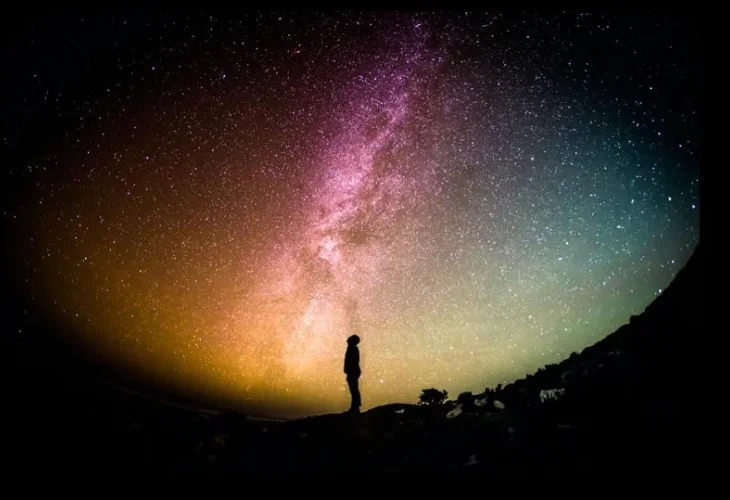
Light and darkness seem like simple opposites. We experience them every day through sunrise and sunset, daylight and nightfall. Yet behind these familiar concepts lies an extraordinary world of scientific discoveries that reveal just how fascinating our universe truly is.
Scientists continue to uncover surprising facts about light, darkness, and the way we perceive the world around us. Some of these discoveries challenge our assumptions and offer a deeper appreciation for the remarkable design of creation.
Here are five fascinating facts about light and darkness that may change the way you see the world.
1. Darkness Doesn't Actually Exist
It may sound surprising, but from a scientific perspective, darkness is not something that exists on its own.
Light is a form of energy that travels through space. Darkness, by contrast, is simply the absence of light.
It is not a substance, a force, or a type of energy. That's why you can turn on a light, but you cannot "turn on" darkness. The moment even a small amount of light enters a dark room, the darkness disappears.
A single candle can illuminate a space that moments before seemed completely dark.
2. Our Eyes Become More Powerful in the Dark
When we step into a dark room, it may initially feel as though we can't see anything.
But something remarkable begins happening almost immediately.
The human eye undergoes a process known as dark adaptation, gradually becoming more sensitive to available light. As the minutes pass, special cells in the retina adjust and allow us to detect increasingly faint sources of light.
After about 30 minutes in darkness, the human eye can become thousands of times more sensitive than it was when first entering the dark environment.
What initially seemed impossible to see slowly comes into focus.
3. The Stars Are Still There During the Day
If you look up at the sky on a bright afternoon, you'll see very few stars.
But that doesn't mean they've disappeared.
The stars remain exactly where they were the night before. The reason we can't see them is because sunlight scattered through Earth's atmosphere is so bright that it overwhelms their much fainter light.
Once the sky darkens and the sunlight fades, the stars become visible again.
In reality, they were there all along.
4. Sunrise Begins Before the Sun Appears
Most people think sunrise begins the moment the sun rises above the horizon.
In truth, dawn starts much earlier.
Even while the sun is still hidden below the horizon, its rays begin striking the upper atmosphere. As sunlight scatters through the air, the sky gradually fills with shades of blue, pink, orange, and gold.
The light arrives before we can actually see its source.
This daily phenomenon creates some of the most beautiful colors in nature and serves as a reminder that change often begins before it becomes fully visible.
5. Most of the Universe's Light Is Invisible
What we call "light" is actually only a tiny fraction of the electromagnetic spectrum.
The human eye can detect only a narrow band known as visible light.
Beyond that range exist many other forms of radiation, including:
Infrared radiation
Ultraviolet light
Radio waves
X-rays
Gamma rays
In other words, most of the light that exists around us is completely invisible to human eyes.
Some animals can perceive parts of the spectrum that we cannot see at all. Bees, for example, can detect ultraviolet patterns on flowers that remain hidden from us.
Scientists use specialized instruments to observe these invisible forms of light and better understand the universe.
A Universe Bigger Than We Can See
One of the most remarkable lessons from modern science is that reality is often far greater than what our eyes can perceive.
The stars are present even when we cannot see them. Light exists beyond the limits of human vision. Our eyes become stronger when darkness falls.
The universe continually reminds us that there is often more happening beneath the surface than we realize.
Sometimes the most important things are present long before we notice them. And even when everything seems dark, there may be far more light around us than we are capable of seeing.

