

Israel News
Turkey Steps Into Israel’s Fighting in Syria and Lebanon
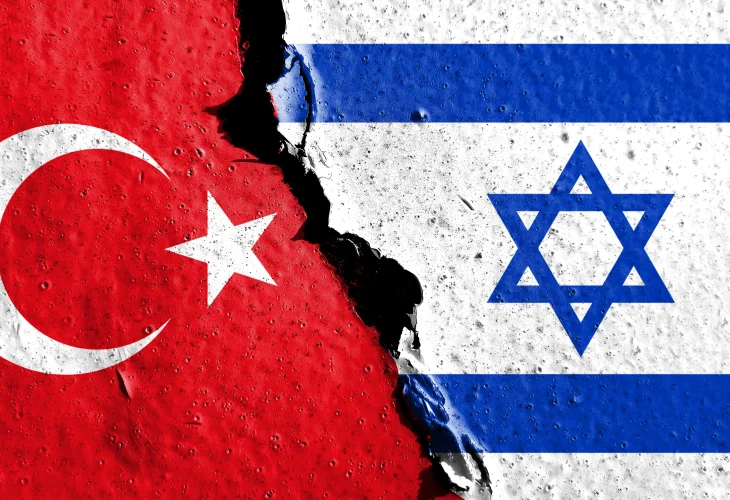
Turkey frames Israel’s operations in Syria and Lebanon as a direct security concern, as Netanyahu calls Erdogan an “antisemitic dictator”
 Shutterstock
Turkey moved deeper into the regional dispute over Israel’s northern operations on Wednesday, after President Recep Tayyip Erdogan said Israeli strikes in Syria and Lebanon had reached the point where they now threaten Ankara.
The remarks marked more than another anti-Israel speech from Erdogan. They showed Turkey trying to place Israel’s actions in Syria and Lebanon inside Ankara’s own security map, as both countries are watching the future of Syria and the balance of power along Israel’s northern front.
“The attacks by Netanyahu and his network of murder on Lebanon and Syria have brought the issue to a point where it also threatens Turkey,” Erdogan told lawmakers from his ruling AK Party.
Prime Minister Benjamin Netanyahu rejected the criticism in a sharp response, calling Erdogan “the antisemitic dictator” and accusing him of “committing genocide against the Kurds,” supporting Hamas, oppressing his own people and imprisoning political rivals.
“He is the last person who can lecture the State of Israel on morality,” Netanyahu said. “The State of Israel and the IDF, the most moral army in the world, will continue to take forceful action against Iran and its proxies, which threaten the Middle East and the entire world.”
Erdogan argued that Turkey’s security is not limited to its formal borders. “Turkey’s security does not begin only in Hatay. It begins in Aleppo, in Damascus and in Beirut,” he said, referring to Syria and Lebanon as part of Turkey’s wider regional concern.
“We will not tolerate any fait accompli in our brotherly nations, and we will not turn a blind eye to aggression against them,” Erdogan said. “Israel refuses to withdraw from Lebanon and continues its actions there despite warnings from countries in the region. It is inciting unrest across a vast geographic area and has become a threat to humanity.”
Syria is the clearest point of friction. Turkey shares a long border with Syria, has fought Kurdish groups there for years, and wants influence over the country’s postwar order. Turkey also wants to prevent new waves of refugees or instability from crossing into Turkey.
Israel, meanwhile, has carried out strikes in Syria to prevent Iranian-backed forces, hostile weapons and other threats from building up near its border. Israel also moved forces into parts of southern Syria after Assad was thrown out, saying it was acting to protect Israeli communities and prevent hostile forces from taking control of the area. That places Israeli and Turkish security interests in the same arena, even if the two countries are not seeking a direct clash.
That risk has already produced quiet coordination. Israel and Turkey have held deconfliction talks over Syria in an effort to avoid unwanted incidents, a sign that both sides recognize the possibility of friction in a country where their interests overlap.
Erdogan also folded Lebanon into the same argument. Lebanon is less direct for Turkey than Syria, but Erdogan is using Israeli action there to claim Israel is destabilizing the wider region. Turkey views regional unrest as a Turkish security issue when it involves countries where Turkey seeks influence, where instability could spread, or where rival powers could gain ground.
Erdogan widened the warning further by pointing to the Eastern Mediterranean and Turkish Cypriots. “If the rights of Turkey and Turkish Cypriots are violated in the Eastern Mediterranean, our response will be very clear and very strong,” he said.
The speech did not include a specific Turkish military step, ultimatum or announced deployment. But it showed that Erdogan is increasingly presenting Israel’s operations in Syria and Lebanon as part of Turkey’s own national security agenda, turning Israel’s northern front into a slower yet broader regional dispute with Turkey.

