

World News
Judge Orders Columbia Anti-Israel Activist Mohsen Mahdawi Deported to Jordan
Mahdawi, a leading figure in Columbia University's anti-Israel protests, has appealed the ruling as his legal battle continues
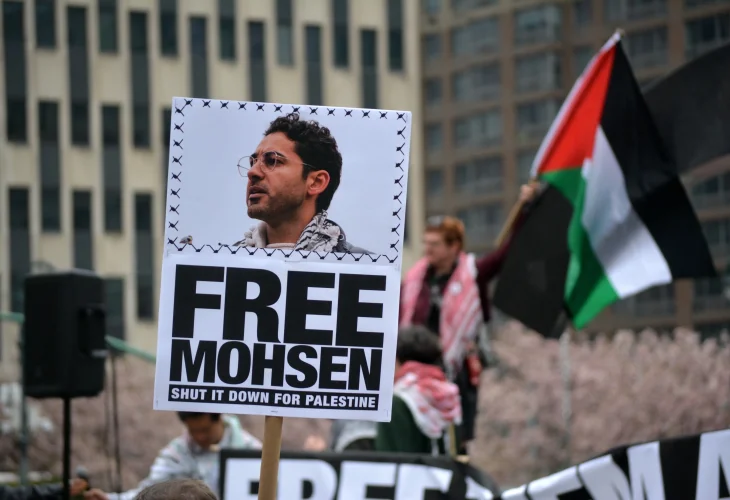 Shutterstock
An immigration judge has ordered Columbia University anti-Israel activist Mohsen Mahdawi deported to Jordan, marking a major development in the Trump administration's effort to remove foreign activists involved in anti-Israel campus protests.
Mahdawi, a Palestinian-born U.S. green-card holder and one of the most visible leaders of Columbia's protest movement, has appealed the decision. His attorneys say separate federal court proceedings currently prevent his immediate removal from the United States.
The case has become one of the highest-profile tests of the administration's use of immigration law against foreign nationals who played prominent roles in anti-Israel demonstrations following the October 7 Hamas massacre. Unlike many deportation cases, the government is not accusing Mahdawi of a crime. Instead, it argues that his continued presence in the United States is contrary to American foreign policy interests.
Mahdawi arrived in the United States years ago and became a lawful permanent resident in 2015. While studying at Columbia University, he co-founded the Palestinian Student Union and emerged as a public spokesman during the anti-Israel encampment protests that drew national attention.
The government's case is based largely on a determination by Secretary of State Marco Rubio, who concluded that Mahdawi's activities could undermine U.S. efforts to combat antisemitism and advance stability in the Middle East. The Department of Homeland Security has taken an even harsher view of his role.
“Mohsen Mahdawi was a ringleader in the pro-terrorist riots at Columbia University,” DHS said in an earlier statement.
The legal battle began in April 2025, when Mahdawi was detained during what was supposed to be a U.S. citizenship interview in Vermont. A federal judge later ordered his release after more than two weeks in custody.
In February 2026, an immigration judge dismissed the deportation case after finding that the government had failed to properly authenticate a key Rubio memorandum. However, the Board of Immigration Appeals later reversed that decision and reinstated proceedings, allowing the case to move forward.
Last week, an immigration judge formally ordered Mahdawi removed from the United States. On Wednesday, his attorneys appealed the ruling to the U.S. Court of Appeals for the First Circuit.
Mahdawi argues that he is being targeted because of his political views and activism. “The administration is abusing immigration law to silence me,” he said after filing the appeal.
His legal team and the American Civil Liberties Union have framed the case as a free speech issue. ACLU attorney Nate Freed Wessler said, “Mohsen should never have been arrested or detained for his speech.”
The case is being closely watched alongside other proceedings involving foreign campus activists, including former Columbia protest leader Mahmoud Khalil. Supporters of the administration argue that immigration law gives the government broad authority to remove non-citizens whose activities harm U.S. interests, while critics warn that the cases could set new precedents involving political speech.
For now, Mahdawi remains in the United States while his appeal and related federal court challenges continue. The outcome could determine how far the government can go in using immigration law against foreign activists involved in anti-Israel protest movements on American campuses.

