

The Month of Elul
Selichot: Jewish Penitential Prayers Before the High Holidays
The Complete Guide to Selichot 2026 — Meaning, Dates, the Thirteen Attributes of Mercy, and Ashkenazi vs. Sephardic Customs, with Hebrew Texts and English Translation
- Hidabroot
- | Updated
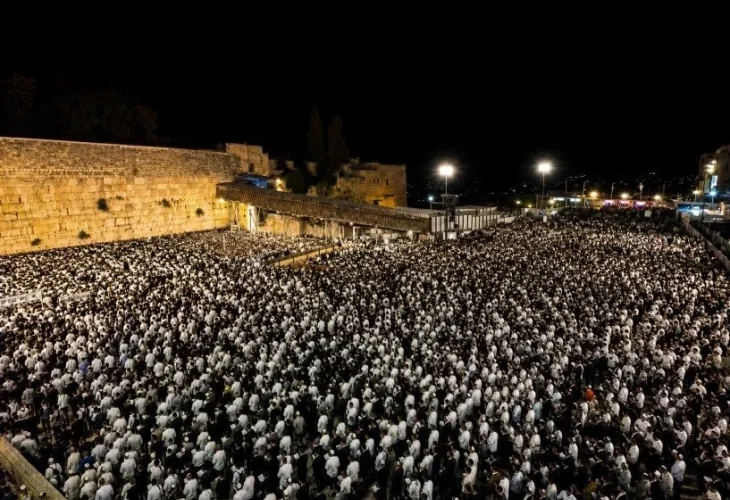 Thousands gathered at the Western Wall for Selichot at night
What are Selichot?
Selichot (סְלִיחוֹת), also spelled Selichos, are Jewish penitential prayers recited before and during the High Holidays and on fast days. The word "Selichot" means "forgiveness" in Hebrew, and the prayers center on the Thirteen Attributes of Mercy (Exodus 34:6–7), piyyutim (liturgical poems), and confession (vidui). Sephardic communities begin reciting Selichot at the start of the month of Elul and continue for approximately 40 days until Yom Kippur. Ashkenazi communities begin on the Saturday night before Rosh Hashanah — known as Leil Selichot. In 2026, Sephardic Selichot begin in mid-August, and Ashkenazi Leil Selichot falls on Saturday night, September 5, 2026.
What are Selichot?
Selichot are the penitential prayers of the Jewish liturgical year — a body of ancient poetry, biblical verses, and confessional formulas recited in the weeks leading up to Rosh Hashanah and Yom Kippur, and on the public fast days throughout the year.
They are recited in the deepest hours of the night or in the earliest light before dawn, when the world is quiet and the heart is most exposed. Their central axis is the Thirteen Attributes of Mercy — the formula God Himself revealed to Moses after the sin of the Golden Calf, which the Talmud (Rosh Hashanah 17b) describes as a covenant that never returns empty.
Selichot are not simply prayers about forgiveness. They are the practical mechanism by which the Jewish people, individually and collectively, approach the Days of Awe already having begun the work of return.
The Meaning of "Selichot" (Forgiveness)
The Hebrew word סְלִיחוֹת (Selichot) is the plural of selicha (סְלִיחָה) — "forgiveness" or "pardon." The root ס־ל־ח appears throughout the Torah and Prophets specifically in the context of divine forgiveness, as in Moses' plea after the sin of the spies: "Salachti kidvarecha" — "I have forgiven, as you asked" (Numbers 14:20).
In modern Hebrew, selicha is the everyday word for "excuse me" or "sorry" — a linguistic echo of the ancient liturgical term, now woven into ordinary speech.
The plural form is deliberate. These are not a single request for forgiveness but a sustained series of them — repeated night after night, building in intensity as the Days of Awe approach.
Selichot vs. Selichos — Ashkenazi Pronunciation
Both spellings refer to exactly the same prayers.
Selichot reflects Sephardic and modern Israeli Hebrew pronunciation, where the letter tav without a dagesh is pronounced "t."
Selichos reflects traditional Ashkenazi pronunciation, where that same letter is pronounced "s." This is the spelling most commonly used in American Ashkenazi and Yeshivish communities.
The same pattern appears across Jewish liturgical vocabulary: Shabbat/Shabbos, Talit/Talis, Sukkot/Sukkos. Neither is more correct — they reflect different living traditions of Hebrew pronunciation, both with deep historical roots.
The Purpose of Selichot Prayers
Selichot serve three interlocking purposes in Jewish practice:
Preparation. The Days of Awe are not meant to arrive unannounced. Selichot function as a spiritual runway — days or weeks of gradual awakening before the judgment of Rosh Hashanah. The Rambam writes (Hilchot Teshuvah 3:4) that the shofar of Elul calls out: "Awake, sleepers, from your sleep." Selichot are the liturgical form that awakening takes.
Confession. Central to Selichot is the vidui — the formal confession of sin. Judaism holds that repentance requires verbal articulation; sin acknowledged only in thought has not yet been fully confronted. Selichot provide the structured language for that articulation.
Invocation of Divine Mercy. Above all, Selichot invoke the Thirteen Attributes of Mercy — the covenantal formula God revealed to Moses. The Talmud teaches that this formula, recited with sincerity, is never turned away.
When are Selichot Recited in 2026?
Selichot 2026 Dates:
Ashkenazi: Leil Selichot falls on Saturday night, September 5, 2026, with the service typically held after halachic midnight (roughly 12:30–1:00 AM, Sunday, September 6). Selichot then continue every weekday morning until Rosh Hashanah (Friday evening, September 11, 2026).
Sephardic: Selichot begin at the start of Elul — around mid-August 2026 — and continue daily until Erev Yom Kippur, Sunday, September 20, 2026, for approximately forty days.
Leil Selichot 2026 — Ashkenazi Start Date
Leil Selichot (לֵיל סְלִיחוֹת — "the Night of Selichot") is the first and most significant communal Selichot service of the Ashkenazi year. In 2026 it falls on Saturday night, September 5, with the service itself beginning after halachic midnight — meaning in practice during the early hours of Sunday, September 6, 2026.
Rosh Hashanah 5787 begins on the evening of Friday, September 11, 2026. Since the first day of Rosh Hashanah falls on Shabbat, Ashkenazi Selichot begin on the Saturday night immediately preceding it — providing five days of Selichot, comfortably above the required minimum of four.
After Leil Selichot, Selichot are recited every weekday morning before Shacharit until Rosh Hashanah — omitted on Shabbat.
Sephardic Selichot Start — The Month of Elul
Sephardic communities begin Selichot at the start of the month of Elul and recite them daily for approximately forty days, until Erev Yom Kippur.
The 2026 calendar detail worth knowing: The 1st of Elul 5786 falls on Friday, August 14, 2026, and the 2nd of Elul falls on Shabbat, August 15. Because Selichot are not recited on Shabbat, communities differ in practice this year — some begin on Friday morning, August 14; others begin on Sunday morning, August 16. Consult your community's schedule or your rabbi.
Sephardic Selichot continue daily — omitted on Shabbat — through Erev Yom Kippur, Sunday, September 20, 2026.
Selichot Dates for Coming Years
Year | Hebrew Year | Sephardic Start (Elul) | Ashkenazi Leil Selichot |
|---|---|---|---|
2026 | 5786 | Fri, August 14 | Sat night, September 5 |
2027 | 5787 | Fri, September 3 | Sat night, September 25 |
2028 | 5788 | Thu, August 24 | Sat night, September 16 |
2029 | 5789 | Mon, August 13 | Sat night, September 1 |
2030 | 5790 | Fri, August 30 | Sat night, September 21 |
Note: Sephardic start dates reflect the 1st or 2nd of Elul depending on whether the 2nd falls on Shabbat. Verify all dates and local start times against Hebcal or your community calendar before relying on them.
The Ashkenazi Custom
Starting on Motzaei Shabbat (Saturday Night)
The Ashkenazi custom, codified by the Rama (Rabbi Moshe Isserles) in Shulchan Aruch, Orach Chayim 581:1, is to begin Selichot on the Motzaei Shabbat (Saturday night) preceding Rosh Hashanah.
The choice of Saturday night is not incidental. Shabbat leaves in its wake a heightened spiritual state — the soul is still elevated, the week's noise has not yet returned. Beginning the season of repentance in the hours immediately following Shabbat means beginning from a place of clarity rather than exhaustion.
There is also a practical dimension: Saturday night is the one night of the week when an entire community can realistically gather at midnight without the pressure of the following workday's early start.
The Four-Day Rule Before Rosh Hashanah
Ashkenazi practice requires a minimum of four days of Selichot before Rosh Hashanah. This produces a calendrical rule with a specific logic:
- If the first day of Rosh Hashanah falls on Thursday or Shabbat, Selichot begin on the Saturday night immediately preceding Rosh Hashanah.
- If the first day of Rosh Hashanah falls on Monday or Tuesday, the Saturday night immediately before would leave fewer than four days — so Selichot begin on the Saturday night more than a week earlier.
The reason for the four-day minimum is given by the classical commentators: a sacrificial offering required four days of inspection before being brought to the altar. On Rosh Hashanah, each person offers themselves in judgment — and therefore requires four days of self-examination first.
In 2026, Rosh Hashanah begins Friday evening, September 11, with the first full day on Shabbat, September 12. Selichot therefore begin the Saturday night immediately preceding — September 5.
Timing — After Halachic Midnight (Chatzot)
Ashkenazi Selichot on Leil Selichot are recited after halachic midnight (chatzot ha'laylah) — not at civil midnight, but at the midpoint between sunset and sunrise, which varies by location and season.
The kabbalistic sources, particularly the writings of the Arizal (Rabbi Isaac Luria) in Shaar HaKavanot, teach that the second half of the night is a time of divine favor. The first half is understood as a time of strict judgment; the hours after midnight are a time when mercy is more accessible.
Practically, this means most American Ashkenazi congregations hold Leil Selichot between approximately 12:30 AM and 1:30 AM. Some communities schedule it slightly earlier for accessibility, and some hold it at dawn instead.
Approximate halachic midnight for Leil Selichot 2026 (night of Saturday, September 5):
City | Approx. Chatzot HaLaylah |
|---|---|
New York, NY | ~12:56 AM |
Lakewood, NJ | ~12:56 AM |
Baltimore, MD | ~1:01 AM |
Miami, FL | ~12:47 AM |
Chicago, IL | ~12:47 AM |
Los Angeles, CA | ~12:41 AM |
Toronto, ON | ~1:07 AM |
Approximate times only. Halachic midnight varies by exact location and by calculation method. Verify with your synagogue's published schedule or a local halachic calendar.
For the remaining days until Rosh Hashanah, Ashkenazi Selichot are recited in the early morning before Shacharit — typically 45 minutes to an hour before the regular morning service.
Leil Selichot as the Central Communal Service
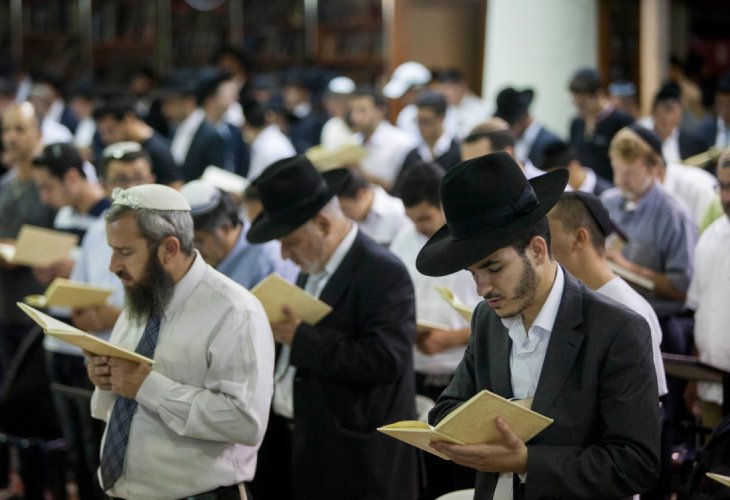 (Illustration photo: Flash 90)
Leil Selichot is the single most attended Selichot service of the year in Ashkenazi communities — and it functions as something more than a prayer service.
The synagogue is often prepared with the white Torah mantles and ark curtain (parochet) of the High Holidays, replacing the ordinary colored coverings — a visual signal that the Days of Awe have begun. The chazzan wears white. The melodies used are the distinctive High Holiday tunes, heard for the first time that year.
In many communities, the rabbi delivers a sermon before or after the service, and the entire community attends — men, women, and older children. For many families, Leil Selichot is the emotional threshold of the High Holiday season.
The Sephardic Custom
Forty Days of Selichot from the Start of Elul
Sephardic and Mizrachi communities recite Selichot for approximately forty days — beginning at the start of Elul and continuing daily, except Shabbat, until Erev Yom Kippur.
This is a substantially more demanding practice than the Ashkenazi custom: forty consecutive days of early-morning penitential prayer, arriving at Yom Kippur having spent nearly six weeks in sustained spiritual work.
The Sephardic practice is codified in Kaf HaChayim, Orach Chayim 581, and reflected in the rulings of Rabbi Ovadia Yosef ZT"L in Chazon Ovadia, Yamim Nora'im, and in Yalkut Yosef.
The Connection to Moses on Mount Sinai
The forty days are not an arbitrary number. They correspond precisely to the forty days Moses spent on Mount Sinai after the sin of the Golden Calf — from the 1st of Elul, when he ascended for the third and final forty-day period, until the 10th of Tishrei, when he descended with the second set of tablets and the divine declaration of forgiveness.
That day of descent became Yom Kippur — the day of atonement for all generations.
The Sephardic Selichot calendar therefore recreates, year after year, the original forty days of divine forgiveness. Each morning of Elul is a day within that ascent; Yom Kippur is the descent with the tablets renewed.
This is why the Thirteen Attributes of Mercy — the formula God revealed to Moses during precisely those forty days — stand at the center of the Selichot liturgy. The congregation is not merely quoting a verse; it is invoking the covenant established in exactly this season.
Early Morning Recitation (Ashmoret HaBoker)
Sephardic Selichot are recited in the ashmoret haboker — the final watch of the night, the hours before dawn.
The Talmud divides the night into three watches, and the last is understood as the time when the divine presence is most accessible to prayer. The Psalmist writes: "My eyes anticipated the night watches, to meditate on Your word" (Psalm 119:148).
In practice, this means Sephardic Selichot typically begin between 4:00 AM and 5:00 AM, concluding in time for Shacharit at sunrise. In Sephardic communities across Israel, the United States, France, and the wider diaspora, synagogues fill in the dark before dawn throughout Elul — an extraordinary sustained communal commitment.
Feature | Ashkenazi | Sephardic |
|---|---|---|
Start date | Motzaei Shabbat before Rosh Hashanah | Start of Elul |
Duration | 4–9 days | ~40 days |
Time of recitation | After halachic midnight (first night); early morning thereafter | Ashmoret haboker (pre-dawn), throughout |
Opening prayer | Ashrei and Half-Kaddish | Adon Olam (in many rites) |
Communal peak | Leil Selichot — the first night | Distributed across the whole month |
End point | Erev Rosh Hashanah (extended through Yom Kippur in some rites) | Erev Yom Kippur |
Pronunciation | "Selichos" | "Selichot" |
Both customs share the same essential architecture: Thirteen Attributes of Mercy, piyyutim, vidui, and Avinu Malkeinu. The differences are of timing and emphasis rather than substance.
The Structure of a Selichot Service
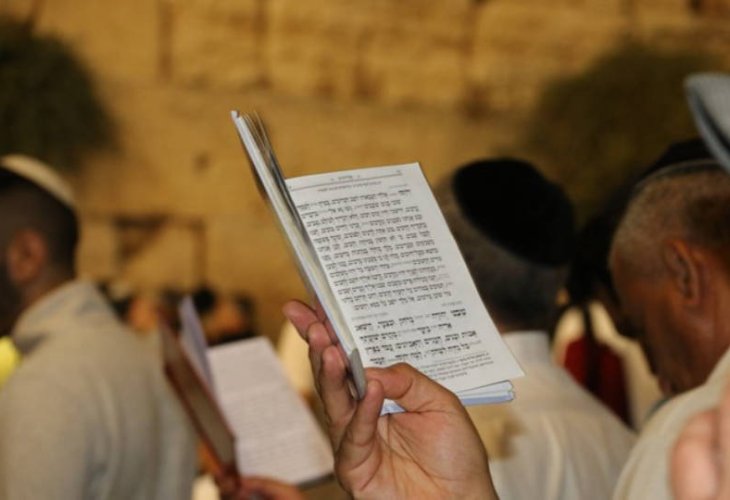 Photo: The Western Wall Heritage Foundation
A Selichot service follows a consistent architecture, though the specific piyyutim vary by day and by rite.
Ashrei and Half-Kaddish (Ashkenazi Opening)
The Ashkenazi Selichot service opens with Ashrei (Psalm 145 with its introductory and concluding verses), followed by Half-Kaddish. This mirrors the standard structure of a Jewish prayer service — establishing that Selichot are a formal service, not an informal gathering.
Ashrei is chosen for its universal expression of divine goodness: "The Lord is good to all, and His mercies are upon all His works" (145:9) — a fitting opening for prayers that will spend the next hour asking for exactly that mercy.
Adon Olam and Ben Adam (Sephardic Opening)
Many Sephardic and Western Ashkenazi rites open with Adon Olam — the ancient hymn of divine sovereignty — followed in the Sephardic rite by Ben Adam ("Son of man"), a piyyut that directly addresses the worshipper rather than God.
בֶּן אָדָם, מַה לְּךָ נִרְדָּם? קוּם קְרָא בְּתַחֲנוּנִים.
שְׁפֹךְ שִׂיחָה, דְּרֹשׁ סְלִיחָה, מֵאֲדוֹן הָאֲדוֹנִים.
רְחַץ וּטְהַר, וְאַל תְּאַחַר, בְּטֶרֶם יָמִים פּוֹנִים.
וּמְהֵרָה רוּץ לְעֶזְרָה, לִפְנֵי שׁוֹכֵן מְעוֹנִים.
וּמִפֶּשַׁע וְגַם רֶשַׁע, בְּרַח וּפְחַד מֵאֲסוֹנִים.
אָנָּא שְׁעֵה שִׁמְךָ יוֹדְעֵי, יְיָ אֱלֹהֵי הָאֱלֹהִים.
Son of man — why do you sleep? Arise and call out in supplication.
Pour out your words; seek forgiveness from the Master of all masters.
Wash and purify yourself, and do not delay, before the days turn away.
Hurry swiftly for help before the One who dwells on high.
From transgression and from wickedness — flee, and fear catastrophe.
Please, turn to those who know Your name, O Lord, God of gods.
The direct address is deliberate and startling. Before asking anything of God, the liturgy first turns to the person praying and asks what they are doing awake at this hour, and whether they intend to mean it. The opening phrase — Ben Adam, mah lecha nirdam — has become one of the most recognizable lines in the entire Sephardic Selichot tradition, and its melody is known across communities.
The Piyyutim (Liturgical Poems)
The heart of the Selichot service is its piyyutim — liturgical poems composed across more than a thousand years of Jewish history, from the Geonic period through medieval Spain, Germany, and beyond.
Why each day is different. Each day of Selichot has its own designated set of piyyutim. A Sephardic community reciting Selichot for forty days encounters a substantially different service each morning; an Ashkenazi community reciting for five to nine days moves through a numbered sequence — Selichot for the First Day, for the Second Day, and so on. Only the structural elements repeat: the Thirteen Attributes, the vidui, and Avinu Malkeinu. The poetry itself keeps changing.
How they are built. Piyyutim are constructed on formal skeletons that are invisible in translation but immediately apparent in Hebrew:
- Alphabetical acrostic — each successive line or stanza begins with the next letter of the Hebrew alphabet, from aleph through tav. This structure signals completeness: everything that can be said, has been said.
- Reverse acrostic (tashrak) — the alphabet running backward, from tav to aleph, often used to convey a sense of undoing or return.
- Author-name acrostic — the initial letters spell out the poet's name, sometimes with a blessing attached, which is how many piyyutim are attributed at all.
- Fixed rhyme and meter — often a single rhyme sustained across an entire poem, a technical feat borrowed from and rivaling contemporary Arabic poetry.
What they are about. Thematically, the piyyutim address the merit of the Patriarchs, the binding of Isaac (Akedah), the destruction of the Temple, the sufferings of exile, the frailty and brevity of human life, and above all the plea for divine mercy.
Ashkenazi and Sephardic piyyutim differ substantially. Ashkenazi Selichot are shaped by the Rhineland experience — the Crusades, the massacres of 1096, the burning of the Talmud — and carry a register of collective grief and martyrdom. Sephardic Selichot, formed in the Golden Age of Spain, are more philosophically inflected and more concerned with the individual soul before its Creator. Both traditions ask for the same thing; they arrive at the request by different roads.
The Thirteen Attributes of Mercy
Between each piyyut, the congregation recites the Thirteen Attributes of Mercy — the recurring refrain and structural spine of the entire service. This is treated in full in the section below.
The Vidui (Confession)
The vidui — formal confession — appears in two parts:
Ashamnu (אָשַׁמְנוּ) — the short confession, an alphabetical acrostic in which each letter of the Hebrew alphabet begins a verb of wrongdoing. It is recited while gently striking the left side of the chest with a closed fist at each word — a physical gesture indicating that the heart is the source of what requires repair.
Al Chet (עַל חֵטְא) — the long confession, appearing primarily in the Yom Kippur liturgy and in some Selichot rites, enumerating categories of sin in double alphabetical acrostic.
Both are written in the plural — "we have been guilty," "we have betrayed" — never in the singular. Jewish confession is communal even when recited alone. No one stands before God as an isolated individual.
אָשַׁמְנוּ. בָּגַדְנוּ. גָּזַלְנוּ. דִּבַּרְנוּ דֹפִי. הֶעֱוִינוּ. וְהִרְשַׁעְנוּ. זַדְנוּ. חָמַסְנוּ. טָפַלְנוּ שֶׁקֶר. יָעַצְנוּ רָע. כִּזַּבְנוּ. לַצְנוּ. מָרַדְנוּ. נִאַצְנוּ. סָרַרְנוּ. עָוִינוּ. פָּשַׁעְנוּ. צָרַרְנוּ. קִשִּׁינוּ עֹרֶף. רָשַׁעְנוּ. שִׁחַתְנוּ. תִּעַבְנוּ. תָּעִינוּ. תִּעְתָּעְנוּ.
We have been guilty. We have betrayed. We have stolen. We have spoken falsely. We have caused others to sin. We have acted wickedly. We have sinned willfully. We have been violent. We have attached ourselves to falsehood. We have given harmful counsel. We have deceived. We have scorned. We have rebelled. We have provoked. We have turned away. We have been perverse. We have transgressed. We have persecuted. We have been stiff-necked. We have acted wickedly. We have corrupted. We have committed abomination. We have gone astray. We have led others astray.
Avinu Malkeinu
The service concludes — in most rites — with Avinu Malkeinu ("Our Father, Our King"), the great litany of petition. Each line begins with the same two words, holding together the two fundamental postures of Jewish prayer: intimacy and awe.
אָבִינוּ מַלְכֵּנוּ, חָטָאנוּ לְפָנֶיךָ.
אָבִינוּ מַלְכֵּנוּ, אֵין לָנוּ מֶלֶךְ אֶלָּא אָתָּה.
אָבִינוּ מַלְכֵּנוּ, עֲשֵׂה עִמָּנוּ לְמַעַן שְׁמֶךָ.
אָבִינוּ מַלְכֵּנוּ, חַדֵּשׁ עָלֵינוּ שָׁנָה טוֹבָה.
אָבִינוּ מַלְכֵּנוּ, כָּתְבֵנוּ בְּסֵפֶר חַיִּים טוֹבִים.
אָבִינוּ מַלְכֵּנוּ, שְׁמַע קוֹלֵנוּ, חוּס וְרַחֵם עָלֵינוּ.
אָבִינוּ מַלְכֵּנוּ, חָנֵּנוּ וַעֲנֵנוּ, כִּי אֵין בָּנוּ מַעֲשִׂים. עֲשֵׂה עִמָּנוּ צְדָקָה וָחֶסֶד וְהוֹשִׁיעֵנוּ.
Our Father, our King — we have sinned before You.
Our Father, our King — we have no king but You.
Our Father, our King — act toward us for the sake of Your name.
Our Father, our King — renew for us a good year.
Our Father, our King — inscribe us in the book of good life.
Our Father, our King — hear our voice; have pity and compassion upon us.
Our Father, our King — be gracious and answer us, for we have no deeds of our own. Act toward us with charity and lovingkindness, and save us.
The final verse is the emotional low point and the theological center of the entire service: "for we have no deeds of our own." Everything that has preceded it — the poems, the confessions, the invocations — ends in the acknowledgment that the plea rests on divine mercy rather than human merit.
The Thirteen Attributes of Mercy (Yud-Gimmel Middot)
The Thirteen Attributes of Mercy:
The Thirteen Attributes (י״ג מִדּוֹת הָרַחֲמִים) are the formula of divine compassion God revealed to Moses after the sin of the Golden Calf (Exodus 34:6–7). The text reads:יְהוָה, יְהוָה, אֵל רַחוּם וְחַנּוּן, אֶרֶךְ אַפַּיִם, וְרַב חֶסֶד וֶאֱמֶת. נֹצֵר חֶסֶד לָאֲלָפִים, נֹשֵׂא עָוֹן וָפֶשַׁע וְחַטָּאָה, וְנַקֵּה.
"The Lord, the Lord — God, compassionate and gracious, slow to anger, and abundant in lovingkindness and truth; preserving lovingkindness for thousands of generations, bearing iniquity, transgression, and sin, and cleansing."
They are the central refrain of the entire Selichot liturgy, recited between each piyyut and repeated many times in a single service. The Talmud (Rosh Hashanah 17b) teaches that this order of prayer, performed sincerely, is never turned away.
The Biblical Source (Exodus 34:6–7)
After the sin of the Golden Calf, Moses ascended Mount Sinai a third time and asked to understand the ways of divine governance. God's answer was not a philosophical explanation but a self-declaration — passing before Moses and proclaiming the attributes by which He relates to the world.
The Selichot liturgy introduces the Attributes with the verse describing that moment, then recites the formula itself:
Hebrew — the introductory verse and the Thirteen Attributes:
וַיַּעֲבֹר יְהוָה עַל פָּנָיו וַיִּקְרָא:
יְהוָה, יְהוָה, אֵל רַחוּם וְחַנּוּן, אֶרֶךְ אַפַּיִם, וְרַב חֶסֶד וֶאֱמֶת. נֹצֵר חֶסֶד לָאֲלָפִים, נֹשֵׂא עָוֹן וָפֶשַׁע וְחַטָּאָה, וְנַקֵּה.
וְסָלַחְתָּ לַעֲוֹנֵנוּ וּלְחַטָּאתֵנוּ וּנְחַלְתָּנוּ.
And the Lord passed before him and proclaimed:
"The Lord, the Lord — God, compassionate and gracious, slow to anger, and abundant in lovingkindness and truth; preserving lovingkindness for thousands of generations, bearing iniquity, transgression, and sin, and cleansing."
And You shall forgive our iniquity and our sin, and take us as Your own.
The Thirteen Attributes — Enumerated
Transliteration | Meaning | |
|---|---|---|
יְהוָה | Hashem | God's mercy before a person sins |
יְהוָה | Hashem | God's mercy after a person sins and repents |
אֵל | El | The Almighty — mercy beyond what is deserved |
רַחוּם | Rachum | Compassionate — easing the suffering of the afflicted |
וְחַנּוּן | V'Chanun | Gracious — giving freely, even to the undeserving |
אֶרֶךְ אַפַּיִם | Erech Apayim | Slow to anger — allowing time for repentance |
וְרַב חֶסֶד | V'Rav Chesed | Abundant in kindness — toward those lacking merit |
וֶאֱמֶת | V'Emet | Truth — unfailing in fulfilling His word |
נֹצֵר חֶסֶד לָאֲלָפִים | Notzer Chesed La'alafim | Preserving kindness for thousands of generations |
נֹשֵׂא עָוֹן | Nosei Avon | Bearing iniquity — deliberate sin |
וָפֶשַׁע | VaFesha | And transgression — rebellious sin |
וְחַטָּאָה | V'Chataah | And sin — unintentional wrongdoing |
וְנַקֵּה | V'Nakeh | And cleansing — wiping the slate clean for those who return |
The order of attributes 10 through 12 is itself a teaching. The liturgy lists the most severe category of sin first (avon — deliberate) and the least severe last (chataah — accidental). Divine forgiveness is not reserved for minor lapses; it begins with the most serious.
The Talmudic Teaching on the Thirteen Attributes
The Talmud (Rosh Hashanah 17b) records an extraordinary teaching. Rabbi Yochanan states that the verse "And the Lord passed before him" indicates that God wrapped Himself in a tallit like a prayer leader and showed Moses the order of prayer, saying:
"Whenever Israel sins, let them perform before Me this order, and I will forgive them."
Two elements of this teaching are essential to understanding Selichot:
It is an order, not a formula. The Hebrew is seder — an order of service — not an incantation. The classical commentators emphasize that reciting the words without the accompanying work of repentance does not activate anything. The Attributes are effective when a person genuinely acts in accordance with the qualities they describe: becoming compassionate, gracious, and slow to anger themselves.
It requires a minyan. Because the Thirteen Attributes are considered a davar shebikdusha (a matter of sanctity), they are recited in their liturgical form only with a quorum of ten. An individual praying alone reads them with the cantillation of Torah reading rather than as a liturgical invocation.
How the Attributes Are Recited in Selichot
In the Selichot service, the Thirteen Attributes function as a refrain. Between each piyyut, the congregation returns to them — sometimes ten or more times in a single service.
The recitation follows a fixed pattern. The chazzan chants the introductory passage El Melech Yoshev ("God, King who sits upon a throne of mercy"), and then the entire congregation recites the Attributes aloud together, in unison, slowly.
Hebrew — El Melech Yoshev (the introduction to the Thirteen Attributes):
אֵל מֶלֶךְ יוֹשֵׁב עַל כִּסֵּא רַחֲמִים, מִתְנַהֵג בַּחֲסִידוּת, מוֹחֵל עֲוֹנוֹת עַמּוֹ, מַעֲבִיר רִאשׁוֹן רִאשׁוֹן, מַרְבֶּה מְחִילָה לַחַטָּאִים וּסְלִיחָה לַפּוֹשְׁעִים, עוֹשֶׂה צְדָקוֹת עִם כָּל בָּשָׂר וָרוּחַ, לֹא כְרָעָתָם תִּגְמוֹל.
אֵל, הוֹרֵיתָ לָּנוּ לוֹמַר שְׁלֹשׁ עֶשְׂרֵה, וּזְכֹר לָנוּ הַיּוֹם בְּרִית שְׁלֹשׁ עֶשְׂרֵה, כְּמוֹ שֶׁהוֹדַעְתָּ לֶעָנָו מִקֶּדֶם, כְּמוֹ שֶׁכָּתוּב: וַיֵּרֶד יְיָ בֶּעָנָן וַיִּתְיַצֵּב עִמּוֹ שָׁם, וַיִּקְרָא בְשֵׁם יְיָ.
God, King who sits upon a throne of mercy, who conducts Himself with kindness, who pardons the iniquities of His people, removing them one by one; who grants abundant pardon to sinners and forgiveness to transgressors; who acts with charity toward all flesh and spirit — You do not repay them according to their wickedness.
God, You taught us to recite the Thirteen. Remember for us this day the covenant of the Thirteen, as You made known to the humble one long ago, as it is written: "And the Lord descended in a cloud and stood with him there, and He proclaimed in the name of the Lord" (Exodus 34:5).
Immediately following this introduction, the congregation recites the Thirteen Attributes themselves, given in full above.
"The covenant of the Thirteen." The phrase in the second paragraph — brit shalosh esreh — is the theological key to the entire service. The Attributes are not presented as a description God happens to fit, but as a binding covenant God established: a standing commitment that this formula, invoked in earnest, will be answered.
In many communities the congregation stands for the Attributes. The tune is ancient and instantly recognizable. For most worshippers, the repeated communal recitation of the Thirteen Attributes is the single most powerful element of the Selichot experience.
The Spiritual Power of the Thirteen Attributes
Why does this formula carry such weight in Jewish tradition?
The classical explanation is that the Thirteen Attributes are not a description of God's essence — which is beyond description — but a description of God's relationship to a world that fails. They are the terms of the covenant established at precisely the moment Israel had most thoroughly broken it.
The Golden Calf occurred forty days after the revelation at Sinai. There has never been a more complete betrayal of a covenant, and it happened faster than any other in Jewish history. And it is from within that catastrophe that God revealed the Thirteen Attributes.
This is the message Selichot carry into the High Holiday season: the mechanism of forgiveness was given specifically for people who have failed badly. It was not designed for the righteous.
The Origins of Selichot
Selichot in the Time of the Geonim
The practice of reciting penitential prayers before the Days of Awe is ancient, with roots in the Talmudic period. But the Selichot liturgy as a structured, written service took shape during the Geonic period (approximately the 7th to 11th centuries CE) in the great Babylonian academies of Sura and Pumbedita.
The Geonim standardized the placement of the Thirteen Attributes as the service's structural refrain and established the framework — opening prayers, piyyutim, Attributes, vidui, closing petitions — that remains recognizable in every rite today.
The Composition of the Piyyutim
Over the following centuries, Jewish communities across the Mediterranean, Middle East, and Europe composed thousands of piyyutim for Selichot. Different communities gradually canonized different selections, producing the distinct rites in use today: Nusach Ashkenaz, Nusach Sefarad, Nusach Edot HaMizrach, the Italian rite, the Yemenite rite, and others.
This is why a Selichot book purchased in a Sephardic community will differ substantially from one purchased in a Lithuanian or Polish Ashkenazi community — not in structure, but in poetic content.
Major Selichot Poets
Rav Saadia Gaon (882–942, Babylonia and Egypt) — the towering figure of the Geonic era, philosopher, grammarian, translator of the Bible into Arabic. Among the earliest to compose piyyutim that entered the standard Selichot liturgy.
Rabbi Solomon ibn Gabirol (c. 1021–1058, Spain) — one of the greatest Hebrew poets of any era and a significant neoplatonic philosopher. His liturgical poetry, marked by extraordinary compression and philosophical depth, appears throughout the Sephardic Selichot.
Rabbi Yehuda HaLevi (c. 1075–1141, Spain) — author of the Kuzari and perhaps the most beloved Hebrew poet of medieval Spain. His piyyutim are notable for their emotional directness and their longing for Zion.
Rabbi Gershom ben Judah (c. 960–1040, Germany) — known as Rabbeinu Gershom, Meor HaGolah ("Light of the Exile"). His Selichot, composed in the aftermath of persecution in the Rhineland, carry a distinctly Ashkenazi register of grief.
Rabbi Meir of Rothenburg (c. 1215–1293, Germany) — the leading halachic authority of Ashkenaz, who died in imperial imprisonment. He composed the well-known kinah Sha'ali Serufah BaEsh after witnessing the burning of the Talmud in Paris in 1242.
Reciting Selichot means reciting the words of Jews who lived through the Crusades, the expulsions, the Inquisition, and the pogroms — and who responded not with despair but with poetry addressed to God.
How to Prepare for Selichot
Choosing the Right Selichot Book
Selichot books (Selichot machzorim) are rite-specific. Buying the correct one matters:
- Ashkenaz — for those following Lithuanian, German, and most American Orthodox congregational practice.
- Sefard (Chasidic) — for Chasidic communities, despite the name.
- Edot HaMizrach / Sephardic — for Sephardic and Middle Eastern communities.
For English speakers, several excellent bilingual editions exist with facing-page translation and running commentary. These are strongly recommended for anyone who does not read Hebrew fluently — Selichot are dense medieval poetry, and following along without translation is difficult even for experienced readers.
Selichot with a Minyan vs. Alone
Selichot are ideally recited with a minyan (a quorum of ten adult men). The Thirteen Attributes, as a davar shebikdusha, may be recited in their full liturgical form only with a minyan.
Reciting Selichot alone is permitted and valuable. One omits the parts requiring a minyan (Kaddish, and the liturgical recitation of the Thirteen Attributes). When reaching the Thirteen Attributes, an individual reads the verse with Torah cantillation — as scriptural reading rather than as invocation. Some authorities permit reciting the Aramaic passages; others advise omitting them. Consult your rabbi.
The piyyutim, vidui, and Avinu Malkeinu may all be recited individually.
Reciting Selichot at Home
For those who cannot reach a synagogue — because of distance, health, work schedules, or family obligations — reciting Selichot at home is entirely appropriate.
Practical suggestions:
- Choose a consistent time and keep it. Consistency matters more than duration.
- Use a bilingual edition and read at a pace that allows comprehension.
- If the full service is not feasible, recite a portion. The Thirteen Attributes (read as scripture), the vidui, and Avinu Malkeinu constitute a meaningful core.
- Attend at least Leil Selichot in person if at all possible — the communal dimension of that night is difficult to replicate alone.
Following an English Translation
Selichot were written to be understood. The piyyutim make dense use of biblical allusion, midrashic reference, and historical context — a poem may hinge entirely on a phrase from Isaiah or an image from the Akedah.
Reading in translation with commentary is not a compromise. Reciting Hebrew without comprehension is far less valuable than reading with genuine understanding in one's own language. The Vilna Gaon's principle regarding Tehillim applies equally here: attention to meaning is the substance of the prayer.
The Meaning and Themes of Selichot
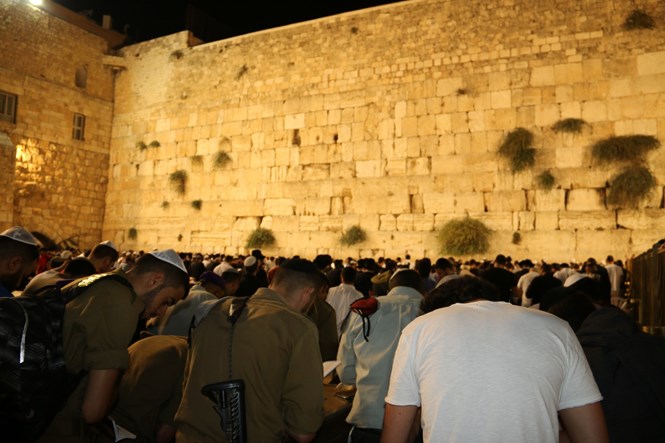 Photo: The Western Wall Heritage Foundation
Teshuvah (Return and Repentance)
The Hebrew word for repentance — teshuvah (תְּשׁוּבָה) — literally means return. The concept is not primarily about guilt or punishment but about coming back to a place one has left.
The Rambam (Hilchot Teshuvah 2:2) defines complete teshuvah with precision: abandoning the sin, resolving never to return to it, regretting the past, and confessing aloud. Selichot address the last of these directly, and create the conditions for the others.
Teshuvah in Jewish thought is not a single act but a season. Selichot mark its opening.
Divine Mercy and Forgiveness
The theological engine of Selichot is the assertion that divine mercy exceeds strict justice — and that this is by design, not by exception.
The Thirteen Attributes describe a God who is erech apayim — slow to anger — precisely so that there is time for a person to change. Delay is not indifference; it is the space in which repentance becomes possible.
Connection to Yom Kippur Prayers
Anyone who has attended Yom Kippur services will recognize a great deal of the Selichot liturgy. The overlap is deliberate and structural:
- The Thirteen Attributes are recited repeatedly on Yom Kippur.
- Ashamnu and Al Chet are the core confessions of Yom Kippur.
- Avinu Malkeinu is recited throughout the Ten Days of Repentance and on Yom Kippur.
- Many Selichot piyyutim appear in the Yom Kippur machzor.
Selichot function as rehearsal in the most serious sense of the word. By the time a person reaches Yom Kippur, the words are familiar, the melodies are known, and the internal work is underway. Yom Kippur becomes a culmination rather than a sudden confrontation.
Selichot on Fast Days
Fast Day Selichot Beyond the High Holidays
Selichot are not exclusive to the High Holiday season. They are recited in many Ashkenazi communities on the minor fast days as well:
- 17th of Tammuz
- Fast of Gedaliah (3 Tishrei)
- 10th of Tevet
- Fast of Esther (13 Adar)
Fast day Selichot are shorter than High Holiday Selichot and are recited during the Shacharit service rather than as a separate late-night gathering. Their piyyutim are specific to each fast, addressing the particular historical tragedy commemorated.
Sephardic communities generally do not recite Selichot on the minor fast days, reserving them for the Elul–Yom Kippur season — though customs vary.
The Aneinu Prayer
On all fast days, a prayer called Aneinu ("Answer us") is added to the Amidah — a plea that God answer the community as He answered those who fasted before Him in earlier generations.
עֲנֵנוּ יְהוָה עֲנֵנוּ בְּיוֹם צוֹם תַּעֲנִיתֵנוּ, כִּי בְצָרָה גְדוֹלָה אֲנָחְנוּ. אַל תֵּפֶן אֶל רִשְׁעֵנוּ, וְאַל תַּסְתֵּר פָּנֶיךָ מִמֶּנּוּ, וְאַל תִּתְעַלַּם מִתְּחִנָּתֵנוּ. הֱיֵה נָא קָרוֹב לְשַׁוְעָתֵנוּ, יְהִי נָא חַסְדְּךָ לְנַחֲמֵנוּ. כִּי אַתָּה יְהוָה הָעוֹנֶה בְּעֵת צָרָה, פּוֹדֶה וּמַצִּיל בְּכָל עֵת צָרָה וְצוּקָה.
Answer us, O Lord, answer us on the day of our fast, for we are in great distress. Do not turn to our wickedness, do not hide Your face from us, and do not ignore our plea. Be near, please, to our cry; let Your lovingkindness comfort us. For You, O Lord, are the One who answers in time of distress, who redeems and rescues in every time of distress and trouble.
Special Selichot Customs
Cantorial Selichot Services
Leil Selichot is one of the great occasions of the cantorial year. Many congregations engage a guest chazzan, sometimes accompanied by a choir, and the service becomes a significant musical event alongside its liturgical function.
The melodies are the distinctive High Holiday nusach — modes and motifs reserved for this season — and Leil Selichot is the first time they are heard in the new year. For many worshippers, that first phrase of High Holiday melody is the moment the season truly begins.
Certain piyyutim have acquired near-universal melodies transcending community lines. Others carry tunes specific to individual congregations, passed down across generations.
Communal Selichot Programs
Many American synagogues have expanded Leil Selichot into a full evening program: a lecture or panel earlier in the evening, a film screening or study session, a light meal, and then the service itself at midnight.
This structure serves a real purpose — it makes a midnight service accessible to people who would not otherwise attend, and it uses the waiting hours for learning rather than simply waiting.
Children Attending Leil Selichot
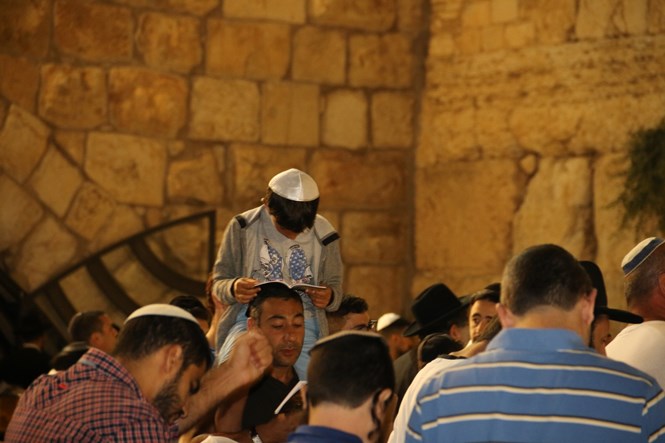 Photo: The Western Wall Heritage Foundation
Leil Selichot is one of the few late-night services that families attend together. Older children — generally from around bar and bat mitzvah age — commonly attend with their parents.
There is no obligation for children to attend, and the late hour makes it inappropriate for young children. But for many adults, the memory of being brought to Leil Selichot as a teenager is formative: the darkened synagogue, the white coverings on the ark, the unfamiliar melodies, the seriousness of the adults around them.
Selichot in American Jewish Communities
Late-Night Selichot Services in the U.S.
Across Orthodox communities in New York, New Jersey, Los Angeles, Chicago, Baltimore, Miami, and Toronto, Leil Selichot draws some of the largest crowds of the year outside the High Holidays themselves. Large congregations often run multiple services at staggered times to accommodate attendance.
Sephardic communities — the Syrian communities of Brooklyn and Deal, Persian communities in Great Neck and Los Angeles, Moroccan and Bukharian congregations across the country — maintain the full forty-day pre-dawn schedule throughout Elul. Synagogues fill before 5:00 AM, day after day, for six weeks.
Conservative congregations widely observe Leil Selichot, frequently as a communal evening program with study and a service. Reform congregations have increasingly reintroduced Selichot services in recent decades, often held earlier in the evening rather than at midnight.
Combined Educational Programs
A distinctly American development is the pairing of Leil Selichot with substantive educational programming — scholar-in-residence lectures, panel discussions on teshuvah, community-wide learning sessions, and text study on the Thirteen Attributes.
Hidabroot offers Selichot resources including recorded shiurim, explanations of the liturgy, and guidance for those approaching Selichot for the first time — in both Hebrew and English.
Sources & References
Biblical and Talmudic Sources:
- Exodus 34:6–7 — the Thirteen Attributes of Mercy.
- Exodus 32 — the Golden Calf and Moses' intercession.
- Numbers 14:20 — "Salachti kidvarecha"; the root of the word Selichot.
- Babylonian Talmud, Rosh Hashanah 17b — God as prayer leader; the order of the Thirteen Attributes.
- Babylonian Talmud, Yoma 86a–87b — the laws and categories of teshuvah.
- Psalm 145 (Ashrei) and Psalm 119:148 — liturgical sources.
Halachic Sources:
- Shulchan Aruch, Orach Chayim 581 — laws of Selichot.
- Rama (Rabbi Moshe Isserles), Orach Chayim 581:1 — the Ashkenazi custom.
- Mishnah Berurah 581 — detailed laws of Selichot.
- Kaf HaChayim, Orach Chayim 581 — Sephardic laws and customs.
- Rambam (Maimonides), Mishneh Torah, Hilchot Teshuvah, chapters 1–3.
- Arizal (Rabbi Isaac Luria), Shaar HaKavanot — the kabbalistic timing of Selichot.
- Rabbi Ovadia Yosef ZT"L, Chazon Ovadia, Yamim Nora'im.
- Yalkut Yosef, Yamim Nora'im.
- Rabbi Ben Zion Abba Shaul ZT"L, Ohr LeTzion, vol. 4.
Contemporary References:
- Chabad.org — articles on Selichot laws, customs, and timing.
- Orthodox Union (OU.org) — practical halacha on Selichot.
- Sefaria (sefaria.org) — full texts of Selichot liturgy, Talmud Rosh Hashanah, and Mishneh Torah.
- Hebcal (hebcal.com) — verified Leil Selichot and Elul dates, 2026–2030.
- Encyclopaedia Judaica — entries on Selichot, piyyut, Thirteen Attributes, and the Geonic liturgy.
- ArtScroll and Koren Selichot editions — bilingual texts with commentary.
For practical halachic guidance on individual situations — reciting Selichot without a minyan, community-specific customs, or which rite to follow — consult a qualified Orthodox rabbi.
Questions & Answers
+What are Selichot?
+When do Selichot start in 2026?
+What is the difference between Selichot and Selichos?
+What is Leil Selichot?
+When do Sephardic Jews begin Selichot?
+When do Ashkenazi Jews begin Selichot?
+What are the Thirteen Attributes of Mercy?
+Why are Selichot recited at midnight?
+Can I say Selichot without a minyan?
+How long is a Selichot service?
+Are Selichot said on Shabbat?
+What is a piyyut?
+Are Selichot said on fast days too?
+What is the best Selichot book for beginners?
+What is "El Melech Yoshev"?
+What is "Ben Adam Mah Lecha Nirdam"?

