

Home Styling
How Often Should You Replace Your Kitchen Sponge?
Why cleaning methods often fail, what microbiologists recommend, and how a simple weekly habit can help keep your kitchen safer and healthier
- Yitzchak Eitan
- | Updated
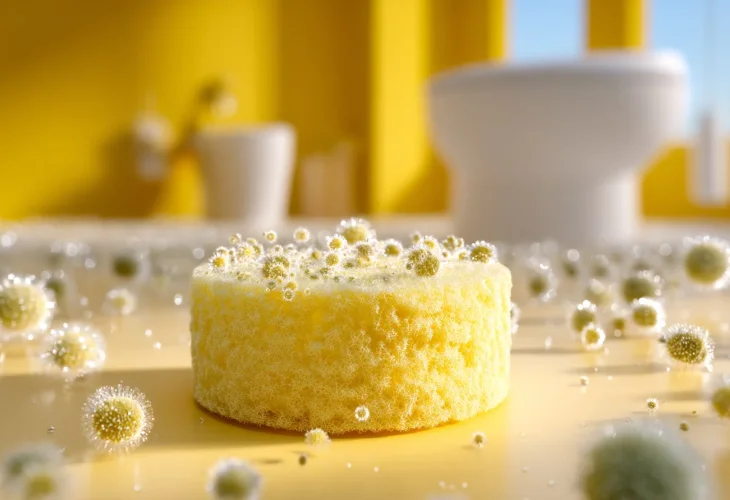
If you usually wait until your kitchen sponge starts falling apart or develops a bad smell before replacing it, you may want to rethink that habit. A comprehensive microbiological study highlighted by TIME magazine challenges the common belief that sponges can be safely reused through cleaning and suggests that they may pose a genuine health risk.
Contrary to what many people assume, the dirtiest place in the home is not the bathroom — it is often the kitchen countertop. Researchers found that the average kitchen contains significantly higher concentrations of bacteria than a household toilet seat.
Why Kitchen Sponges Are a Breeding Ground for Bacteria
The primary reason is the kitchen sponge, which scientists describe as the largest reservoir of active bacteria in the home. A sponge's porous structure, constant moisture, and trapped food residues create the perfect environment for bacterial colonies to multiply rapidly.
Every time the sponge is used, some of these bacteria can be transferred directly onto dishes, utensils, and food preparation surfaces.
Can You Safely Disinfect a Sponge?
Many people try to extend the life of their sponges by boiling them, running them through the dishwasher, or heating them in the microwave. However, laboratory findings suggest that these methods may not be as effective as commonly believed.
While such techniques can kill some of the weaker bacteria, they often leave behind the most resistant strains. With less competition, these hardier bacteria may multiply even more quickly.
The problem lies in the sponge's structure. Its synthetic fibers and deep pores create countless tiny hidden spaces that heat and disinfectants cannot easily reach.
Because cleaning agents and heat struggle to penetrate these microscopic cavities, bacteria can survive deep inside the sponge, making household sanitation efforts less effective than expected.
The Recommendation from Health Experts
Based on these findings, health experts recommend adopting a regular sponge replacement routine. Their advice is straightforward:
Replace your kitchen sponge every week, regardless of how clean it appears or whether it has developed an odor.
One practical solution is to purchase inexpensive multi-packs of sponges and designate a specific day each week to replace the old sponge with a new one.
This simple habit takes only a few seconds but can significantly reduce bacterial buildup and help maintain a cleaner, healthier kitchen environment for the entire family.
A sponge may look clean on the surface, but appearances can be deceiving. Because sponges provide ideal conditions for bacterial growth, regular replacement is one of the easiest and most effective steps you can take to improve kitchen hygiene and reduce the risk of contamination.

