

Magazine
"Your Son Has a Brain Tumor": The Words She Will Never Forget
Meital Yemini was already struggling with postpartum depression when doctors delivered devastating news about her young son.
- Miri Ben-David Leivi
- | Updated
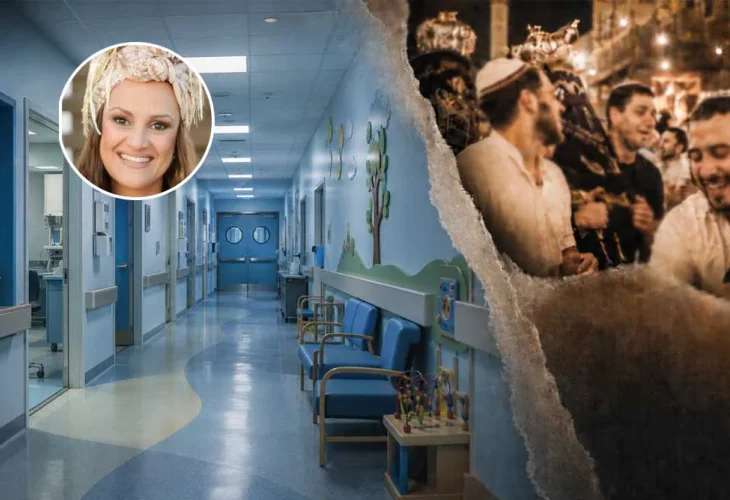 In the circle: Meital Yemini (Credit: David Stein)
There is one moment that Meital Yemini will never forget. She is sitting alone in a hospital corridor on Simchat Torah. Outside, people are dancing with Torah scrolls. Inside, her own world is falling apart. In her hands is an open book of Tehillim, and her six year old son is fighting for his life in the operating room.
She whispers a single sentence: “Master of the Universe, I have no one. I have only You.”
Meital, 49, is a singer who performs for women and the founder of the Alma women's center and healing clinic in the community of Alei Zahav. She is married to Shimon, a tax adviser, and together they have four children, ages 11 to 21.
Raised in a traditional home in Ramat Gan, Meital strengthened her commitment to Judaism after high school and went on to study in Jerusalem. She married at age 24 and, after facing fertility challenges and treatments, was blessed with her first child.
“When Hillel was born, I felt that everything had finally fallen into place,” she recalls. “He was a miracle child, an angel. A year and a half later, my daughter Eden was born. Then life took a different direction.”
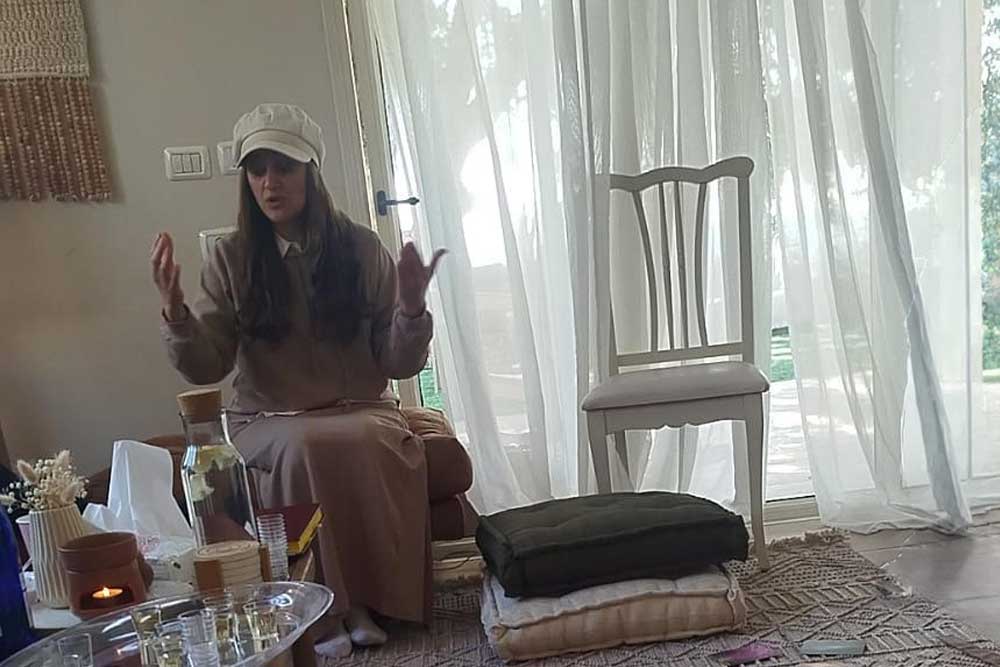 Meital today
The Hidden Struggle of Postpartum Depression
Meital describes herself as a perfectionist.
“I thought I was holding the whole world together, and suddenly I couldn't hold onto anything. Not the house, not the children, not even myself. I wanted to be the perfect mother at any cost. I wasn’t sleeping. I wasn’t eating. I wasn’t listening to my body. After a few months, I felt that something was very wrong.
“The things that used to make me happy no longer did. I didn’t want to see people. I cried endlessly. I hated myself. I was convinced I was a failure.”
Today, she recognizes those symptoms as classic postpartum depression.
“At the time, people hardly talked about it. But I understood enough to know I needed help. I went to my doctor and said, ‘I’m postpartum, I’m not okay, please help me.’ She referred me for psychiatric treatment, and I received medication for six months.
“There is something important people need to understand. Postpartum depression also has a physiological component. Just as you would treat an infection with antibiotics, this condition can and should be treated. No one should feel ashamed to ask for help. Awareness and treatment can change a person's life.”
A Spiritual Awakening
Looking back, Meital sees that painful period as the beginning of a profound spiritual journey.
“It forced me to stop and ask questions I had never asked before. Who am I? What is my purpose? Am I only what other people think of me, or is there something deeper?
“I began to recognize two voices within me. One voice told me I was a failure, a bad mother, someone without value. The other was loving and encouraging, reminding me of the good within me.
“Eventually, I understood that both voices come from the same Creator and each has a role. Most importantly, I realized that I am connected to absolute goodness. Darkness is simply the background against which light can be revealed.”
Several years later, her third child, Noam, was born.
“Again, I found myself struggling with depression. But this time I recognized the signs. I knew there were things I needed to accept and release. Looking back, I realized that part of my struggle came from my relentless effort to be a perfect mother, especially when it came to nursing.”
The Day Everything Changed
Before Meital had a chance to seek treatment again, a new and far greater challenge emerged.
When Noam was just three months old, Meital noticed something unusual about six year old Hillel. His movements seemed off. He looked weak and exhausted.
“That night, he woke up with severe headaches and vomiting. We went to the pediatrician, who immediately told us to go to the emergency room. I had no idea what was coming.”
Doctors wanted to perform a CT scan, but Meital pushed for an MRI instead. After hours of trying every possible avenue to arrange one, she felt defeated.
“I sat beside Hillel’s bed in tears and said, ‘Master of the Universe, please help me. I have only You.’”
Just minutes later, a doctor entered the room and informed her that an MRI slot had become available.
“That was the first lesson Hashem taught me. ‘Do not put your trust in princes, nor in mortal man, who cannot save.’ I had turned everywhere else first. But Hashem was waiting for me to turn to Him.”
The MRI revealed devastating news.
“The doctor told me words I will never forget: ‘Mrs. Yemini, your son has a seven centimeter brain tumor in the posterior fossa. He is being transferred directly to surgery.’
“I was in shock. I was already battling postpartum depression, and suddenly the ground disappeared beneath my feet.”
One of Meital’s aunts contacted Rabbi Firer, who quickly became involved in the case.
“It turned out that the surgeon who arrived was considered the leading pediatric brain surgeon in the country. He came immediately to perform the operation. Once again, Hashem arranged everything with incredible precision.”
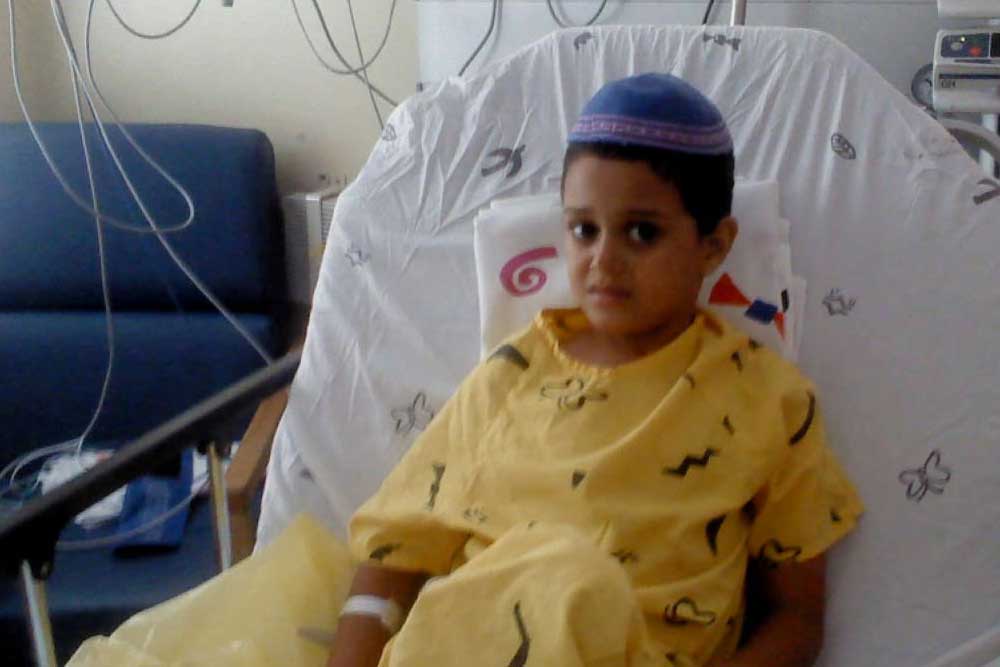 Hillel at age 6 during his hospitalization and recovery
Alone With Tehillim
As Simchat Torah began, Meital sat alone outside the operating room.
“Downstairs, people were dancing with Torah scrolls. I was holding Tehillim and crying. Again, I spoke to Hashem.
“My father always says at the Shabbat table, ‘Hashem is my shepherd, I shall not lack.’ I told Hashem, ‘I appoint You as my shepherd. I have no one besides You.’”
When she finished praying, she opened Tehillim and found herself looking directly at that chapter.
“I felt that Hashem was answering me and telling me He was with me.”
As the hours passed, Meital continued praying.
Then something unexpected happened.
“A group of young men dressed in white entered the department carrying a Torah scroll. They stopped near me, asked for my son’s name, recited a Mi Sheberach prayer, and began saying Shir Hama'alot, Mima'amakim Keraticha.
“I stood there crying. I felt Hashem’s embrace.”
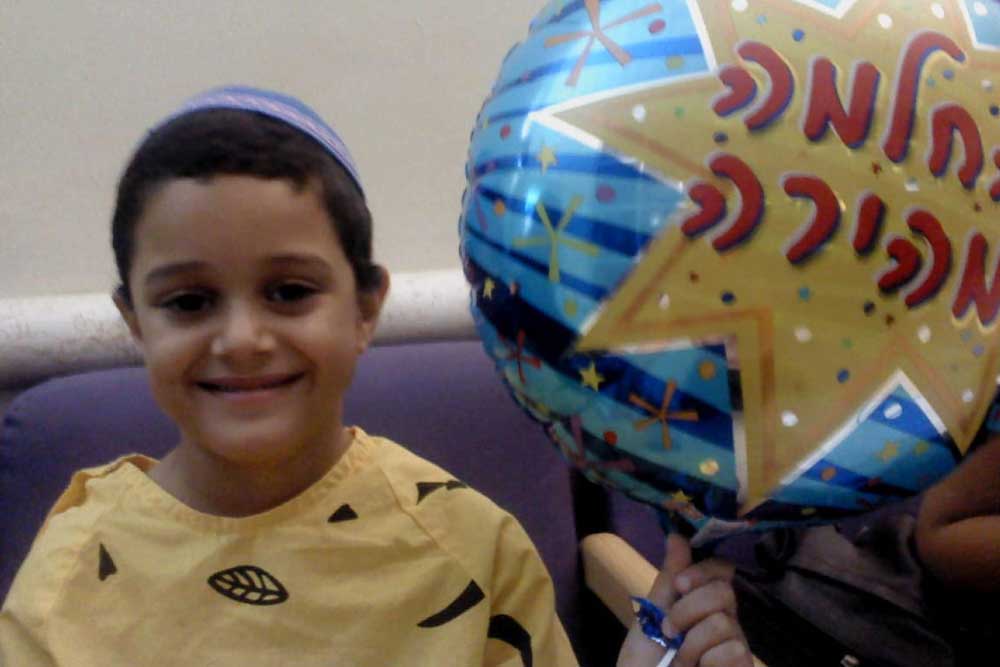 Hillel following the successful removal of a brain tumor
Finding Strength Through Faith
After many tense hours, the doctors emerged with good news.
“Baruch Hashem, they had completely removed the tumor.”
Standing beside Hillel’s hospital bed, Meital made a personal commitment.
“For every improvement, no matter how small, I would say Mizmor L'Todah. When they removed a tube, I said it. When he opened his eyes, I said it. When he took his first step, I said it again.”
As Hillel slowly recovered, Meital noticed something remarkable happening within herself.
“During his treatment and rehabilitation, I realized I had been given strength. I became strong, trusting, and full of faith. The depression disappeared.
“Not because I ignored it, but because I stopped focusing only on myself. I devoted myself to helping my son heal.
“That experience taught me something that remains with me to this day. When a person becomes disconnected from their soul and from Hashem, they lose vitality. But when there is connection, life begins to flow again, like plugging a cord into an outlet.
“Of course, we relied on doctors and medical treatment. But through every step of the journey, I chose to run toward Hashem, not away from Him. It was in that darkness that I discovered faith and strength I never knew I had.”
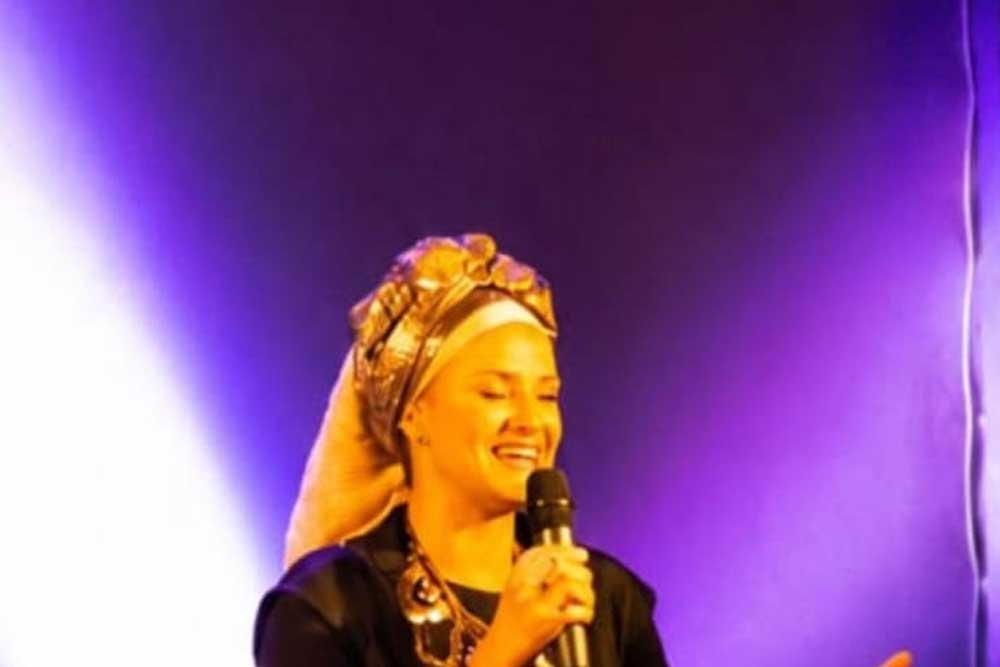 Meital singing at a performance
A New Mission in Life
During her fourth pregnancy, Meital once again experienced depression, this time beginning in her eighth month.
“But this time I approached it differently. I was more mature and more connected. I wanted to repair what had happened in the past, and Baruch Hashem, I succeeded. I didn't even need medication.”
After giving birth, she devoted herself fully to the things she loved most: singing, dancing, and Torah learning.
She began performing at women's events, released a song called Cholat Ahavah, and spent years studying Chassidut and the inner teachings of Torah.
“I learned to understand my soul, listen to my heart, and stop fighting reality. I realized that our entire journey in life is a journey of closeness and humility.
“There is Someone who runs the world. He is good, He does good, and He loves us. He is simply waiting for us to awaken to Him.
“My life changed completely. Today, Hashem is my partner and my best friend. When I have Him, I have everything.”
Today, Meital shares those lessons with other women through the Alma center in Alei Zahav.
“Women come to learn, grow, and reconnect with themselves through the inner teachings of Torah. We also offer a healing clinic based on the understanding that healing begins when people receive genuine presence, love, and support.
“After years in management positions in the public sector, Hashem led me to my true mission. I have been privileged to meet extraordinary women whose lives have changed completely, just as mine did.
“In the end, all of us are dealing with similar struggles. There is wisdom, there is a path, and there is no reason to walk it alone.”
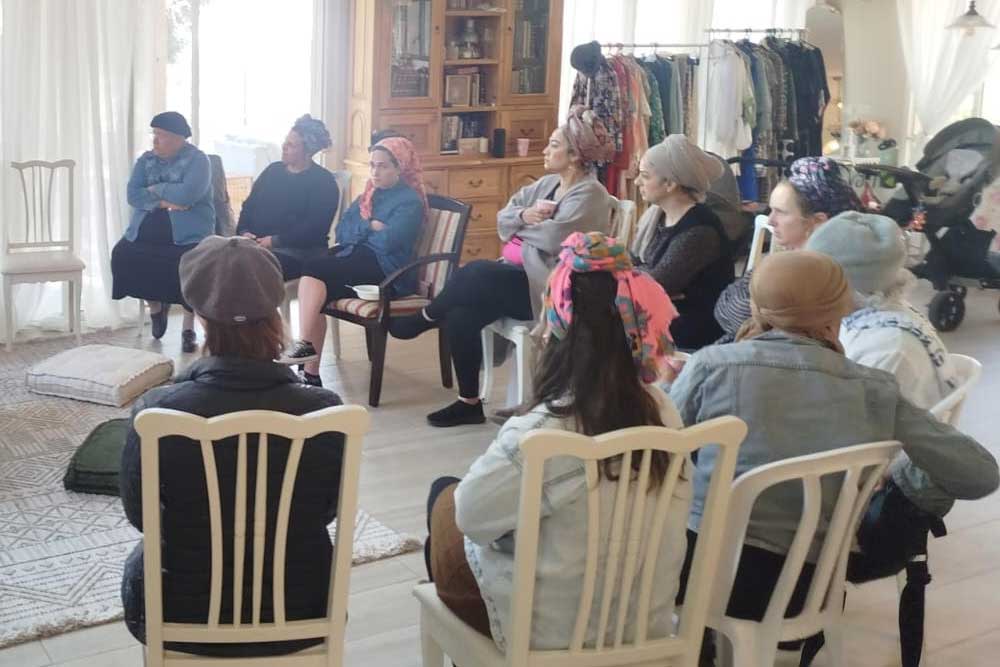 The Alma Center, a space for women's growth and connection
Where Is Hillel Today?
Today, Hillel is 21 years old.
For many years he remained under medical supervision, and Baruch Hashem, he is healthy and thriving.
He completed his studies successfully, is currently learning in a hesder yeshiva, and is preparing for combat military service.
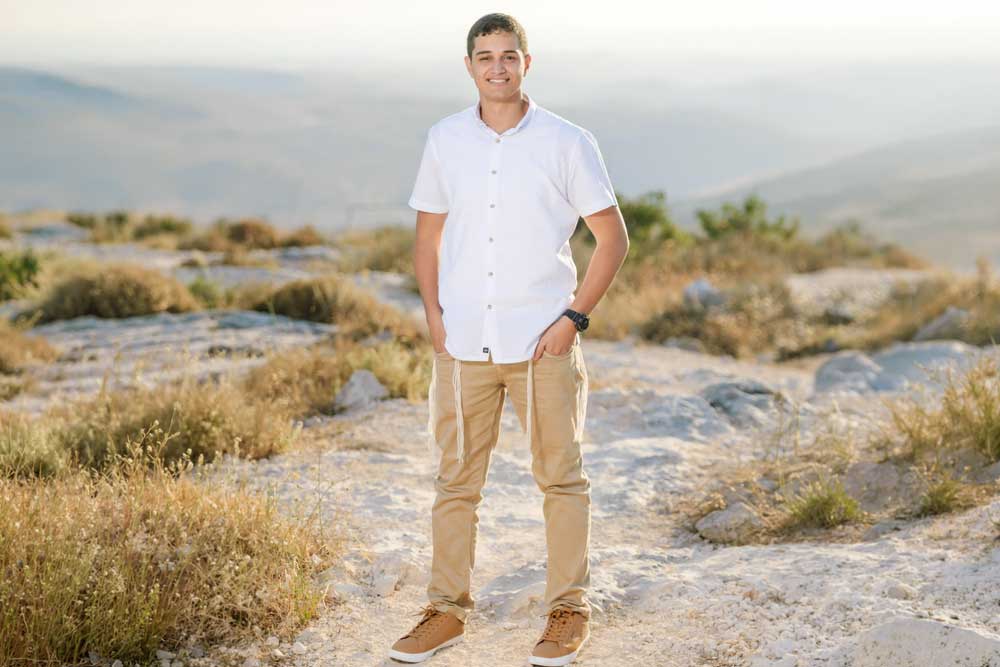
A Message of Hope
Looking back, Meital sees every challenge she faced as part of a larger journey that brought her closer to Hashem, to herself, and to her life's purpose.
Through postpartum depression, fear, uncertainty, and her son's life threatening illness, she discovered reserves of faith and strength she never knew she possessed. Today, she shares that message with others: no matter how dark a situation may seem, a person is never alone. With faith, support, and a connection to Hashem, it is possible to find healing, hope, and even growth in the most difficult moments.

