

Magazine
The Actor Who Found Judaism Through Playing a Rabbi
What began as preparation for an acting role unexpectedly led Shlomo Yan Ben on a journey toward Torah and mitzvot.
- Michal Arieli
- | Updated
 Shlomo Yan Ben
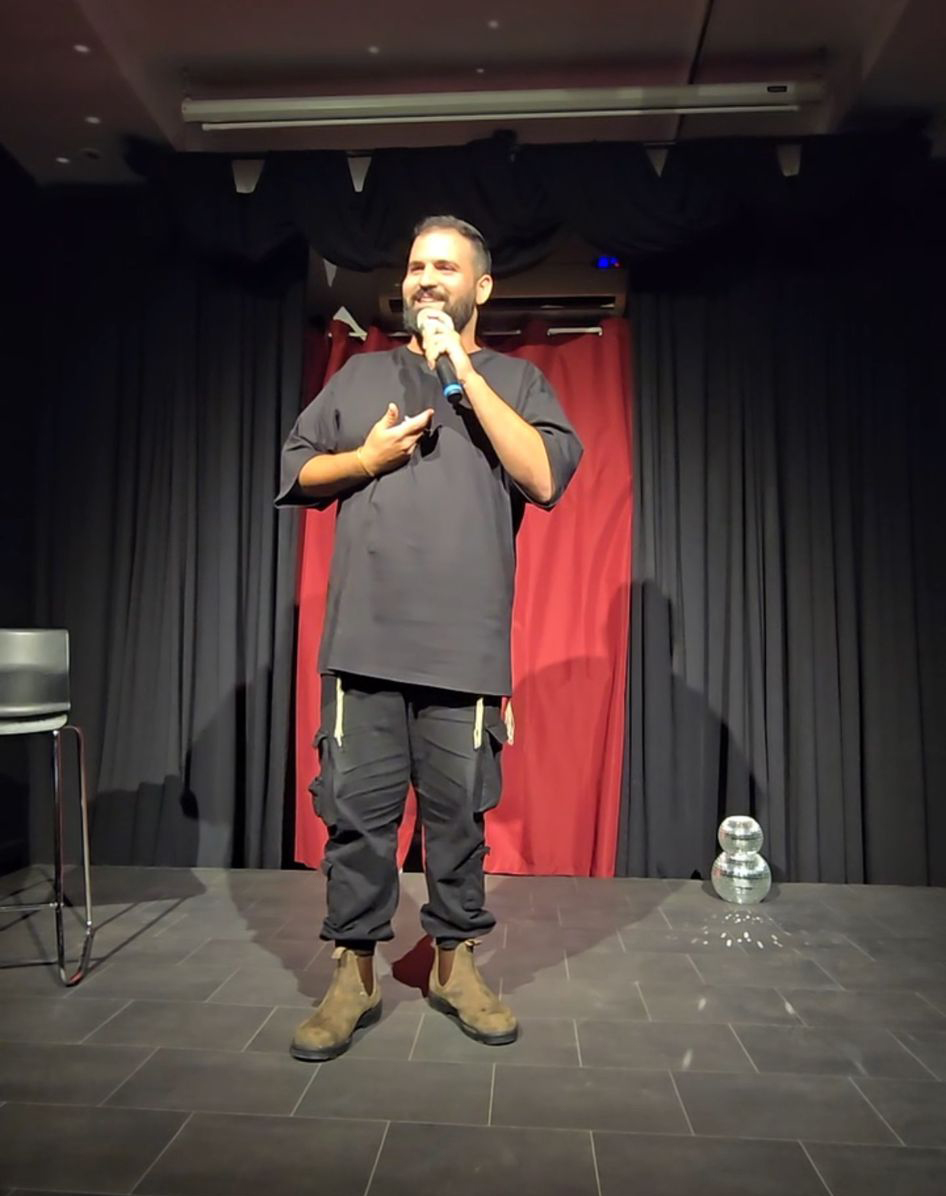
Sometimes, the most unexpected roles end up changing a person's life. For actor and stand-up comedian Shlomo Yan Ben, what began as research for a theater production eventually became a journey of spiritual discovery that transformed his worldview. Today, at 28, he balances a career in entertainment with a growing commitment to Torah and mitzvot, a path he never imagined he would take.
The Role That Changed Everything
If you had told Shlomo Yan Ben years ago that he would one day be living in Tel Aviv, working as an actor and stand-up comedian, and embracing a Torah-observant lifestyle, he would have found it hard to believe.
Born in France, Yan Ben made aliyah with his family as a child. The family moved frequently, living in Eilat, Netanya, and Kfar Yona before he eventually attended a military boarding school and later served in the army.
"Moving so often definitely shaped me," he recalls. "Every few years I had to start over in a new school. I was also overweight as a child, and humor became a way of coping. Making people laugh helped me find my place."
At the time, he had no idea that comedy and performance would eventually become his profession.
Discovering a Passion for Acting
Like many people, Yan Ben found himself doing some soul-searching during the COVID pandemic.
"It gave me time to think about what I was good at and what I wanted to do with my life," he says. "I realized I loved being around people and creating an atmosphere where others could laugh, connect, or feel something meaningful."
Around the same time, he began singing at events and discovered he enjoyed performing. Rather than limiting himself to music, he decided to pursue acting professionally.
As restrictions eased, he enrolled in a three-year acting program.
"People sometimes think acting school is easy," he says with a smile. "In reality, it's extremely demanding. You're studying, rehearsing, and working constantly. But when you stand on stage and connect with an audience, it's worth every minute."
A Rabbi on Stage
The turning point came during his second year of studies.
As part of an original production called Question and Answer, which explored the worlds of religious observance and secular life, Yan Ben was cast in the role of a rabbi.
The role was central to the play and required him to portray the character authentically.
"The director kept telling me that something was missing," he recalls. "Eventually she said, 'You need to understand rabbis better. Go watch Torah classes and learn how they speak and think.'"
Until that point, Yan Ben had never listened to Torah lectures.
But he took the assignment seriously.
To prepare for the role, he began watching classes by Rabbi Zamir Cohen and Rabbi Yitzchak Pangr, studying both their ideas and their presentation styles.
At first, it was simply research.
Then something unexpected happened.
Finding Answers He Wasn't Looking For
Even after the play began running successfully, Yan Ben continued listening to Torah classes.
"I no longer needed them for the role," he says. "But I found myself going back to them again and again. I felt like I was hearing answers to questions I didn't even know I had."
What began as professional preparation gradually became a personal journey.
Still, he resisted labeling himself.
"For a long time, I avoided calling myself a baal teshuva," he admits. "It was easier to say, 'I'm just listening to Torah classes.' To be honest, I was a little afraid of where it might lead."
A Slow and Meaningful Process
The change did not happen overnight.
During his second and third years of study, Yan Ben continued learning Torah regularly. He also received a scholarship for Jewish studies, which deepened his connection even further.
As his learning grew, so did his questions.
"Was the Shabbat I knew really what Shabbat was meant to be?" he wondered. "Why did I feel like something was missing? Why did Torah feel increasingly meaningful?"
Eventually, the questions became practical.
The first mitzvah he consciously took upon himself was wearing tzitzit.
From there, he gradually added more mitzvot, always trying to understand not only what to do, but why.
"When my heart and mind connected, observance became much easier," he explains. "I wasn't doing things blindly. I felt like I understood what stood behind them."

Facing the Reactions of Others
Not everyone understood the changes he was making.
"Whenever someone changes significantly, it can be difficult for people around them," he says. "You dress differently, speak differently, think differently. Some friends were genuinely worried about me. Others were critical."
As someone who values relationships deeply, those reactions were painful.
Yet they also strengthened his conviction.
"I realized that if everyone was so concerned about my future, then I needed to make sure I was taking care of myself too. And if I felt this was the right path, I had to keep moving forward."
His family, however, was supportive.
His father had become religious years earlier and had long prayed that his son would one day find his own path to Torah.
"He later told me that he had prayed I would come to it through joy and love," Yan Ben says.
From Loss to Joy
In recent years, life has brought both tremendous sorrow and profound happiness.
Yan Ben lost close friends on October 7. At the same time, he experienced one of life's greatest blessings: getting engaged and married.
"You find yourself moving between grief and joy," he says. "Those experiences change you."
The challenges also led him to reexamine himself repeatedly.
"There were times when I stopped performing and asked myself difficult questions about who I am and where I'm going. Every time, I came back feeling grateful for the path I've chosen."
Bringing Torah Into the Spotlight
Today, Yan Ben continues working in acting and entertainment.
"Acting is part of who I am," he says. "But now I approach it differently."
Before accepting a role, he carefully examines the production and its message.
"I always ask myself: Is this something that can create a kiddush Hashem? Is this the right place for me?"
If the answer is yes, he embraces the opportunity wholeheartedly.
His goal, he says, is not simply to entertain.
It's to bring authenticity, meaning, and positive influence to every stage he steps onto.
Looking back, it's remarkable to think that a single acting role set the entire journey in motion. What began as an attempt to play a rabbi convincingly eventually became something far more profound: a search for truth that changed the course of his life.

