

Evolution
The Fossil Record: Evidence or Challenge?
The fossil record is often presented as powerful evidence for evolution, but critics argue that important questions remain unanswered.
- Professor Moshe Trop
- | Updated
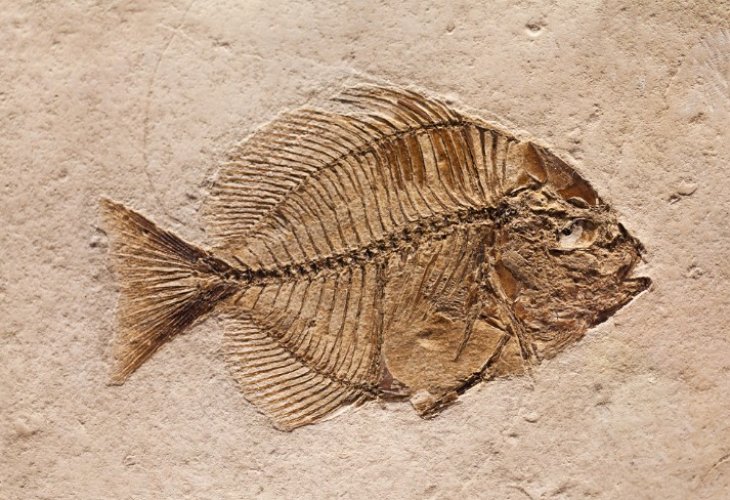
The fossil record has long played a central role in discussions about the origins and development of life on Earth. Supporters of evolutionary theory view the sequence of fossils found in rock layers as evidence of gradual biological change over vast periods of time. Critics, however, argue that the fossil record contains significant challenges that raise questions about the standard evolutionary narrative.
Among the most frequently discussed issues are fossils that appear in unexpected places, gaps in the fossil record, and debates over how geological layers are interpreted and dated.
Unexpected Fossils and Geological Puzzles
In many locations around the world, fossils are found in a sequence that appears to fit the conventional geological timeline. However, critics of evolution point to cases where fossils seem to appear outside the periods in which they are expected.
According to these critics, some discoveries involve organisms appearing earlier or later than evolutionary models would predict. They argue that such findings complicate efforts to reconstruct a clear timeline of life's development and raise questions about how the fossil record should be interpreted.
Supporters of evolutionary theory generally respond that unusual findings often have alternative explanations, including geological disturbances, erosion, redeposition, dating uncertainties, or incomplete information about the circumstances of discovery.
The Geological Column
Many people imagine that geologists uncovered a complete and uninterrupted sequence of rock layers stretching from the earliest periods of Earth's history to the present day.
In reality, no single location on Earth contains the entire geological column. Instead, geologists reconstruct the column by comparing rock formations and fossil-bearing layers from many different locations around the world.
Critics argue that because the geological record is fragmented, reconstructing Earth's history involves interpretation and assumptions. They question whether the resulting timeline is as certain as it is sometimes presented.
Geologists, on the other hand, maintain that the reconstruction is supported by multiple independent lines of evidence, including rock formations, fossil distributions, radiometric dating, and other geological indicators.
The Question of Transitional Fossils
One of Charles Darwin's own concerns was the relative scarcity of transitional forms in the fossil record. He acknowledged that the geological record available in his day appeared incomplete and suggested that future discoveries would fill many of the gaps.
Since Darwin's time, thousands of additional fossils have been uncovered, including many that scientists identify as transitional forms. Nevertheless, critics continue to argue that important gaps remain and that the fossil record does not fully demonstrate the gradual transitions predicted by evolutionary theory.
The debate over what qualifies as a transitional fossil remains one of the most discussed topics in the broader conversation about evolution.
Fossils That Challenge Expectations
Critics of evolution often highlight reports of fossils, footprints, tools, or human remains allegedly found in geological layers assigned to much earlier periods than expected.
Such claims have generated significant controversy. In many cases, mainstream researchers dispute the dating, interpretation, or authenticity of the findings. In other cases, questions remain about the geological context in which the discoveries were made.
Because these claims, if verified, could have major implications for our understanding of Earth's history, they continue to attract attention from both researchers and critics alike.
Different Ways of Interpreting the Evidence
The same evidence is often interpreted differently depending on one's underlying assumptions about the history of life.
Evolutionary theory interprets the fossil record as evidence of gradual development and diversification over hundreds of millions of years. Critics argue that many fossil patterns are equally compatible with alternative explanations and that certain discoveries fit poorly within the evolutionary framework.
As a result, debates about fossils often involve more than the fossils themselves. They also touch on broader questions regarding scientific interpretation, historical reconstruction, and the assumptions used to explain the evidence.
A Continuing Discussion
The fossil record remains one of the most important sources of information about the history of life on Earth. At the same time, it continues to be a subject of active discussion and debate.
Questions about fossil distribution, geological dating, transitional forms, and unusual discoveries ensure that the conversation remains ongoing. Whether one views the fossil record as strong evidence for evolution or as a challenge to it, there is little doubt that fossils continue to play a central role in one of the most significant scientific and philosophical discussions of modern times.

