

Evolution
Evolution vs. Creation: What Does the Torah Say About Human Origins?
Explore the debate between Darwin’s theory of evolution and the biblical account of Creation, including the origins of humanity, the complexity of life, and the Jewish perspective on design, purpose, and the human soul
- Yonatan HaLevi
- | Updated
 (Photo: shutterstock)
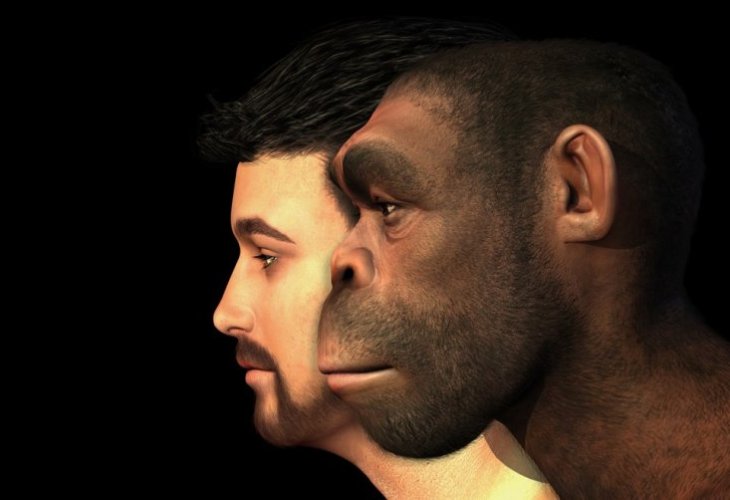
The theory of evolution, developed by Charles Darwin, proposes that life developed through natural processes involving genetic changes accumulated over many generations. According to this view, the world has existed for millions of years, during which all known forms of life gradually evolved.
At first glance, this appears to conflict with the biblical account of Creation.
The Torah's Account of Creation
According to the straightforward reading of the Book of Genesis, God created the universe and all living organisms directly and intentionally, rather than through a long process of gradual development.
The Sages taught in the Talmud: “All the works of Creation were created in their full stature, with their full understanding, and with their complete form.”
From this perspective, creation was immediate and complete.
Those who accept the evolutionary model generally view the diversity of life as the result of natural processes, while traditional Jewish teachings emphasize divine creation and purpose.
The Unique Nature of Humanity
A central distinction in Jewish thought concerns the human soul.
Genesis 2:7 states: “And the Lord God formed man from the dust of the ground, and breathed into his nostrils the breath of life; and man became a living soul.”
According to traditional Judaism, human beings possess a divine soul that sets them apart from animals. Because of this, many religious thinkers reject the idea that humans are merely another branch of the animal kingdom.
Scientific Criticisms Raised Against Evolution
Throughout its history, evolutionary theory has faced criticism from both religious and scientific perspectives.
Some critics argue that the fossil record does not contain enough transitional forms to fully explain the development of all species. Others question whether certain highly complex biological systems could arise through gradual evolutionary processes alone.
While evolutionary biologists offer explanations for these questions, the debate continues in some scientific, philosophical, and religious circles.
The Example of the Human Eye
One frequently cited example is the human eye. The eye can:
Automatically focus on objects at different distances.
Adjust to varying light conditions.
Process enormous amounts of visual information.
Coordinate with the brain almost instantaneously.
To many believers, the sophistication of the eye points to intentional design.
They argue that not only the eye, but also organs such as the heart, brain, liver, kidneys, digestive system, and reproductive system display extraordinary complexity and precision.
From this viewpoint, the intricate coordination of these systems suggests purposeful creation rather than a purely unguided process.
The Argument from Design
Supporters of a creation-based perspective often point to the remarkable order found throughout nature.
A famous teaching attributed to Rabbi Akiva expresses this idea: “Just as a house testifies to its builder, a garment to its weaver, and a door to its carpenter, so too the world testifies that the Holy One created it.”
According to this perspective, the complexity, beauty, and functionality of the natural world serve as evidence of a Creator.
Two Different Ways of Viewing Origins
The discussion between evolution and creation is not merely scientific; it also involves deeper questions about purpose, meaning, and humanity's place in the universe.
Evolutionary theory seeks to explain biological diversity through natural mechanisms.
Traditional Jewish thought emphasizes divine creation, human uniqueness, and purposeful design.
For many people, the conversation is ultimately about more than origins — it is about how we understand life itself and whether the order we observe in nature points beyond the natural world.

