

Israel News
Israel Takes Over Jewish Building Powers in Chevron From Palestinians
“This is a historic correction,” Smotrich said, while the Foreign Ministry clarified that the wider 1997 Chevron Agreement remains in force
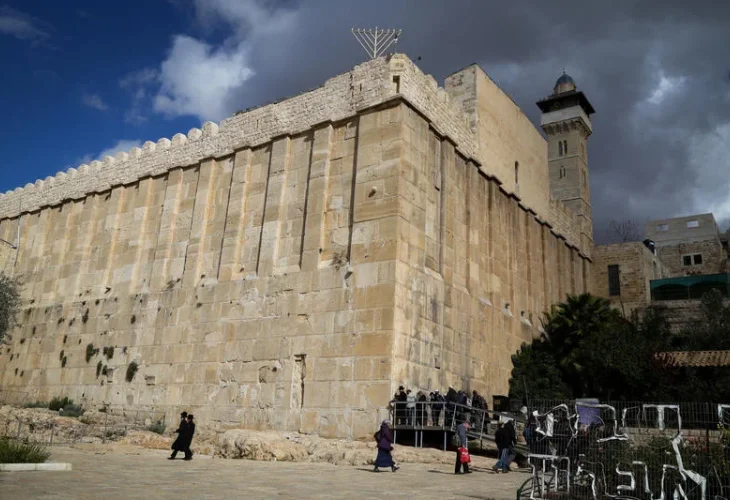 Cave of the Patriarch (Me'arat Hamachpela) (Gershon Elinson/Flash90)
Israel has moved planning and construction authority for Jewish Chevron and Maarat Hamachpela away from Palestinian authorities and into Israeli hands, Finance Minister Bezalel Smotrich announced Tuesday.
Chevron is one of the most sensitive and disputed cities in Judea and Samaria because it contains Maarat Hamachpela and is split between Israeli and Palestinian control. The city is home to roughly 200,000 Palestinians and several hundred Jews. Under the 1997 Chevron Agreement, Chevron was divided into H1 and H2: H1, about 80% of the city, was placed under Palestinian control, while H2, about 20%, remained under Israeli security control. H2 includes the Jewish community, parts of the Old City, Maarat Hamachpela and about 33,000 Palestinians.
Israel already controlled security in H2, but it did not have sole control over every building decision there. Until now, construction and infrastructure work connected to Jewish Chevron and Maarat Hamachpela still required involvement from the Palestinian-run Chevron municipality. Smotrich’s announcement removes that role and puts those approvals in Israeli hands. It does not place all of Chevron, or all Palestinian areas of the city, under new Israeli municipal control.
Smotrich said the move was completed after a cabinet decision approved several months ago and after the Supreme Planning Council finalized the necessary steps Monday night.
“Yesterday, we canceled the Chevron agreements,” Smotrich said during a ceremony marking the establishment of Doron, a new community in the Har Chevron region. “For many long years, one of the most absurd clauses of Oslo remained in place, with powers relating to the Jewish community in Chevron and the holy sites dependent on the terror municipality of Chevron. Yesterday, we put an end to it.”
He added: “This is much more than a planning step. This is a historic correction.”
Hours later, the Foreign Ministry issued a clarification saying the wider 1997 Chevron Agreement had not been canceled. The ministry said the move only changes who handles building approvals for Jewish Chevron and Maarat Hamachpela, while the wider agreement dividing control of the city remains in place.
“The Hebron Agreement has not been canceled,” the Foreign Ministry said in English, using the secular name for Chevron. “Beyond that, no changes have been made.”
According to the ministry, the move followed years of “complete lack of cooperation” by the Chevron municipality, which it said prevented progress on planning matters connected to the Jewish community and Jewish heritage sites.
The Palestinian Authority condemned the decision, with Mahmoud Abbas’s office calling it an “infringement upon the political and legal status of Chevron.” The PA also urged the international community, especially the United States, to intervene immediately to stop what it described as “this most dangerous step.”
The practical result is a narrow but significant shift in Chevron, where even technical building decisions carry political weight. Israeli authorities will now control planning approvals for Jewish Chevron and Maarat Hamachpela, giving Israel greater direct authority over the Jewish sites inside the divided city.

