

Hanukkah Recipes
Healthy Beet Latkes for Chanukah: The Nutritious Alternative to Traditional Potato Latkes
Discover the surprising health benefits of beets, from antioxidants and heart health support to improved digestion, plus an easy baked beet latke recipe perfect for Chanukah
- Yitzchak Eitan
- | Updated
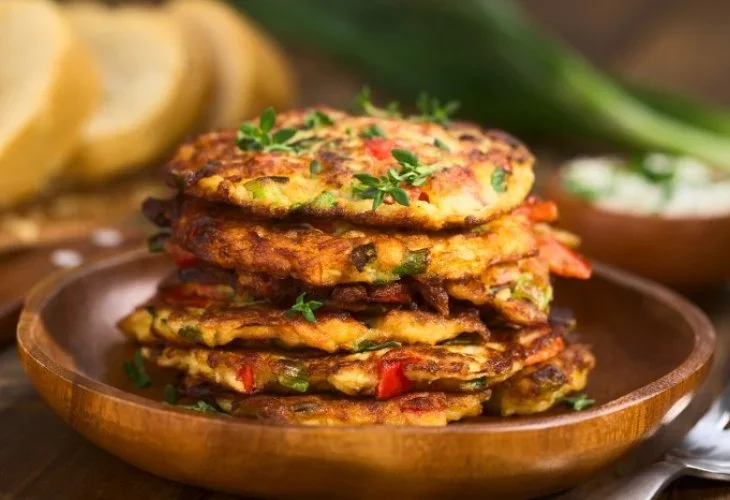
Can the traditional Chanukah latke recipe be replaced with something healthier? According to Dr. Maya Rozman, the answer is yes.
“As Chanukah approaches, it’s worth paying attention to a particularly healthy root vegetable that can be used to make latkes instead of traditional potatoes,” she explained. “It’s a great way to add variety to your holiday menu.”
Why Beets Are a Smart Alternative
Dr. Rozman points out that although beets look starchy and sweet, they actually contain only about 40–45 calories per 100 grams. Most of their volume comes from water and dietary fiber.
“I tend to classify beets as a ‘free vegetable,’ making them an excellent choice for weight management and healthy eating,” she says.
Beets can be eaten either cooked or raw. Cooking softens the plant cells, improves the absorption of certain beneficial compounds, and makes digestion easier. However, unlike potatoes, beets can also be enjoyed raw without any concerns. They can be grated, thinly sliced, or added to salads, where their naturally sweet and mild flavor shines through.
Dr. Rozman notes that beets retain most of their antioxidant properties even after baking or brief cooking, so there is little nutritional difference between baked and boiled beets. The choice mainly comes down to personal preference.
Packed With Powerful Antioxidants
According to Dr. Rozman, beets are rich in betalains, particularly betanin, the compound responsible for their deep red color.
“These compounds provide anti-inflammatory benefits and strong antioxidant protection,” she explains. “They’re also the reason beets stain everything they touch — clothing, cutting boards, and baking paper.”
She adds an important clarification: the red color of beets does not indicate a high iron content.
“Beets contain a moderate amount of iron — about 0.8 milligrams per 100 grams, but the red pigment is not related to iron. That’s a common myth.”
Research Highlights the Benefits of Beets
Dr. Rozman cites research published in the Journal of Food Science, which found that beet extracts demonstrated high antioxidant activity, in some cases even surpassing that measured in red wine.
This means beets may help protect the body from oxidative damage without the alcohol or added sugars associated with some other antioxidant-rich foods.
Natural Support for Healthy Blood Pressure
Beets are naturally rich in nitrates, which the body converts into nitric oxide — a molecule that helps widen blood vessels and improve circulation.
Dr. Rozman also referenced a study published in the Hypertension Journal, which found that drinking beet juice may temporarily lower blood pressure in people with mildly elevated readings.
Good for Digestion and Gut Health
The high fiber content of beets supports healthy digestion by increasing stool bulk and promoting regular bowel movements. In addition, their high water content helps move waste efficiently through the digestive system.
For this reason, beets are often recommended for people struggling with constipation.
Why Beets Can Turn Urine and Stool Red
One surprising effect of eating beets is that they can cause urine and stool to appear red.
“This phenomenon is called beeturia,” says Dr. Rozman. “It’s much more common than people realize. The pigments pass through the digestive system and kidneys, changing the color of bodily waste.”
She emphasizes that this is completely harmless and does not indicate bleeding, illness, or a need for medical testing.
Dr. Maya Rozman’s Baked Beet Latke Recipe
Ingredients
3 beets
1–2 eggs
½ cup whole-wheat breadcrumbs
Chopped parsley and cilantro
1 teaspoon salt
½ teaspoon black pepper
Instructions
Peel and grate the beets using a box grater.
Combine the grated beets with the eggs, breadcrumbs, herbs, salt, and pepper.
Mix well until a uniform mixture forms.
Shape the mixture into latkes and place them on a lightly greased baking sheet lined with parchment paper.
Lightly spray the tops with cooking oil spray.
Bake in a preheated oven at 200°C (400°F) for 15–20 minutes on one side.
Turn the latkes over and bake for an additional 10 minutes, or until golden and cooked through.
Enjoy!

