

World News
Australia’s Far-Right One Nation Surges Targeting Radical Islam, Multiculturalism
Pauline Hanson says Australia must reject multiculturalism as polls place her party ahead of the country’s traditional political rivals
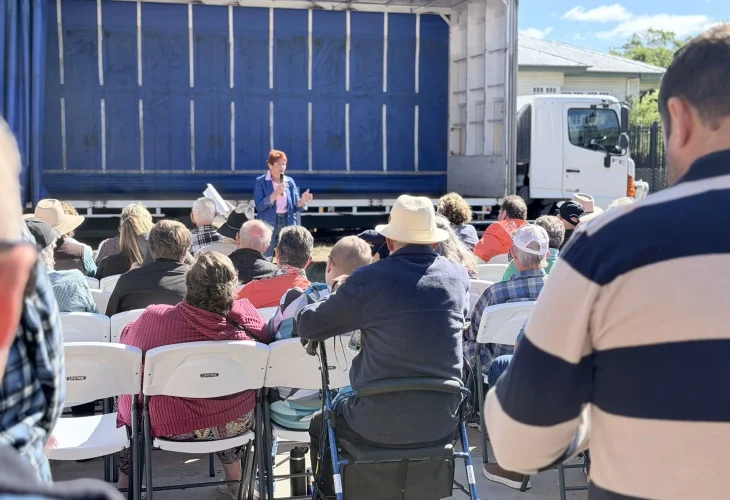 Pauline Hanson (X)
Pauline Hanson, leader of Australia’s far-right One Nation party, attacked “radical Islam,” multiculturalism and the media on Wednesday in a major address at Canberra’s National Press Club, as new polling showed her party moving from the fringe toward national influence.
The speech comes as One Nation records its strongest position in years. A recent Sky News Pulse/YouGov poll placed the party at 28% of the primary vote, ahead of Labor at 26% and the Coalition at 21%, while another poll showed Hanson overtaking Prime Minister Anthony Albanese as Australians’ preferred choice for prime minister.
Hanson, a senator who has spent decades outside Australia’s political mainstream, used the speech to accuse journalists and the political establishment of dismissing her rise. “Australians aren’t buying this **** from the political establishment and its media supporters anymore,” she said.
“I don’t answer to the media. I answer to the Australian people,” she added.
Hanson’s central message was that Australia must reject multiculturalism and demand a single national culture. “We cannot be a multicultural society. We are a multiracial society, but we must be monocultural,” she said.
Her policy proposals include withdrawing Australia from the U.N. Refugee Convention, tightening visa rules, mandatory visa cancellations for criminal offenders and longer waits for citizenship.
The polling surge does not mean One Nation is likely to win a parliamentary majority in the next election, due in 2028. But it could give Hanson a major role in shaping a future right-wing coalition, especially if Australia’s major parties continue losing support.
Australian coverage has linked One Nation’s rise to public frustration over the cost of living, immigration, national identity and weakness inside the Liberal-National Coalition. The party’s rise also reflects a wider trend in Western countries, where populist and nationalist parties have gained support by attacking immigration policy and political elites.
For Jewish communities, the debate carries added significance. Australia has seen rising antisemitism since October 7, making questions of radicalization, integration and public security more urgent. Hanson’s comments are not a Jewish community position, but they are part of a broader national argument over how Australia responds to extremism and social division.
The speech was briefly disrupted by protesters, with the activist group GetUp claiming responsibility for a banner accusing Hanson of opposing a pay rise for workers while taking a major pay rise herself.
Hanson’s opponents continue to describe her as divisive. But the latest polling suggests she can no longer be treated as only a protest politician. With the next election still two years away, One Nation’s rise has become one of the clearest signs that Australia’s political center is under pressure.

