

Magazine
Rabbi Ofir Malka on Siyata D’Shmaya, Family, and Preparing for the High Holidays
In a candid interview, Rabbi Ofir Malka shares the secret behind his demanding schedule, and practical guidance for approaching Rosh Hashanah and Yom Kippur with purpose and preparation
- Michal Arieli
- | Updated
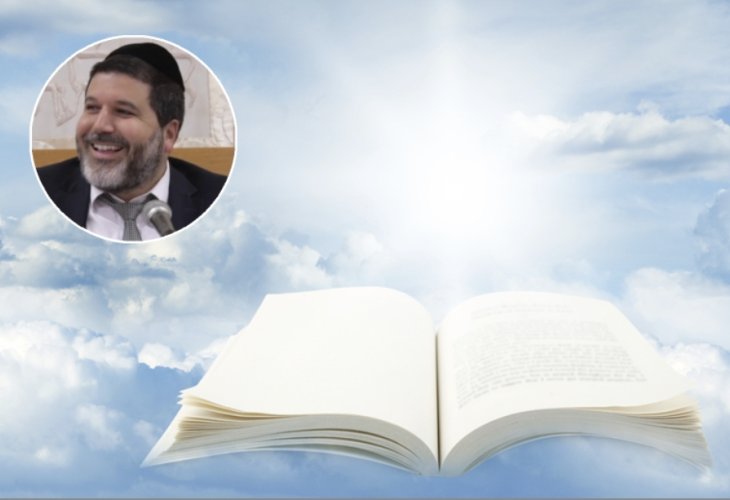 (Photo: shutterstock)
Rabbi Ofir Malka dedicates countless hours to Torah study, teaching, radio broadcasts, writing halachic works, and leading one of Israel's busiest halachic guidance centers. He is exceptionally busy throughout the year — and especially during the weeks leading up to the High Holidays.
Several interview appointments were scheduled and postponed. Then, late one evening, the phone rang.
“The rabbi has an hour available for an interview,” his secretary informed us.
What followed was remarkable. Despite his packed schedule, once Rabbi Malka sat down to speak, he was completely present. For that hour, it felt as though nothing else existed except the opportunity to share words of guidance and inspiration with readers preparing for the upcoming holidays.
“Without Heavenly Assistance, We Can Do Nothing”
Before discussing the holidays, we asked the question many people wonder about:
How does he find time for everything?
Rabbi Malka's answer was immediate.
“First and foremost, we must remember that everything comes through siyata d’shmaya — Heavenly assistance. Without Heavenly assistance, a person cannot move a finger, lift a fork, open a book, or certainly write one. Everything comes from Hashem.”
He compares life to a puppet controlled by strings.
“To someone watching from the outside, the puppet appears to sing, dance, and move independently. But in reality, it is being guided by the one holding the strings. We are much the same. The One holding the strings is directing our lives.”
This belief, he says, shapes his daily routine.
“I pray several times each day that Hashem should grant me the strength and assistance to do what He wants from me and to fulfill His will sincerely.”
An Introvert Called to Serve the Public
One surprising revelation during our conversation was Rabbi Malka's admission that public life does not come naturally to him.
“By nature, I prefer to sit quietly in my own four cubits, learning, writing, and studying. That's what I love. That's what I connect to.”
Yet he believes his mission requires something different.
“I understand that Hashem wants me to go out to the public and use whatever abilities He gave me to spread Torah. So despite the challenge, I do it.”
According to Rabbi Malka, whenever a person sacrifices personal comfort for the sake of a greater purpose, Heaven responds with special assistance.
He also credits much of his success to Rabbi Eyal Ben Zikri. “He handles everything around me with genuine faith and pure intentions. Through him, I have literally witnessed Hashem's help.”
Torah, Family, and Balance
Despite his accomplishments, Rabbi Malka repeatedly returns to the theme of humility.
“I can honestly say that I do not possess extraordinary talent or exceptional memory.”
What concerns him most is maintaining balance.
“The challenge is combining writing books, giving classes, learning Torah, and caring for one's family — which is the most important thing in the world.”
He emphasizes that Torah scholarship cannot come at the expense of family responsibilities. “A person must first be a husband to his wife and a father to his children.”
Quoting the Talmud, he adds: “Whoever says, ‘I have only Torah,’ ultimately does not even have Torah.”
True spiritual growth, he explains, means integrating Torah with every aspect of life.
From Two Hours a Week to Twenty-Four Hours a Day
Today, Rabbi Malka heads the Beit Hora’ah “Halacha Lemaaseh,” a global halachic guidance center that serves thousands of people.
Its beginnings, however, were remarkably modest. “We started with just two hours a week answering questions.”
As demand grew, so did the service. “We added two more hours, then another two. At the time, who could have imagined that one day the Beit Hora’ah would operate twenty-four hours a day?”
Today, more than seventy qualified rabbinic scholars answer questions around the clock.
Services are offered in multiple languages, including Hebrew, Yiddish, English, French, and Spanish.
Recently, the center expanded beyond traditional halachic questions to include guidance on marriage, family harmony, and child education.
Training Future Halachic Authorities
Many of the rabbis serving at the Beit Hora’ah were discovered through the international Halacha Lemaaseh competition.
“The competition encouraged many young scholars to master important sections of halacha and the Shulchan Aruch. Through it, we were able to identify and recruit talented individuals.”
Others undergo a practical apprenticeship. “Not everyone who possesses knowledge can immediately answer practical halachic questions. There is a process.”
Candidates spend time observing experienced rabbis, listening to real-life questions, analyzing responses, and discussing halachic issues before taking on responsibilities themselves.
“It is essentially a halachic internship,” he explains.
Preparing for the Day of Judgment
Over the years, Rabbi Malka has published seven halachic books, all written with one goal in mind: accessibility.
“We try to write in a language that everyone can understand.” Whether the reader is a Torah scholar or a homemaker seeking practical guidance, the books are designed to be clear and useful.
One of the most popular titles before the High Holidays is Halichot Moed, a comprehensive guide to Elul, Rosh Hashanah, Yom Kippur, and Sukkot.
The book begins not with laws, but with preparation.
“How can a person approach Rosh Hashanah without preparing? If someone is summoned to court, they hire lawyers, seek advice, and invest tremendous effort. How much more so when standing before the King of Kings?”
Looking Inward
Rabbi Malka believes the first step toward meaningful preparation is honest self-reflection.
“Rosh Hashanah is not just another holiday. It is a day of judgment.”
According to Jewish tradition, many aspects of a person's future are determined on Rosh Hashanah:
Livelihood
Health
Family relationships
Success in raising children
Personal growth
He cites the Mishnah Berurah, which explains that sometimes a decree issued on Rosh Hashanah can affect a person for many years.
“A person cannot assume that next year will simply provide another opportunity. Sometimes a judgment affects several years into the future.”
This perspective, he believes, should motivate every Jew to take the season seriously.
The Questions Everyone Asks
The practical sections of the book address many common questions. The book also covers:
Candle lighting
Simanim
Tashlich
Shehecheyanu
Shofar laws
Food preparation on the holidays
The Ten Days of Repentance
Yom Kippur
Sukkot
Hoshana Rabbah
“If people don't learn the laws in advance,” Rabbi Malka notes, “they may either make mistakes or become unnecessarily strict.”
Looking Ahead
Despite his many ongoing projects, Rabbi Malka is already focused on the next one.
“We are currently working intensively on a comprehensive book covering all the laws of blessings.”
The project is demanding, but he remains optimistic.
“When a person is guided by siyata d’shmaya and turns to Hashem for help, there is hope that the work will be completed successfully.”
A Final Word
Before ending the interview, Rabbi Malka asks to express gratitude to one person in particular — his wife.
“The verse says, ‘The wisdom of women builds her home.’ If a wife does not enable her husband to sit and learn, many opportunities become impossible.”
He credits her support for much of what he has been able to accomplish. “Hashem blessed me with a wife who comes from a true Torah home. She is the one who enables me to dedicate my time to these endeavors. My deepest gratitude belongs to her.”
As the conversation concluded, one message remained clear above all others:
No matter how much a person achieves, true success begins with humility, gratitude, and the recognition that every accomplishment ultimately comes through Heavenly assistance.

