

Home Styling
Should You Wash Towels With the Rest of Your Laundry? Here’s What to Know
When towels should be washed on their own, why fabric softener may be ruining their absorbency, and the simple habits that help towels stay fresher, softer, and more hygienic for longer
- Tehila Cohen
- | Updated
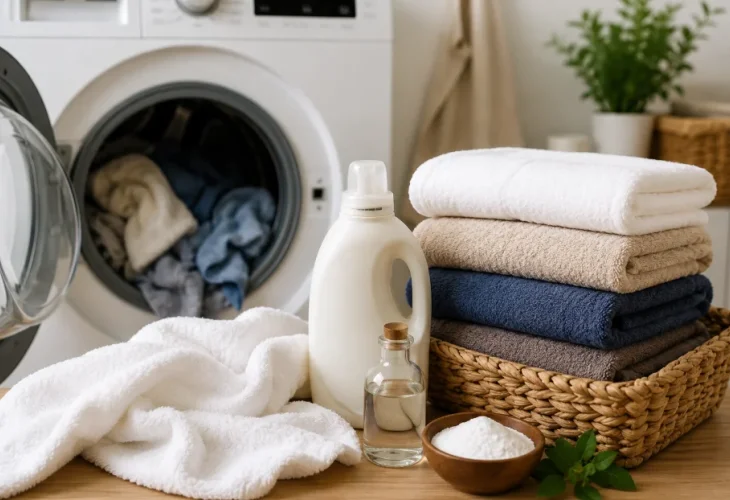
Towels are among the most frequently used items in any home, and are therefore among the most likely to accumulate dirt and bacteria. We use them every day after washing our hands, showering, or swimming, making them an ideal environment for moisture, dead skin cells, soap residue, and germs. Many people wonder whether towels should be washed separately from other laundry, and the answer is more nuanced than it may seem.
One reason to consider washing towels separately is the difference in fabric types. Towels are typically made from thick, absorbent cotton with long fibers, while most clothing is made from much more delicate materials.
When towels are washed together with shirts, activewear, or delicate garments, the friction inside the washing machine can cause extra wear and tear on the clothing. In addition, new towels tend to shed lint, which can stick to dark-colored clothes or sportswear and affect their appearance.
Hygiene considerations also support separating towels from other laundry. Towels generally require a more intensive wash cycle and higher temperatures than many clothing items can tolerate.
Washing towels and clothes together often means compromising on temperature and wash settings, which can result in less effective cleaning for the towels.
When Is It Okay to Wash Towels With Other Laundry?
Washing towels separately is not always necessary.
If the towels are relatively clean, similar in color, and the laundry load is small, they can be washed together with comparable cotton items such as:
Bed linens
Pajamas
Loungewear
Cotton household textiles
Problems are more likely to arise when towels are mixed with:
Delicate garments
Athletic clothing
Items with zippers
Specialty fabrics
The Common Mistake That Ruins Towel Absorbency
Although it leaves a pleasant scent, overusing fabric softener coats the towel fibers with a thin layer that can reduce their absorbency. If your towels no longer absorb water as effectively as they once did, the problem may not be the quality of the towel but rather excessive use of softener.
How Often Should Towels Be Washed?
Experts recommend washing bath towels after three to four uses. However, they should be washed more frequently if:
They remain damp for long periods
They are stored in a poorly ventilated bathroom
They develop an odor
Hand towels, which are used by multiple household members throughout the day, should be washed even more often.
Tips for Keeping Towels Soft and Fluffy
To maintain soft, absorbent towels for as long as possible:
Avoid overloading the washing machine
Use less fabric softener
Dry towels thoroughly after every use
Shake them out before hanging them to dry
Every few washes, consider replacing fabric softener with a small amount of white vinegar.
White vinegar helps maintain the softness of towel fibers, removes residue buildup, and preserves absorbency, without leaving towels feeling coated or less effective at drying.
Towels do not always need to be washed separately, but they often benefit from it. Their thicker fibers, higher cleaning requirements, and tendency to shed lint make them different from most clothing items. By washing them properly and avoiding common mistakes like overusing fabric softener, you can keep your towels cleaner, softer, and more absorbent for much longer.

