

Evolution
Fossils, Coelacanths, and Creation: A Different Perspective
Are scientific theories about origins as settled as they seem? This article examines fossils, geological interpretations, and the Torah's perspective on creation.
- Daniel Bles
- | Updated
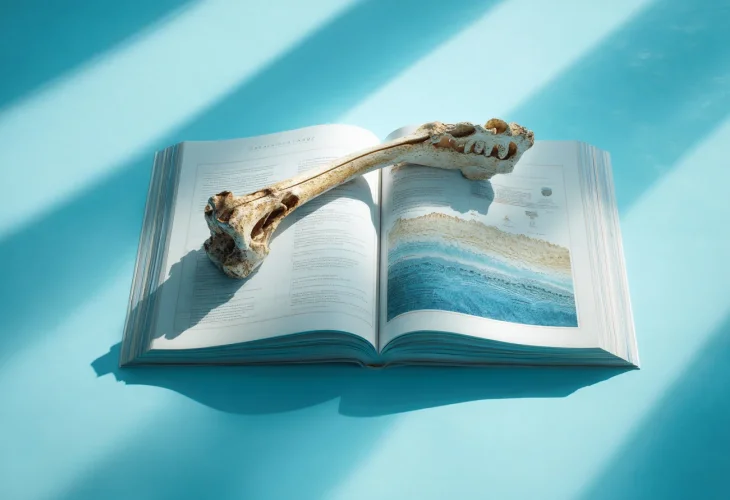
Questions about the origin of the universe and the beginning of life are often presented in textbooks and encyclopedias as established facts. Yet those who explore the scientific literature more deeply quickly discover that many conclusions are based on interpretations of evidence, and that debates and disagreements often exist behind the scenes.
The Fossil Layer Question
One frequently cited example involves fossil layers. According to the standard explanation, the deeper a fossil is found in the earth, the older it is presumed to be. This concept is commonly used to explain the history of life on Earth and the sequence in which different species appeared.
However, some researchers argue that the reality in the field can be more complex than simplified textbook diagrams suggest. Fossils are not always found in neat, orderly layers, and geological processes such as erosion, shifting sediments, and tectonic activity can affect where fossils are ultimately discovered.
For example, paleontologist Dr. Michael Novacek has noted that many dinosaur fossils are initially discovered exposed at the surface. In some cases, parts of a skeleton become visible through natural erosion, allowing researchers to begin excavation from those exposed remains.
Researchers have also reported finding mammal fossils in locations where dinosaur fossils are present. Scientists generally explain these findings through geological processes that occurred over long periods of time, which may have altered the original arrangement of rock layers and fossil deposits.
The Coelacanth Surprise
Another example often discussed is the coelacanth, a fish once believed to have disappeared millions of years ago. For many years, it was known only through fossils and was frequently highlighted in discussions about evolutionary history.
In 1938, however, a living coelacanth was unexpectedly discovered off the coast of southern Africa.
The discovery generated enormous scientific interest because it showed that a species believed to be extinct had survived into modern times. While evolutionary biologists did not view the discovery as overturning evolutionary theory, it did demonstrate that scientific understanding can change when new evidence comes to light.
Different Interpretations of the Evidence
Supporters and critics of prevailing scientific models often interpret such findings differently. Some see them as evidence that current theories require refinement, while others view them as challenges to broader explanations about the history of life.
This highlights an important distinction: scientific observations and the interpretations built upon them are not always the same thing. Different researchers may agree on the data while disagreeing about what it ultimately means.
What Does Torah Say?
From a Torah perspective, discussions about creation have existed for centuries. Various Jewish commentators have offered different approaches to understanding the account of Creation in Bereishit, including interpretations that view the days of Creation in different ways.
Others emphasize the straightforward reading of the text and the belief that Hashem created the world through His will and wisdom.
A Question That Continues to Fascinate
Questions about the origins of the universe and life remain among the most profound subjects humanity can explore. Scientists continue to investigate them through research and discovery, while Torah scholars continue to study them through the lens of tradition and faith.
For many people, the ongoing discussion serves as a reminder that some of the deepest mysteries of existence still inspire both investigation and wonder.

