

Evolution
Why a Yale Professor Questions Darwinian Evolution
David Gelernter argues that Darwinian evolution struggles to explain the origin of species, biological information, and key events such as the Cambrian Explosion.
- Hidabroot
- | Updated
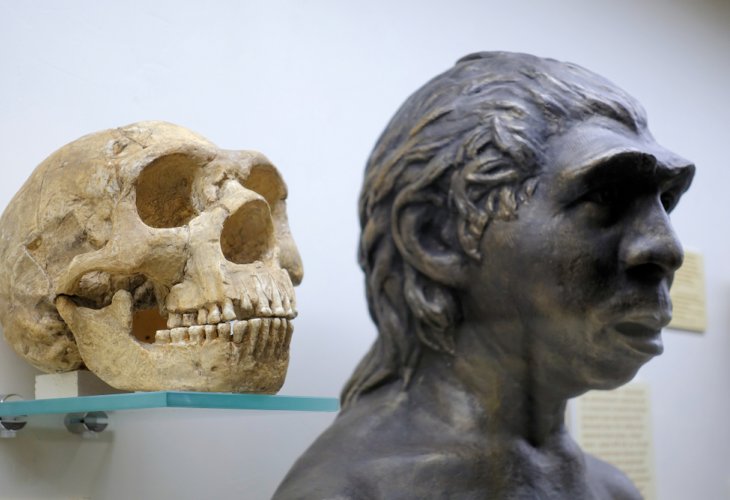
For more than a century, Darwin's theory of evolution has been one of the most influential ideas in modern science. Many have viewed it as the primary explanation for the diversity of life on Earth, while others have questioned whether it can fully account for the origin of species and biological complexity.
One prominent voice in that discussion is Professor David Gelernter, a computer scientist at Yale University, who has publicly argued that Darwinian evolution faces serious scientific challenges and deserves renewed scrutiny.
A Surprising Change of Mind
Writing in Claremont Review of Books, Gelernter explained that after examining a growing body of research and criticism, he came to believe that Darwin's theory does not adequately explain some of biology's most important questions.
According to Gelernter, scientific inquiry should follow the evidence wherever it leads, even when that means questioning ideas that have become widely accepted.
As he sees it, acknowledging weaknesses in a theory does not automatically provide all the answers, but it is an essential step toward understanding the truth.
The Question of New Species
Gelernter accepts that natural selection can help explain small-scale changes within existing species, such as variations in fur, coloration, or beak shape.
The larger question, he argues, is whether those same mechanisms can explain the appearance of entirely new forms of life.
According to Gelernter, this is the central challenge facing Darwinian evolution: explaining the origin of new species rather than merely variations within existing ones.
The Cambrian Explosion
One of the examples Gelernter discusses is the Cambrian Explosion, a period in Earth's history during which a remarkable variety of complex organisms appears in the fossil record.
Critics of Darwinian evolution have long pointed to this event as difficult to reconcile with a gradual, step-by-step process of biological development.
Gelernter notes that many major groups of organisms appear relatively abruptly in the fossil record, leading some researchers to question whether existing evolutionary mechanisms fully account for what is observed.
The Challenge of Proteins and Mutations
Gelernter also focuses on questions arising from molecular biology.
Living organisms depend on proteins, highly complex molecules built from sequences of amino acids. The specific arrangement of those amino acids determines a protein's function.
According to Gelernter, the number of possible combinations is enormous, while the number of arrangements that perform useful biological functions is comparatively small.
As a result, he argues that random mutations face significant mathematical challenges when attempting to generate entirely new functional proteins.
This issue has become a major point of discussion among critics of neo-Darwinian evolution.
Small Changes vs. Major Changes
Another distinction Gelernter emphasizes is the difference between minor biological changes and large-scale evolutionary transformations.
Small mutations occur regularly and can affect existing traits. However, Gelernter argues that mutations large enough to create fundamentally new biological structures often prove harmful rather than beneficial.
In his view, this creates a dilemma: small mutations appear insufficient to produce major innovations, while large mutations tend to damage the organism.
Following the Evidence
Gelernter's position has attracted attention because it comes from a scholar outside the fields traditionally associated with creation-evolution debates.
His argument is not that every scientific question has already been answered, but rather that unresolved problems should be acknowledged openly rather than ignored.
For Gelernter, the goal of science is not to defend a particular theory at all costs, but to follow the evidence wherever it leads.
An Ongoing Debate
Questions about evolution, genetics, and the origin of biological complexity continue to be discussed by scientists, philosophers, and scholars around the world.
While many researchers remain confident in Darwinian explanations, critics such as David Gelernter argue that significant questions remain unresolved.
The debate is far from over, and as new discoveries emerge, the discussion surrounding the origins of life and the diversity of living organisms continues to evolve.

