

Parashat Balak
Fascinating Insights from Balaam, Balak, and the Talking Donkey
The family connection between Balak and Moses, the deeper meaning behind Balaam's journey, the angel's drawn sword, and timeless lessons on pride, patience, and Divine providence
- Rabbi Yaakov Maavari / Maavar LaMefursam
- | Updated
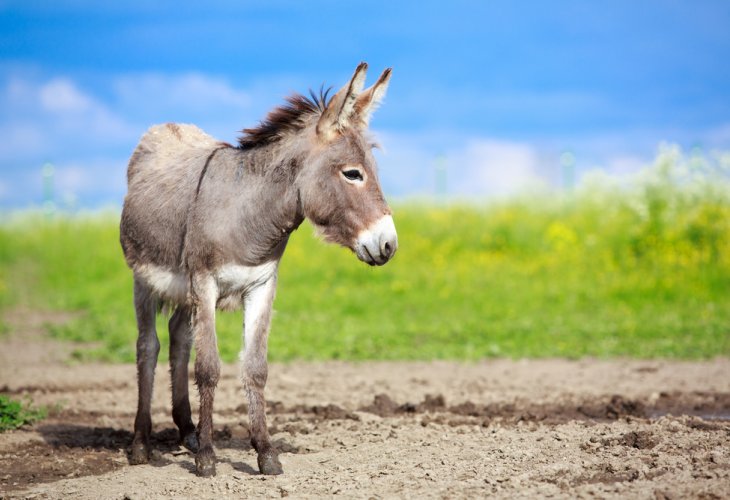 (Photo: shutterstock)
“Balak son of Zippor saw all that Israel had done to the Amorites” (Numbers 22:2)
What family connection was there between Balak and Moses?
Moses' father-in-law was Jethro, and Balak was one of Jethro's descendants. (The Holy Zohar, 197a)
Some authorities say that Balak was actually Jethro's son, and before Jethro converted, he was called Zippor. (Rabbi Chaim Yosef David Azulai, Chomat Anach)
“Behold, the people who came out of Egypt have covered the face of the land. Now come and curse them for me; perhaps I shall be able to fight against them and drive them out” (Numbers 22:11)
Why did Balak use the uncertain expression "perhaps"? Was Balaam's success not guaranteed?
Balak was hinting to Balaam: "Do not say it is not worthwhile for you to come because you may not succeed. Even for the mere possibility that you will succeed, I am willing to pay you!" (Maharam Alshich)
“Balaam arose in the morning and said to Balak's officers, 'Go back to your land, for the Lord refuses to let me go with you'” (Numbers 22:13)
Why did Balaam get up in the morning and immediately tell Balak's officers to return home?
Because he was stingy. He hurried to send them away before mealtime arrived and he would have to feed them at his own expense. (Ohr HaChaim)
“The donkey saw the angel of the Lord standing in the road with his sword drawn in his hand, and the donkey turned aside from the road and went into the field. Balaam struck the donkey to turn her back onto the road” (Numbers 22:23)
Why was the angel's sword drawn?
To hint to Balaam that he would eventually be killed by the sword. (Chida, Nachal Kedumim)
Why specifically by a sword?
Because Balaam himself said to the donkey, "If only I had a sword in my hand, I would kill you right now" (Numbers 22:29). (Sefer Chassidim, Siman 766)
Jacob and Esau are each associated with a distinct characteristic. Jacob is identified with "the voice is the voice of Jacob" (Genesis 27:22), while Esau is associated with "by your sword shall you live" (Genesis 27:40). The message to Balaam was: If you take Jacob's weapon and come against My people through speech and curses, I will take Esau's weapon and come against you with a sword. (Bamidbar Rabbah 20:13)
“The donkey saw the angel of the Lord and pressed against the wall, crushing Balaam's foot against the wall, and he struck her again” (Numbers 22:25)
Why did the angel not move to the right or left? Because it had been decreed that he must stand specifically in that place.
For this reason, when a person is suddenly overcome by fear, it is sometimes because he has entered an area traversed by angels or spiritual beings. (Sefer Chassidim, Siman 886)
On a related note, what should someone do if they are ill or suffering from fear and anxiety?
He should wash his face, hands, and feet three times. (Orchot Tzion by Rabbi Ben Zion Mutzafi, Weekday Volume 1, p. 120)
“The Lord opened the donkey's mouth, and she said to Balaam, 'What have I done to you that you have struck me these three times?' Balaam said to the donkey, 'Because you have mocked me. If I had a sword in my hand, I would kill you now'” (Numbers 22:28–29)
How was Balaam able to answer the donkey? Should he not have fainted from fear when he heard her speaking?
His arrogance was so great that he immediately answered the donkey. He acted as though such a thing was perfectly normal and not at all astonishing. (Derech Sichah by Rabbi Chaim Kanievsky, p. 444)

