

Behind the News
Vance Opens Iran Talks as Israel Braces for Lebanon Pressure
Washington wants nuclear progress, but Iran is pushing IDF withdrawal from southern Lebanon as Israel vows to hold the security zone
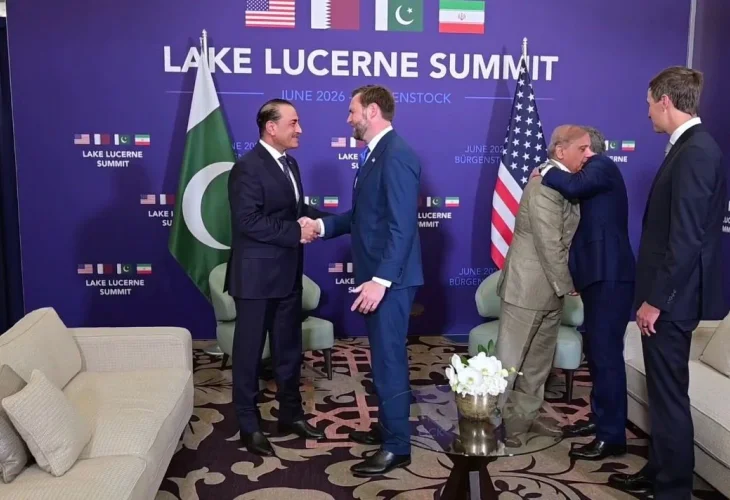
U.S. Vice President J.D. Vance opened talks with Iranian officials in Switzerland on Sunday, as Washington seeks progress on Iran’s nuclear program. But for Israel, the more immediate concern is Lebanon, where Iran is pressing for an IDF withdrawal from the south while Israel says it will not leave the security zone.
The talks are part of a U.S.-Iran framework that gives the sides up to 60 days to work toward a final nuclear arrangement. Vance said Washington hopes “to make progress on the nuclear issue” and “on the Lebanon ceasefire issue.” The nuclear file has time, but Lebanon is already becoming the first test.
Iran is trying to turn the opening stage of the agreement into pressure on Israel. Iranian Foreign Ministry spokesman Esmaeil Baghaei said ahead of the Switzerland talks that Israel’s actions in Lebanon would be a main issue in the discussions, saying, “The Zionist regime continues to violate its commitment in Lebanon.” Iran has also said it would view continued Israeli presence in Lebanese territory as a violation of the U.S.-Iran understanding.
At the same time, Iran is presenting the memorandum as a win. Iranian President Masoud Pezeshkian said the only American condition is that Iran not build an atomic bomb, something he said Iran is prepared to put in writing. But he also said Iran will not give up what it calls its right to uranium enrichment, claiming that Trump has effectively recognized those rights.
“What the United States demands is that Iran not build an atomic bomb,” Pezeshkian said, according to Iranian reporting. “This is nothing new, and we can also state in writing that we have no intention of building a bomb. However, we will not relinquish our right to enrichment.”
That is the Iranian formula: no bomb, continued enrichment, and pressure on Israel over Lebanon. Iranian reporting has also claimed that billions of dollars in frozen Iranian funds held in Qatar will be released, though it is unclear whether Iran would be able to spend the money freely.
Israel has rejected the Lebanon track as a red line. Regional reporting, including Al Arabiya, has pointed to American pressure and Israeli-U.S. talks over the continued IDF presence in southern Lebanon. But Israel has made clear publicly that it will not treat withdrawal as the price of keeping Iran in the diplomatic process.
Prime Minister Benjamin Netanyahu said Israel would hold the zone as long as needed. “We will restore security to the north,” he said. “That requires maintaining the security zone in southern Lebanon, and it requires that we not leave there as long as Israel’s security needs require it.”
Defense Minister Israel Katz sharpened that position on Sunday, saying, “Israel will not withdraw from the security zone in Lebanon.” Katz also denied that IDF forces had been restricted in responding to threats. “There was and is no restriction on IDF soldiers in Lebanon acting to remove threats,” he said.
For Israel, the security zone is meant to keep Hezbollah terrorists away from northern communities after months of war and displacement. If Israeli forces withdraw before Hezbollah is pushed back, Israel fears the group will move back toward the border and recreate the same threat that forced residents of the north from their homes.
In the latest escalation, Hezbollah fire was reported toward IDF forces operating in southern Lebanon. Israeli soldiers were killed over the weekend, and the IDF responded with heavy strikes on Hezbollah targets.
For President Donald Trump, the Switzerland talks are also about control. He does not need Vance to return with a final nuclear deal. He needs the process to look stable: Iran still talking, the Strait of Hormuz open in practice, oil markets calm, and no wider war pulling the United States deeper into the region.
The conflict has already cost Washington heavily and drawn down American stockpiles of munitions. For Trump, avoiding another round of escalation means avoiding another drain on U.S. weapons while showing voters ahead of the midterms that he forced Iran into negotiations without being dragged into a long Middle East war.
Hormuz is the market test, and Iran is tying it directly to the talks. Iran claimed the strait was closed until further notice, while the U.S. military disputed the claim and said commercial shipping was continuing. On Sunday, Iran’s Tasnim news agency reported that Hormuz would not reopen as long as the Lebanon ceasefire is not respected and waivers for Iranian oil sales are not issued. For Washington, the question is not only what Iran announces, but whether global markets believe the route remains safe.
The likely outcome from Switzerland is the following: Iran will try to leave the room saying its enrichment rights remain intact and that Lebanon is now tied to the future of the deal. Trump will try to show that the process is working: Iran is still talking, Hormuz has not become a full market crisis, and the United States is avoiding another costly escalation. Israel, meanwhile, will hold its line in southern Lebanon while watching whether reported American pressure turns into a direct demand.
That makes the coming days more important than any single statement after the meeting. If Hezbollah fire decreases, Hormuz remains open in practice and Iran stays at the table, Washington will call that progress. But if Iran uses the talks to demand Israeli withdrawal while refusing real nuclear limits, the framework could run into its first major crisis before the 60-day clock even becomes the main story.

