

World News
US and Iran Agree on 60-Day Roadmap After 18-Hour Talks in Switzerland
Following 18 hours of negotiations, the US and Iran agreed on a roadmap with a 60-day deadline, including a Strait of Hormuz hotline.
- Hidabroot
- | Updated
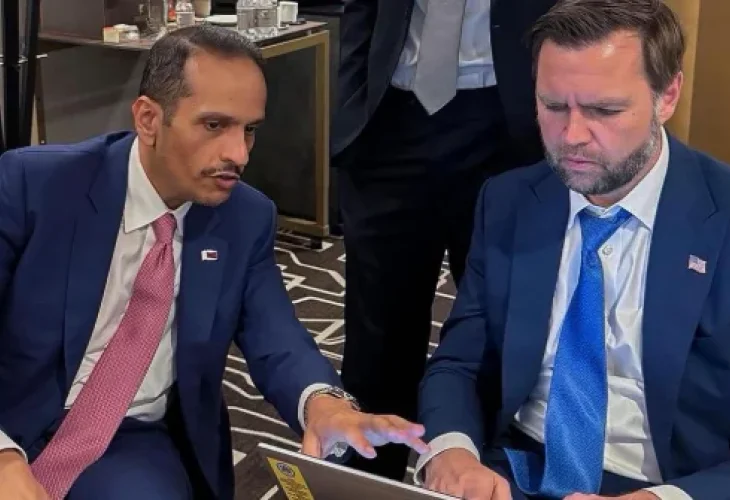
The United States and Iran concluded their first high-level negotiating session in Switzerland on Monday after 18 hours of talks at the Burgenstock resort near Lake Lucerne. Qatar and Pakistan, the two mediating countries, published a joint statement announcing that "encouraging progress" had been achieved and that a roadmap toward a final agreement within 60 days had been approved.
The summit, held under the framework of the Islamabad memorandum of understanding, brought together senior representatives from all four countries. The joint statement described "a positive and constructive atmosphere," and the parties agreed to establish a high-level committee for political oversight of the mediation process. Heads of the negotiating teams will report regularly to this committee and lead working groups on nuclear issues, sanctions, and a monitoring and dispute resolution mechanism.
A direct communication channel was agreed upon to "prevent incidents and misunderstandings and ensure the safe passage of commercial vessels through the Strait of Hormuz." The hotline, tied to the period referenced in Article 5 of the memorandum of understanding, is designed to reduce the risk of accidental military escalation in one of the world's most strategically critical waterways.
The parties also agreed to establish a deconfliction cell involving Lebanon, operated with the assistance of the mediating countries, to "ensure compliance with the cessation of military operations in Lebanon in accordance with the memorandum of understanding." Israel was not mentioned anywhere in the joint statement, nor was Hezbollah, despite the ongoing fighting in Lebanon being between the Israel Defense Forces and the Iranian-backed organization. Israel is not a party to the talks.
Iranian Foreign Minister Abbas Araghchi responded shortly after the statement was published, posting on social media: "The tireless mediation of Pakistan and Qatar has delivered major progress toward ending the war in Lebanon. Oil and petrochemical exports have been granted waivers, the blockade has been lifted, some frozen assets have been released, and a major reconstruction and economic development plan for Iran has been launched." He added a pointed warning: "The first real test will be the Lebanon deconfliction cell."
Technical talks are set to continue throughout the week at the Burgenstock resort, covering all remaining agenda items. Qatar and Pakistan stated they "will continue to do everything in their power to ensure that negotiations proceed in a positive and constructive atmosphere, with the goal of reaching a final agreement," and expressed appreciation to both sides for their "continued commitment to diplomacy and to resolving the conflict peacefully."
Pakistani Prime Minister Muhammad Shehbaz Sharif held a separate meeting on the sidelines with US Vice President JD Vance, a sign of the wider diplomatic activity surrounding the summit. The Islamabad memorandum of understanding had already laid the groundwork for this first senior-level session, and the new oversight committee gives the process a formal institutional structure.
The 60-day deadline is the most concrete timeline to emerge from any round of US-Iran diplomacy in years. Whether the Lebanon deconfliction mechanism - which Araghchi himself identified as the first real test - holds in practice will be the earliest sign of whether the broader framework can produce a lasting agreement.

