

Israel News
Vance Says Iran Agreed to Let Nuclear Inspectors In This Week
After two days of intensive talks between the United States and Iran, Vice President J.D. Vance gave a statement to the press and expressed satisfaction with the progress made in the discussions. According to him, progress was recorded on several key issues.
- Yuval Aviv
- | Updated
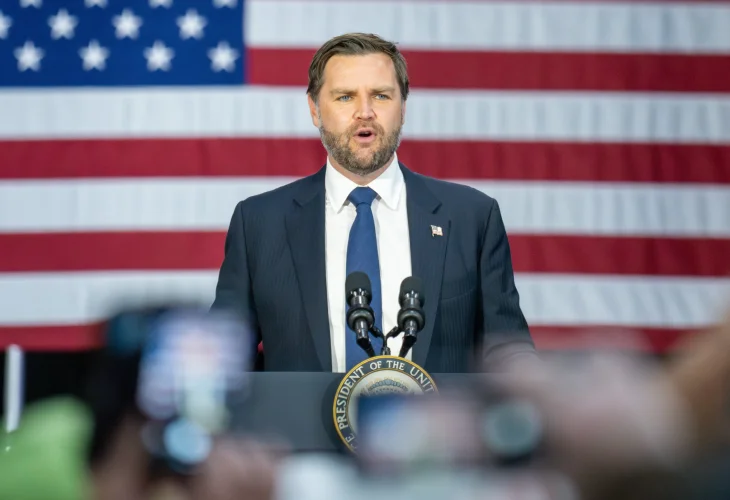 Vance (Credit: shutterstock)
After two days of talks between the United States and Iran in Switzerland, U.S. Vice President J.D. Vance delivered his first public statement today (Monday), laying out what he described as the achievements of the talks and expressing satisfaction with the progress that was made. According to him, significant progress was made on several key issues, chief among them the issue of Iran’s nuclear program.
At the start of his remarks, Vance said that contrary to statements heard in Iran, Washington believes there has been considerable progress on oversight of the nuclear program: "We expect a visit from the International Atomic Energy Agency as early as this week - maybe even today." He later stressed that Iran had agreed to allow IAEA inspectors onto its territory: "I expect that to happen at the very least this week. But we think some of these talks with the inspectors and with the IAEA may actually take place as early as today."
Vance also addressed the understandings reached around what he described as a "mechanism for preventing friction" in Lebanon. According to him, "We wanted to make sure the proper coordination mechanisms are in place, so that if there is indeed fire - if Hezbollah fires at Israel or if Israel responds, if other clashes break out in the region - we are actually talking to each other and figuring out how to stop the shooting."
According to Vance, the initiative is meant to deal with situations in which a ceasefire does not bring a complete halt to the fighting: "As Trump himself said, sometimes these ceasefires simply mean there is a little less shooting," Vance said, adding that the United States had sought to establish an orderly mechanism that would help prevent renewed escalation.
The vice president also referred to Israel and said Washington is in continuous coordination with Jerusalem: "We are in constant contact with the Israelis throughout the process, and likewise with all our regional partners - the Saudis, the Lebanese. This is not a deal we are forcing on the region; rather, the region asked us to advance the deal.", He added that Israel has no territorial ambitions in southern Lebanon and that its presence there is "only to prevent fire from Lebanon."
Vance also listed a series of economic and security gains that he said stemmed from the understandings that were reached: "The Strait of Hormuz is open, the price of oil is going down," he said, adding that "millions upon millions of barrels of crude oil and natural gas flow through it."
Later, he addressed reports of the thawing of Iranian assets and clarified that the United States intends to monitor how they are used: "We will make sure they go toward the citizens of Iran and not toward financing terror. It will make farmers in the U.S. richer." Alongside the reports of progress, Vance stressed that the path to a comprehensive agreement is still not complete: "We have built good foundations here for a final agreement - but there is still more to do. We need to make progress on the nuclear issues, the economy."

