

Israel News
“It Was No Longer the Same Nasrallah”: Hezbollah Insider Says Pager Operation Shook Terror Chief
Wafiq Safa said Nasrallah stopped eating, changed visibly and understood Hezbollah’s military power had suffered a major blow before Israel reached him
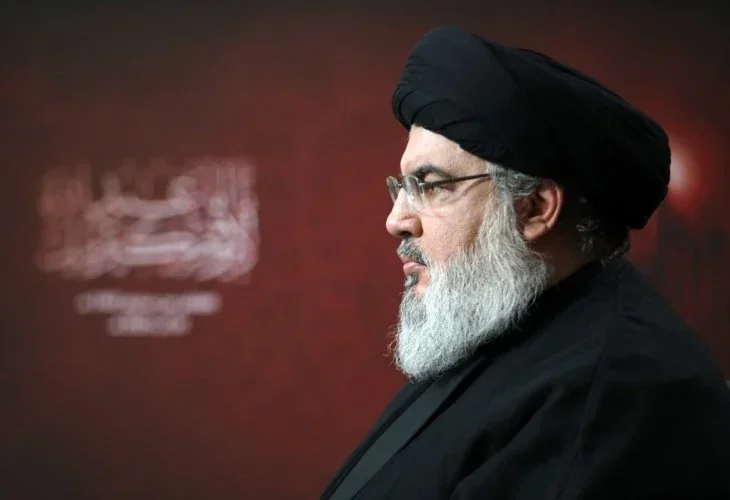
A senior Hezbollah figure close to Hassan Nasrallah said in an interview with Al-Mayadeen this week, that the former Hezbollah chief was deeply shaken by Israel’s pager operation in the days before he was eliminated, saying, “It was no longer the same Hassan Nasrallah.”
Wafiq Safa, one of Nasrallah’s close associates, described the pager operation as a moment that left a visible mark on the Hezbollah leader. His account offered a rare look from inside the terror organization at Nasrallah’s final days and the personal impact of the intelligence breach.
According to Safa, Nasrallah’s reaction changed after he saw footage of the explosions and the injuries caused by the attack. “With everything Hezbollah went through over 40 years, this was a completely different event,” Safa said.
“The mistake of the people around him was that they showed him the footage of the pagers exploding on people,” he said. “Once he saw the images, he could not bear it.”
Safa said the images and the scale of the damage changed Nasrallah’s behavior. “He became a different person,” he said. “It was not a medical event, but he was certainly not the same person we knew, even in his appearance. He stopped eating, and at first only drank water. In my opinion, he did not eat for about 24 hours. For him, it was the end of the world.”
Safa also admitted that the operation exposed a major Israeli intelligence achievement. “We have to be realistic. It was an intelligence penetration, and it is credited to Israel. We admit that,” he said.
The operation, carried out 10 days before Nasrallah was eliminated, targeted Hezbollah communication devices and caused heavy casualties across the organization. Reuters previously reported that the pager and walkie-talkie explosions killed 39 people and wounded more than 3,400, citing Lebanese figures.
Safa said his final phone call with Nasrallah took place on the day of the pager operation, after Safa’s son was wounded in the attack. He said Nasrallah already understood the scale of what had happened.
“I heard it in his voice,” Safa said. “He did not ask me what was happening, because he already knew. He called to calm me, ask how I was and comfort me.”
Safa said he told Nasrallah, “The main thing is that you hold on.” Nasrallah replied, “God comforts me.”
“From that moment,” Safa said, “Nasrallah was no longer the same Nasrallah.”
Safa said the attack was not only difficult because of the wounded, but also because Nasrallah understood what it meant for Hezbollah’s military strength. “He could not bear the images of the pager attack, nor the blow to the military power Hezbollah had built over years and that disappeared like that,” he said.
Nasrallah’s son, Jawad Nasrallah, also told Reuters that his father was “upset, angry, resentful” after the pager attack and repeatedly asked how it could have happened.
Safa said that the last time he saw Nasrallah, the Hezbollah chief still believed Israel would not be able to reach him. At the same time, he understood that Hezbollah’s leadership had to prepare for the possibility of becoming an Israeli target.
In the end, Israel did reach him. Days after the pager operation, Nasrallah was eliminated in an Israeli strike, while Israel also struck Hezbollah’s missile capabilities and senior command structure

