

The Month of Elul
What a Broken Leg Taught Me About Teshuvah, Healing, and Personal Renewal
Explore how the body's natural ability to heal reveals the deeper spiritual process of teshuvah and the soul's journey back to wholeness
- Ruti Kenig
- | Updated
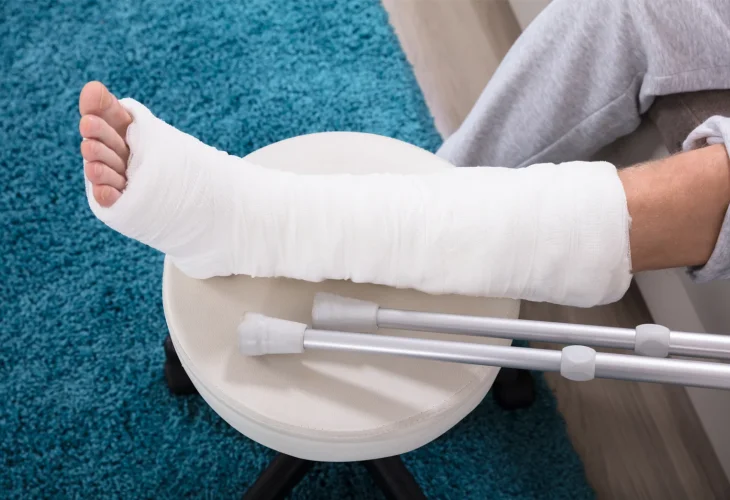 (Photo: shutterstock)
What a joy it is to stand and walk on two feet, and how easy it is to forget what a gift that really is!
When something as basic as walking is taken away, every action suddenly feels miraculous. Bending down, loading the washing machine, tidying the house — ordinary tasks become extraordinary accomplishments. Life takes on an entirely new perspective.
And if this is how we feel after being unable to put weight on a leg for six weeks, what about all the other gifts we rarely stop to appreciate? Our breath, our heartbeat, our eyesight, our hearing, our digestive system, and countless other functions that quietly sustain us every day.
Perhaps they do not need to be taken away before we learn to be grateful for them. Perhaps it is enough to imagine life without them in order to appreciate the blessing of having them.
During the most challenging period of the year for my family, I found myself confined to bed. Yet because of that experience, I encountered places of growth and insight that I may never have discovered otherwise. I would like to share some of the lessons that emerged during the long process of recovery.
The Gift Hidden Inside a Cast
My leg was immobilized for six weeks, and in return I received healing.
A broken bone naturally recruited everything it needed from the body in order to repair itself. Without conscious effort or intervention, it slowly and wisely rebuilt itself until it became whole again.
Think for a moment about a torn sock or a broken plate. Now imagine placing either one in a cast for six weeks.
What happens? Nothing, of course.
A living human being possesses an extraordinary ability to renew and restore itself. Our bodies constantly teach us this lesson, and through them we can learn something profound about the soul as well.
The Body and the Soul Are More Similar Than We Think
Just as everyone understands that the body requires care and attention, the soul requires investment as well. Without nurturing, the soul becomes neglected and weakened.
When the body suffers a wound, it must be treated. Otherwise, the injury can become infected or develop into something far more serious. The same principle applies to emotional and spiritual wounds. When we experience pain, disappointment, loss, or struggle, it is important to address it. We need to process it, talk about it, share it with someone we trust, and bring it before God.
The body also possesses an incredible ability to heal itself. The soul has a similar capacity. Sometimes, however, healing requires a form of immobilization. It requires acknowledging that we are wounded, accepting that we are currently fragile, and giving ourselves the care and patience we need instead of demanding more than we are capable of giving.
And just as physical healing brings relief and joy, emotional and spiritual healing does as well. When light enters a place that has been dark for a long time, the relief and happiness that follow make the entire journey worthwhile.
What Physical Healing Teaches Us About Teshuvah
As we move through the days of this precious and compassionate month of Elul, each of us faces our own unique challenges and responsibilities. Yet the body's natural process of healing teaches us something remarkable about the power of teshuvah.
When a person sins, a wound is created.
The Ohr HaChaim writes that sin creates a deficiency within the soul. The Arizal describes sin as a blemish, a stain, and a form of spiritual corrosion that affects the purity of the soul.
Imagine a wound opening — not in your body, but within your inner self.
In His mercy, God gave us the gift of teshuvah. Teshuvah is, in essence, a healing process for the soul. During the month of Elul, we place our souls in a kind of spiritual cast through introspection, self-examination, and reflection. In return, we are offered the opportunity for healing.
The Courage to Look Within
Self-reflection is not always easy.
When we examine ourselves honestly, we discover what is not working, where repair is needed, and what areas of our lives require attention. Sometimes those discoveries are painful.
Yet when you sit quietly with yourself during Elul and ask, “What hurts? Where am I struggling? What needs to change in order for my soul to heal and flourish?” you are engaging in exactly the process God desires for you.
After all, God's ultimate desire is to bestow goodness upon us.
The entire journey of Elul, which culminates on Yom Kippur, resembles the healing process of a broken bone. It requires patience, honesty, and trust in the outcome.
Forty Days of Spiritual Healing
Forty days is often enough time for a broken bone to heal. After that period, a person can stand once again, walk again, and experience the joy of renewal. They can feel like a new person.
From Rosh Chodesh Elul until Yom Kippur, we are given forty days dedicated to healing the soul. These are forty days designed to mend the wounds created by our mistakes, our struggles, and the challenges we have endured.
What are we expected to do during this time?
The answer is surprisingly simple. Pause.
Do not allow the endless pace of daily life to pull you along like an unstoppable machine. Sit. Think. Search. Reflect.
Ask yourself: What patterns would I like to leave behind? What no longer serves me? What pulls me in directions I do not truly wish to go? Where would I like to be in a month? In a year? In five years?
Healing Happens Naturally
The remarkable truth is that healing and teshuvah often happen more naturally than we realize.
Your role is not to force transformation. Your role is to search, to pay attention, and to become aware.
Just as a broken bone knows how to heal when it is given the right conditions, the soul knows how to return to its source when it is given the opportunity.
May we all merit to discover the beauty of teshuvah, to embrace the healing it offers, and to learn to love the journey of returning home.

