

The Ninth of Av (Tisha B'Av)
After Tisha B’Av: When Can You Eat Meat, Do Laundry, and Listen to Music?
Many people are surprised to learn that certain Tisha B'Av restrictions continue after the fast ends. Here are five important post-fast halachot every Jew should know.
- Shuli Shmueli
- | Updated
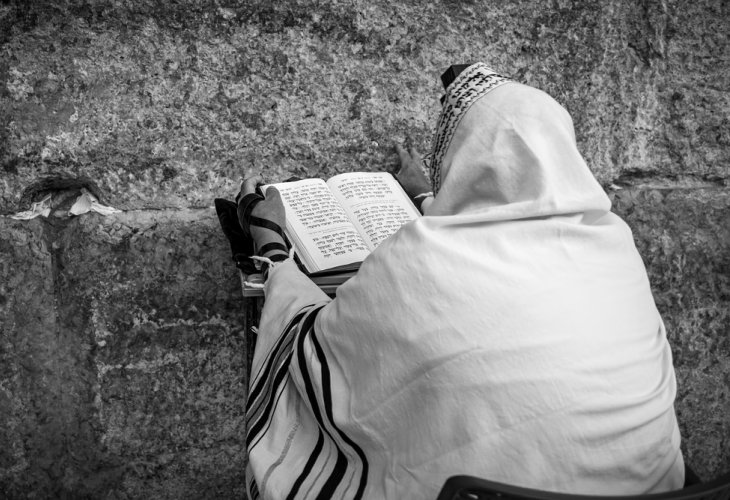 (Photo: shutterstock)
Tisha B'Av may end at nightfall, but some of its customs and restrictions continue into the following day. Questions often arise about when it is permitted to eat meat again, listen to music, do laundry, or recite Kiddush Levanah. Here are several important halachot regarding the period immediately following Tisha B'Av.
When Do We Recite Kiddush Levanah?
Kiddush Levanah is recited on the night after Tisha B'Av. However, one should wait until it is fully dark so that the moon's light can be properly enjoyed.
It is preferable to taste something before reciting the blessing. For this reason, many communities try to schedule Kiddush Levanah after breaking the fast. Ideally, it should be recited while wearing regular shoes and in a spirit of joy.
If there is concern that people may forget to recite it later, it may be said immediately after Ma'ariv.
Ideally, Kiddush Levanah should not be recited before Tisha B'Av, even if the moon is visible. The blessing should be postponed until the night after the fast. (Yalkut Yosef, Shabbat, vol. 5, p. 342)
When May We Eat Meat and Drink Wine Again?
According to Sephardic custom, it is proper to refrain from eating meat and drinking wine throughout the Tenth of Av.
The reason is that although the Beit HaMikdash was destroyed on Tisha B'Av, the fire continued burning through much of the Tenth of Av. Out of respect for that continued destruction, the mourning customs are extended into the following day.
This custom applies even when the Tenth of Av falls on a Friday, although it is permitted to taste meat dishes on Friday afternoon in honor of Shabbat. (Yalkut Yosef, Festivals, p. 574; Chazon Ovadia, Four Fasts, p. 419)
According to Ashkenazi custom, one refrains from meat and wine only until midday on the Tenth of Av. (Rema, Orach Chaim 558)
When Are Bathing, Laundry, and Haircuts Permitted?
For Sephardim, bathing, laundry, and haircuts are permitted immediately on the night after Tisha B'Av.
Ashkenazim customarily continue these restrictions until midday on the Tenth of Av. (Yechaveh Da'at, vol. 5, no. 41; Mishnah Berurah 558:3)
However, when the Tenth of Av falls on a Friday, Ashkenazim may bathe, do laundry, and get haircuts throughout the day in honor of Shabbat. (Mishnah Berurah 558:3)
May We Say Shehecheyanu on the Tenth of Av?
Even after Tisha B'Av has ended, it is proper according to Sephardic custom to avoid reciting Shehecheyanu over a new fruit or a new garment on the Tenth of Av. (Yechaveh Da'at, vol. 5, no. 41)
According to Ashkenazi custom, these restrictions end at midday on the Tenth of Av, together with the other mourning practices.
When Is Music Permitted Again?
According to Sephardic custom, it is proper to refrain from listening to music until the end of the Tenth of Av. (Ma'amar Mordechai, ch. 29; Mishnah Berurah Ish Matzliach 558, note 3)
According to Ashkenazi custom, one should refrain from listening to music until midday on the Tenth of Av. (Mishnah Berurah 558:2)
Although Tisha B'Av officially ends with the conclusion of the fast, some aspects of mourning continue beyond that point. Understanding these customs helps preserve the spirit of the day and reminds us that the destruction of the Beit HaMikdash was not confined to a single date, but continued into the Tenth of Av as well.

