

World News
EU Invites Taliban Delegation to Brussels, Sparking Outrage Across Europe
A Taliban delegation arrived in Brussels for talks with European Union officials about returning Afghan migrants. The unusual meeting drew sharp criticism from politicians and human rights advocates: "The Commission is granting legitimacy to a regime that tramples the rights of women."
- Yuval Aviv
- | Updated
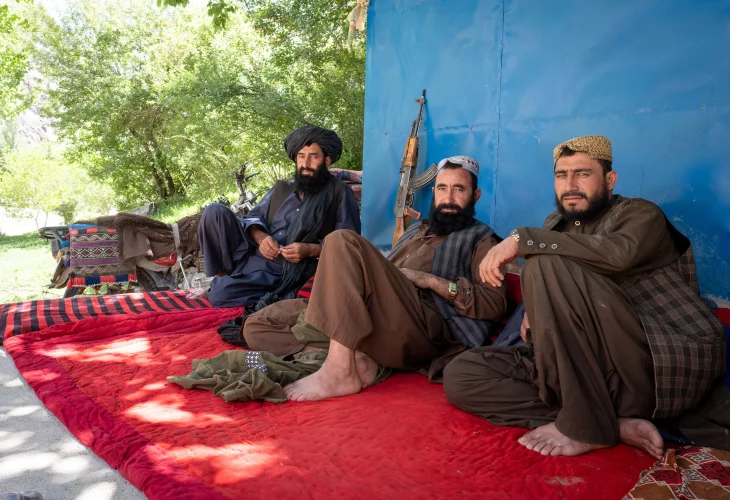 The Taliban in Afghanistan (Credit: shutterstock)
 An official Taliban delegation arrived in Brussels this week and held talks with European Union representatives, in an unprecedented move that sparked intense controversy among human rights groups and politicians across the continent. The meeting, held Tuesday, focused mainly on the return to Afghanistan of Afghan nationals whose asylum requests in European countries had been denied.
The European Commission confirmed that it had invited a five-member Taliban delegation to Brussels, even though the European Union does not officially recognize the group’s rule in Afghanistan. Representatives from 15 EU member states took part in the talks.
The move drew fierce criticism given the Taliban’s history, the Islamist organization that ruled Afghanistan from 1996 to 2001 and enforced a regime based on an extreme interpretation of Sharia law. During its rule, severe restrictions were imposed on women, who were required to forgo education and remain confined to their homes. At the same time, harsh punishments were enforced, including flogging and stoning for various offenses, including adultery or acts defined as blasphemy. Men, too, were required to follow strict behavioral rules, including growing beards.
The Taliban’s first period in power ended in 2001 after the U.S.-led international invasion that followed the September 11 attacks carried out by al-Qaeda, whose leaders had been given refuge by the Taliban. For two decades, Afghanistan was consumed by a prolonged war, during which many of its residents fled to other countries, including European states.
In 2021, following the withdrawal agreement negotiated by the previous administration of U.S. President Donald Trump with the Taliban, foreign forces began leaving Afghanistan. Even before the withdrawal was completed, the group managed to retake major cities across the country, including the capital, Kabul, and seize power, contrary to understandings that it was supposed to share leadership with the pro-Western government then in office.
Since returning to power, only a small number of countries around the world have granted official recognition to the Taliban regime. Against that backdrop, the very fact that the meeting took place in Brussels, along with the issuance of visas to members of the delegation, triggered widespread public criticism. Cecilia Strada, a member of the European Parliament from the center-left S&D group, said that "this is a shameful chapter for Europe." In her words, "The Commission is granting legitimacy to a regime that tramples the rights of women and girls."
During a small protest held outside the European Commission offices in Brussels, Ludovic Loos of Amnesty International sharply criticized the move. Speaking with AFP, he said: "This is truly a slap in the face to the values that the European Union and Belgium are supposed to represent."
EU officials said the initiative was meant to advance cooperation on migration and improve member states’ ability to return undocumented migrants to their countries of origin. According to EU data, fewer than 30% of migrants ordered to leave its territory actually return to their home countries.
The head of the Taliban delegation, Afghan Foreign Ministry spokesman Abdul Qahar Balkhi, welcomed the talks: "There is hope that this visit will open new pathways for positive interaction, strengthen the process of addressing the problems of Afghans living abroad, and further expand the atmosphere of cooperation based on mutual respect and shared interests."

