

Facts You Didn't Know
Synesthesia: When Sounds Have Color and Numbers Have Personality
Learn why some people see colors when they hear music, associate letters with specific colors, or give personalities to numbers, and what this reveals about the incredible complexity of the human brain
- Shira Dabush
- | Updated
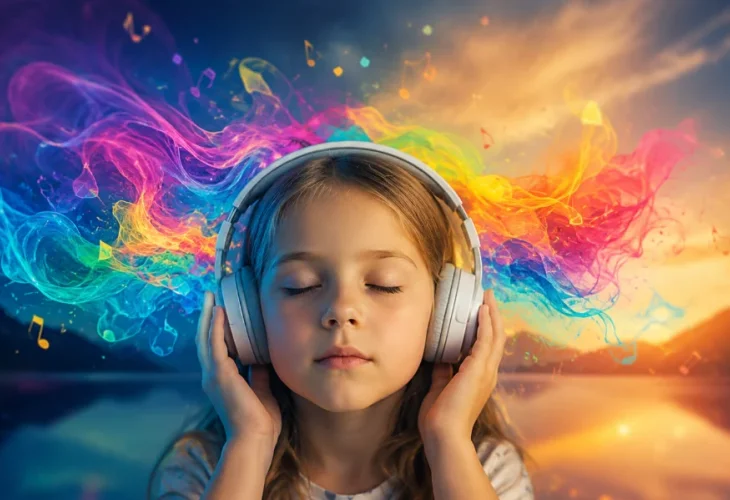
Imagine listening to a piano performance and suddenly seeing flashes of blue, purple, and green before your eyes. Or someone saying their name, and your brain automatically displaying it in orange. For millions of people around the world, this is not a vivid imagination or an interest in mysticism. It is simply part of everyday life.
This remarkable phenomenon is known as synesthesia, a term that literally means "combined senses." What does that mean? For most people, the senses operate independently. The eyes perceive light and color, the ears detect sound, and the skin senses touch. For people with synesthesia, stimulation of one sense automatically triggers another. Sounds may evoke colors, certain words may produce distinct tastes, and numbers or letters may consistently appear in specific colors.
Seeing Letters and Numbers in Color
One of the most common forms of synesthesia is grapheme-color synesthesia. People with this type consistently perceive letters and numbers in fixed colors. For one person, the letter A may always appear red, the letter B blue, and the number 5 green.
What makes this especially fascinating is that these associations remain stable throughout life. If someone saw the number 7 as yellow during childhood, they will almost certainly continue to perceive it as yellow decades later.
Researchers estimate that between 2 and 5 percent of the population experiences some form of synesthesia.
When Music Becomes a Light Show
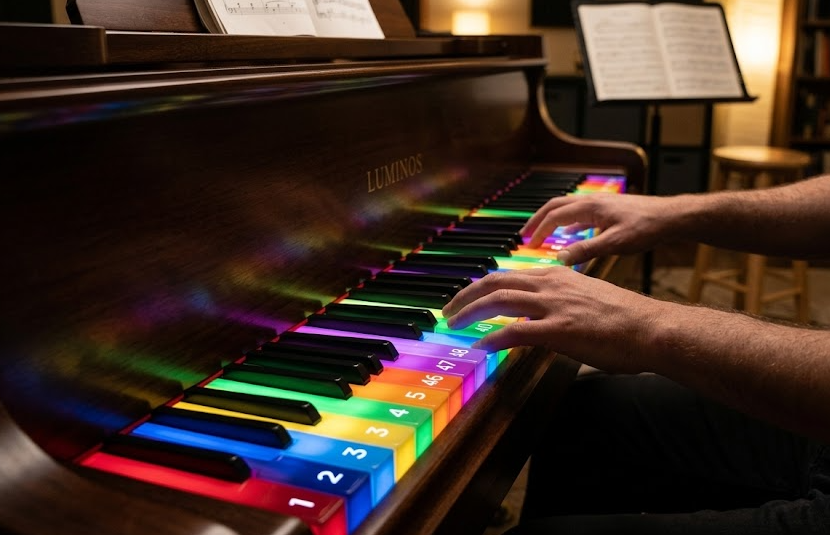
Another well known form is sound-color synesthesia. Individuals with this type may see geometric shapes, colorful clouds, or waves of color whenever they hear music. For some, each musical instrument produces a different color, while for others every musical note is accompanied by its own unique shade.
Some musicians have described the experience as having a private light show accompanying every piece of music they hear.
A Different Way of Experiencing the World
Although synesthesia sounds unusual, it is not considered a disease or a mental disorder, and most people who experience it do not find it distressing. In fact, many describe it as a gift that enriches their perception of the world. For them, it is simply the way their brains interpret reality.
Researchers estimate that between two and five percent of people have some form of synesthesia, although some scientists believe the true number may be even higher. Many individuals never realize their experiences are unusual because they naturally assume everyone perceives the world the same way they do.
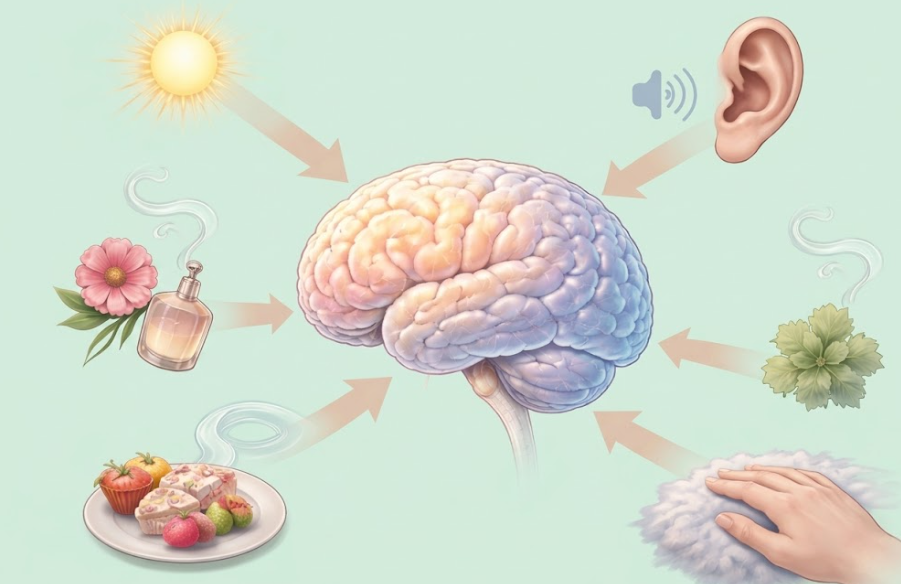
Despite decades of research, scientists still do not know exactly why synesthesia occurs. One leading theory suggests that people with synesthesia have unusually strong connections between different sensory regions of the brain. Instead of processing information independently, these areas communicate more extensively, creating blended sensory experiences.
Throughout history, several famous artists and musicians have reported experiences consistent with synesthesia. The Russian painter Wassily Kandinsky believed there was a profound relationship between colors and music, and many of his paintings were inspired by this perception. Likewise, the composer Franz Liszt was described by his contemporaries as associating different musical sounds with specific colors.
There are also rarer and more surprising forms of synesthesia. Some people report that numbers and letters have distinct personalities. They instinctively personify them, perceiving the number 4 as shy, the number 9 as stubborn, or the letter M as especially friendly.
It may sound amusing, but for those who experience it, it is the most natural thing in the world.
A Window Into the Human Mind
Synesthesia continues to captivate scientists because it offers a rare glimpse into the remarkable complexity of the human brain. It reminds us that the reality we experience is not necessarily identical for everyone. Two people can look at exactly the same world and yet experience it in profoundly different ways.
One more astonishing wonder of the Creator, reminding us of the incredible complexity and beauty with which the human mind was designed.

