

The Month of Elul
What Is Unique About the Teshuvah of Elul?
Explore why Elul is far more than a season of repentance, and how its unique spiritual power helps us rebuild our connection with Hashem before Rosh Hashanah and Yom Kippur
- Rabbi Emanuel Bernstein
- | Updated
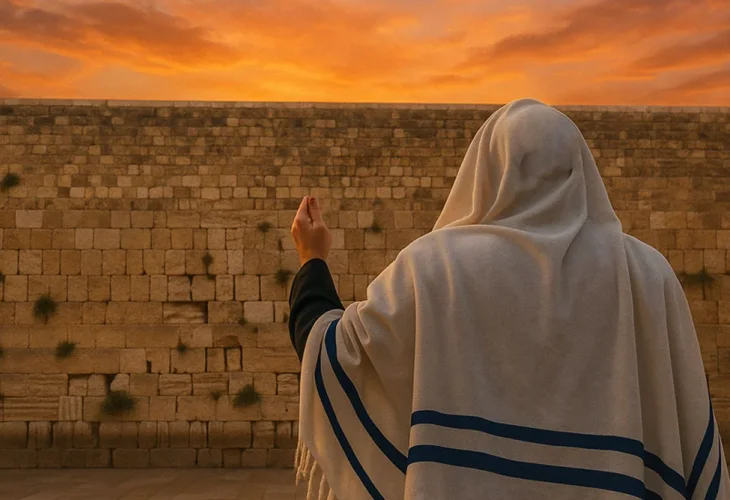
As the month of Elul begins, we naturally say that it is time to "prepare for Rosh Hashanah." We understand that preparation is essential, yet the nature of that preparation often feels vague and undefined. What does it truly mean to prepare for the Day of Judgment?
Our first instinct might be to say that we must simply repent. Upon further reflection however, this cannot be the whole picture. Repentance is a mitzvah that applies throughout the entire year. At any moment, a person can, and should, return to God when necessary. It is difficult to imagine that a mitzvah relevant every day of the year is the sole defining feature of preparing for the High Holidays.
What, then, is the unique character of Elul, and how should we prepare ourselves during these special days?
Returning to the First Elul
To understand the essence of Elul, we must return to the very first Elul experienced by the Jewish people.
The forty days that began on Rosh Chodesh Elul and concluded on Yom Kippur were the days during which Moses remained atop Mount Sinai after God forgave Israel for the sin of the Golden Calf. During this period, Moses ascended the mountain once again to receive the second Tablets, since the first Tablets had been shattered following the nation's sin.
Those forty days permanently infused Elul with the qualities of reconciliation and renewed closeness, establishing it as a uniquely powerful time for the Jewish people throughout history.
One might naturally assume that these days became special simply because Israel was forgiven for the Golden Calf. Surprisingly, however, Rashi explains that this is not entirely accurate. According to him, Israel had already received forgiveness before Rosh Chodesh Elul.
To appreciate the significance of Elul, we must first understand the chronology.
Three Periods of Forty Days
Moses ascended Mount Sinai three separate times.
The first ascent began immediately after Shavuot, when he received the first Tablets. That period ended on the seventeenth of Tammuz, when he descended and shattered the Tablets after witnessing the worship of the Golden Calf.
The second ascent began the following day, on the eighteenth of Tammuz. During these forty days and nights, Moses pleaded with God to forgive the Jewish people. He descended on the twenty-ninth of Av.
Regarding that day, Rashi writes: "On that day, the Holy One was appeased toward Israel and said to Moses, 'Carve for yourself two tablets.'"
This teaches that forgiveness had already been granted before Elul even began.
Then Moses ascended Mount Sinai for a third time, remaining there from Rosh Chodesh Elul until Yom Kippur.
About Yom Kippur, Rashi writes: "On that day, the Holy One was appeased toward Israel with joy, and said to Moses, 'I have forgiven, according to your words.' Therefore this day was established as a day of forgiveness and atonement."
These final forty days accomplished something greater than forgiveness alone.
During the second forty-day period, God reconciled with Israel. During the third, He reconciled with joy. That small addition reveals something far deeper than merely removing punishment.

Two Different Kinds of Repentance
A person may repent sincerely enough to avoid punishment, yet still fail to restore the closeness that once existed between himself and God.
This resembles the second forty-day period after the Golden Calf. God forgave Israel, but the full relationship had not yet been restored. This kind of repentance focuses primarily on escaping the consequences of sin rather than rebuilding the relationship itself.
Such repentance often characterizes the teshuvah we perform throughout the year.
Elul calls us to something much greater.
The final forty days — from Rosh Chodesh Elul through Yom Kippur, brought about complete reconciliation. God was not merely willing to forgive; He desired to renew His loving relationship with His people. This is reflected in what happened immediately afterward: only following Yom Kippur were the Jewish people commanded to build the Mishkan, where God's Divine Presence would once again dwell among them as a visible expression of His love.
Seen from this perspective, ordinary repentance aims to elevate a person spiritually. Elul, however, seeks something higher: transforming distance into intimacy, and restoring a loving relationship with our Creator.
This deeper understanding also sheds light on several customs unique to the month of Elul.
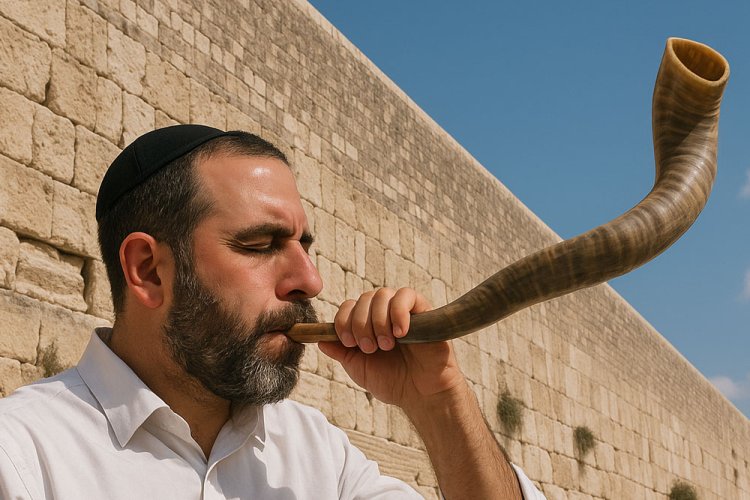
"I Am To My Beloved, and My Beloved Is To Me"
The early sages note that the word Elul forms an acronym for the verse: "Ani L'Dodi V'Dodi Li" — "I am to my Beloved and my Beloved is to me."
This verse captures the true spirit of Elul. It describes repentance motivated not merely by fear of punishment, but by the longing to return to our Beloved — to renew a loving relationship with the Master of the Universe.
Why Do We Recite "L'David Hashem Ori"?
Beginning on Rosh Chodesh Elul, Jewish communities customarily recite Psalm 27, "L'David Hashem Ori V'Yishi" ("The Lord is my light and my salvation"), at the conclusion of the daily prayers.
At first glance, the psalm does not seem to discuss repentance at all. While its opening words allude to Rosh Hashanah and Yom Kippur, the remainder focuses on trust in God, confidence in His protection, and awareness of His constant presence.
How does that prepare us for the Days of Awe?
If the central purpose of Elul is not merely to correct our mistakes but to renew our relationship with God, then Psalm 27 is the perfect preparation. It cultivates an awareness that God is always with us, constantly protecting, guiding, and sustaining us. Recognizing His continuous care naturally awakens within us the desire to return to Him.
The First Step Toward Genuine Teshuvah
Reciting this psalm twice each day reminds us that God has never abandoned us. He has always been present, waiting for us to return.
That awareness becomes the foundation upon which genuine repentance is built — not repentance driven solely by fear, but by love.
Just as the first Elul transformed the relationship between God and Israel thousands of years ago, every Elul continues to offer us the same extraordinary opportunity. It invites us to prepare for Rosh Hashanah and Yom Kippur not only by correcting our shortcomings, but by rebuilding a joyful, living relationship with our Creator.
That is the true essence of Elul.

