

Behind the News
The Lebanon Deal Puts Hezbollah in a Trap — But Leaves One Dangerous Opening
Israel won recognition for its security zone, but the fine print may decide whether Hezbollah is trapped, or rebuilt
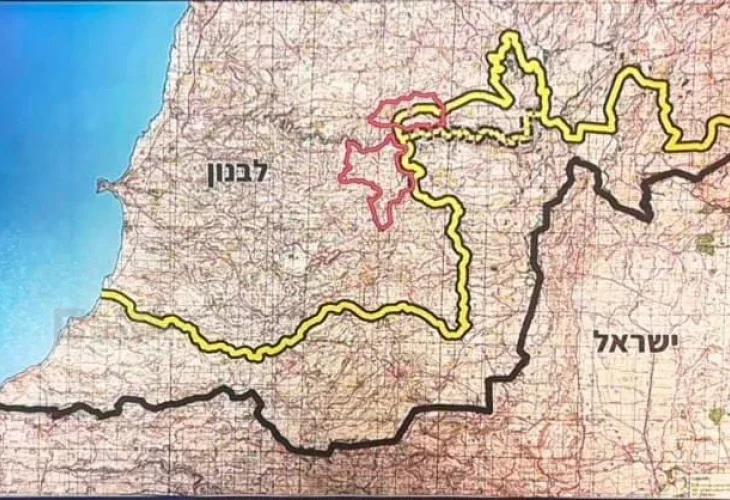 Map of security zone
Israel and Lebanon’s new U.S.-brokered framework agreement is being presented in Israel as a major diplomatic and security achievement. For the first time, Lebanon and the United States have recognized continued Israeli control of a security zone in southern Lebanon, while tying any future withdrawal to Hezbollah’s disarmament. But the agreement is not a final victory. Its success will depend less on the signing ceremony in Washington and more on what happens in Lebanon in the coming weeks.
Prime Minister Benjamin Netanyahu presented the deal as a direct gain for Israel. “Israel remains in the security zone in southern Lebanon,” he said, adding that the IDF will stay there “as long as Hezbollah has not been disarmed, as long as there is a threat to the State of Israel.”
That condition is Israel’s strongest clause, but also one of the agreement’s vaguest. It gives Israel room to remain in the security zone, known in the agreement as the yellow-line area, as long as Hezbollah remains armed. But it leaves open a central question: who decides when Hezbollah has been disarmed, and when the threat has been removed?
Still, the diplomatic shift is real. The agreement names Hezbollah directly and ties Israel’s withdrawal to its disarmament. For Israel, that means Lebanon is finally admitting the core problem: Hezbollah’s weapons are what keep the border dangerous and Lebanon unstable.
Hezbollah’s response showed how seriously it views the agreement. Naim Qassem, the group’s secretary-general, attacked the deal as “a humiliating and shameful agreement that gives up Lebanese sovereignty.” He claimed the agreement has no legitimacy and said Hezbollah would continue using “all necessary means,” along with international and Arab pressure, to force Israel to withdraw from Lebanon.
That is the trap for Hezbollah. It wants Israel out of Lebanon, but any move to block the deal could give Israel more reason to stay. If Hezbollah pressures Beirut, disrupts the Lebanese army’s deployment, or sends terrorists back into areas the IDF evacuates, it also delays the Israeli withdrawal it claims to demand.
The first ground test is already approaching. The IDF is preparing to begin withdrawing from two pilot areas in southern Lebanon, both reportedly in the Nabatieh area. The move is expected to be coordinated with the Lebanese army through a U.S.-backed channel, with Israeli officials demanding that Lebanese forces enter immediately to prevent Hezbollah terrorists from moving into evacuated positions. Adm. Brad Cooper, the commander of U.S. Central Command, is expected to visit northern Israel to observe the first steps of the process.
The bigger concern is what happens beyond the security zone. Israel may be able to act freely in the area it still controls, but Hezbollah can rebuild elsewhere. Its money, weapons and command networks could return through Beirut, Dahiyeh, the airport area and other routes farther north.
That concern connects to the separate U.S.-Iran track. Hezbollah depends heavily on Iran for money, weapons and political backing. If Iran gains more resources or freedom under a separate deal with Washington, Israel fears that Hezbollah could recover from the north while the Lebanon deal only limits it near the border.
Former Prime Minister Naftali Bennett framed the test in terms of northern residents. “Boastful speeches will not determine this, but whether Kiryat Shmona is rebuilt before Hezbollah,” he said. He added that mothers in Metula, Kiryat Shmona and Shlomi must be able to raise their children safely, without fear that Hezbollah will grow back.
The agreement now faces three tests. First, whether the Lebanese army can actually replace the IDF in areas Israel evacuates. Second, whether Hezbollah’s disarmament is defined clearly enough to prevent premature pressure on Israel to withdraw farther. Third, whether Iran can help Hezbollah rebuild deeper inside Lebanon, beyond the area where Israel has the clearest freedom to act. Israel says the IDF still retains the right to strike terrorists who pose a threat. In the end, the deal will be judged by one question: whether Hezbollah is dismantled faster than it can rebuild.

