

Israel News
Brokered by Washington: Israel and Lebanon Sign Security-Political Framework for Southern Lebanon
Just before *Shabbat*, Prime Minister Benjamin Netanyahu announced that understandings had been reached with the Lebanese government and that a framework agreement had been signed between the two countries. The IDF will gradually transfer responsibility in certain areas to the Lebanese army, while Israel will retain freedom of action until Hezbollah is disarmed.
- Shlomi Diaz
- | Updated
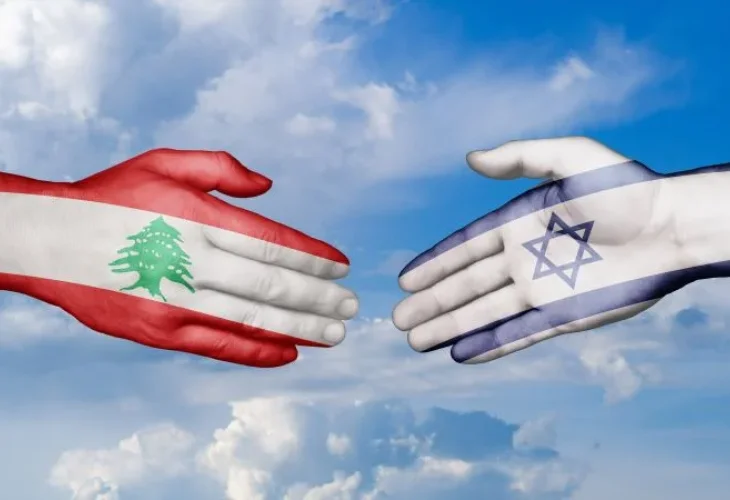 (Photo: Shutterstock)
(צילום: דוברות ראש הממשלה)
Israel and Lebanon signed the security-political arrangement yesterday (Friday) in Washington. The signing took place with the mediation of Secretary of State Marco Rubio. The agreement was signed by Israel’s ambassador to the U.S., Yechiel Leiter, and Lebanon’s ambassador to the U.S., Nada Hamadeh Mouawad. The two ambassadors signed the agreement with the approval of the prime ministers of Israel and Lebanon.
This is a framework agreement intended to lead to future agreements between Israel and Lebanon, with the goal of ending the conflict between the two countries and reaching a peace arrangement. Under the memorandum of understanding, Israel will maintain its security zone along the boundaries of the Yellow Line in Lebanon until the day Hezbollah and the other terror organizations in Lebanon are disarmed and no threat remains from Lebanon to the territory of the State of Israel. The IDF’s military freedom of action throughout the entire security zone will be preserved in order to remove threats of any kind.
Israel and Lebanon agreed on two areas adjacent to the Yellow Line, recommended by the IDF, where there will be a pilot program for disarming Hezbollah and transferring the territory to the control of the Lebanese army: one area outside the Yellow Line and south of the Litani, and the second outside the original Yellow Line and north of the Litani.
Prime Minister Benjamin Netanyahu said before the start of *Shabbat*: "Citizens of Israel, before *Shabbat* begins I want to share with you major news for the State of Israel. You know that we have been conducting negotiations in Washington among representatives of Israel, Lebanon, and the U.S. It has been a lengthy negotiation, and today it bore fruit. The most important thing is that first of all, Israel remains in the security zone in southern Lebanon. This is a major achievement, and we are maintaining it as long as Hezbollah is not disarmed, as long as there is danger to the State of Israel."
"This is also a major blow to Iran. Iran is trying to force us to withdraw from southern Lebanon by force. And in effect, Israel, Lebanon, and the U.S. are telling them: this is not your business. You have no role in Lebanon. Not you, not Hezbollah, and not any terror organization."
"The other thing, of course, is that we are allowing the Lebanese army to begin organizing to take control of territory. We are creating two pilot zones. Both are based on the recommendation of the IDF. One is actually outside the security zone, south of the Litani, and the second is north of the Litani, a small part of it in the expanded security zone that we achieved in the past two weeks, and that the IDF does not need—it is saying that in the clearest possible terms."
Netanyahu added: "We are constantly preserving the original security zone beyond anti-tank missile range. We are not allowing Hezbollah to enter there, nor the population. That is being maintained. And the most important thing is that Israel says: our security comes before everything else."
It should be noted that the framework agreement includes mutual recognition of the sovereignty of both countries. Secretary of State Marco Rubio, who led the contacts between the sides, noted that "there is still much work ahead of us. What the people of Lebanon deserve is a prosperous and peaceful state, a diverse state where people from different backgrounds can live together in coexistence. It will take a great deal of work and time to return to that point, but we believe today is the first step in that journey."
According to Rubio, "the first step is sometimes the hardest step, but it is the step we are taking together today. Clearly, the citizens of Israel deserve to live in peace and security, especially the residents of northern Israel, who have been targeted again and again by terror attacks launched from Lebanese territory—not by the Lebanese people, and not by the Lebanese government, but by an external actor that sought to use that territory to harm innocent civilians, who could not live in those places for a long time." The American secretary repeated that today is "the beginning of the beginning, and we are in no way underestimating the difficulty of the task that awaits us."
Unlike the agreement in November 2024, this time the agreement will be closely accompanied by the U.S. military, which will also train and strengthen the Lebanese army. For that reason, according to Israeli officials, this agreement has better chances than the previous one.
Lebanese President Joseph Aoun expressed his gratitude to the U.S. for its efforts in hosting and sponsoring the negotiations, and for its "support for Lebanon’s position in reaching the step announced today." Lebanon’s presidency said he also thanked the countries that accompanied the negotiations, the Lebanese team, and the Lebanese people, and added that the signed framework agreement is the first step toward "realizing the fruits of the people’s sacrifice, toward returning to its land."

