

Evolution
Can Science Really Explain the Origin of the Universe?
The Lubavitcher Rebbe explores the limits of scientific theories about creation and explains why science and the Torah need not be in conflict.
- Rabbi Menachem Mendel Schneerson
- | Updated
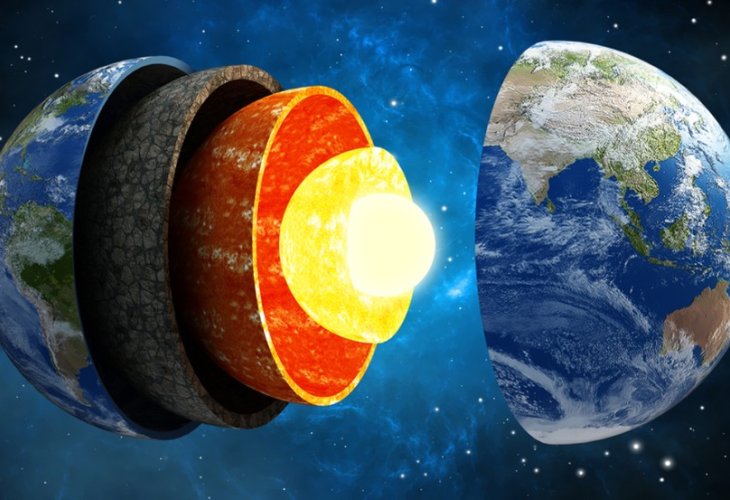
One of the greatest sources of confusion in the debate between science and faith is a misunderstanding of what science can and cannot actually prove. In this thought provoking essay, the Lubavitcher Rebbe examines the scientific method itself, arguing that many theories about the origin and age of the universe are far less certain than many people assume. His discussion offers a fascinating perspective on the relationship between scientific inquiry and the Torah's account of creation.
What Science Can Know and What It Can Only Suggest
The Rebbe begins by drawing an important distinction between two kinds of science.
The first is empirical science, which studies observable, measurable phenomena that can be tested and repeated through experimentation.
The second involves attempts to explain events that cannot be directly observed or reproduced, such as the origin of the universe. Here, science can propose theories, but it cannot claim absolute knowledge.
As the Rebbe explains, speculation should not be confused with certainty. At most, scientific theories represent attempts to explain unknown events based on currently available evidence.
The Difference Between Interpolation and Extrapolation
The Rebbe explains that science generally relies on two methods when drawing conclusions.
Interpolation attempts to estimate what happens between two known points.
Extrapolation, however, attempts to extend known observations far beyond the available evidence.
For example, if scientists understand how a material behaves between 32°F and 212°F (0°C and 100°C), they may estimate how it will behave at slightly higher temperatures. The farther those estimates move beyond directly observed conditions, the less certain they become.
According to the Rebbe, theories about the origin and age of the universe rely heavily on this second, less certain method.
The Challenge of Reconstructing the Past
The Rebbe also points out another limitation.
Scientific theories about the beginning of the universe often attempt to reason backward from present day observations to events that supposedly occurred billions of years ago.
He illustrates this with a simple mathematical example.
If we know that 4 divided by 2 equals 2, the cause produces one known result.
But if we begin only with the result, the number 2, there are countless possible ways that result could have been produced.
Likewise, he argues, moving from present day observations back to the universe's origins necessarily involves a much greater degree of speculation than moving from known causes to known effects.
Unknown Conditions in the Early Universe
The Rebbe further argues that any attempt to reconstruct the distant past assumes that natural conditions remained essentially the same throughout history.
Yet scientists themselves acknowledge that the early universe would have differed dramatically from today's world.
Temperature, atmospheric pressure, radioactivity, and many other conditions may have been entirely different.
If those conditions were fundamentally different, he argues, conclusions based solely on present day observations become far less certain.
Even small changes in environmental conditions can dramatically alter chemical reactions. Unknown conditions on a much larger scale could have produced outcomes that cannot easily be predicted using present day scientific models.
Fossils and the Age of the Earth
The Rebbe also discusses fossil evidence.
He argues that fossils do not necessarily provide absolute proof of the Earth's age because scientists cannot fully reconstruct the environmental conditions under which fossilization occurred.
He also presents another possibility within a Torah framework: that Hashem could have created a complete world containing fully formed geological features, fossils, minerals, and other natural formations as part of creation itself.
The Rebbe emphasizes that questions such as "Why would Hashem create fossils?" are ultimately no different from asking why Hashem created atoms or planets. Such questions cannot serve as scientific arguments for or against creation.
Evolution and Scientific Proof
The essay also addresses evolutionary theory.
The Rebbe argues that scientific theories should remain open to revision as new evidence emerges and should never be presented as absolute certainty.
He maintains that evolutionary theories have not reached the level of experimentally proven scientific law and therefore should not be treated as established fact.
Even if certain forms of biological change were demonstrated experimentally, he writes, this would not necessarily contradict the Torah's account of creation in Bereishit.
Science and Torah Need Not Conflict
Importantly, the Rebbe makes clear that he is not criticizing science itself.
On the contrary, he praises the scientific method and recognizes its essential role in advancing human knowledge.
His concern is with confusing scientific theories and working hypotheses with proven facts.
Science frequently operates by proposing models that best explain available evidence. These models may later be refined, revised, or even replaced as new discoveries emerge.
Recognizing this distinction, the Rebbe concludes, removes much of the perceived conflict between science and Torah.
When scientific theories are understood as theories rather than unquestionable facts, there is no inherent contradiction between scientific investigation and the Torah's account of creation.
His central message is that both science and faith deserve careful thought, intellectual honesty, and humility. Science continues to expand our understanding of the natural world, while Torah provides an enduring framework for understanding creation's ultimate source and purpose.

