

The Ninth of Av (Tisha B'Av)
Tisha B'Av (Ninth of Av): The Saddest Day in Judaism
The 25-hour fast that mourns the destruction of Jerusalem, the Temple, and the exiles of Jewish history — and carries within it the seed of ultimate redemption.
- Hidabroot
- | Updated
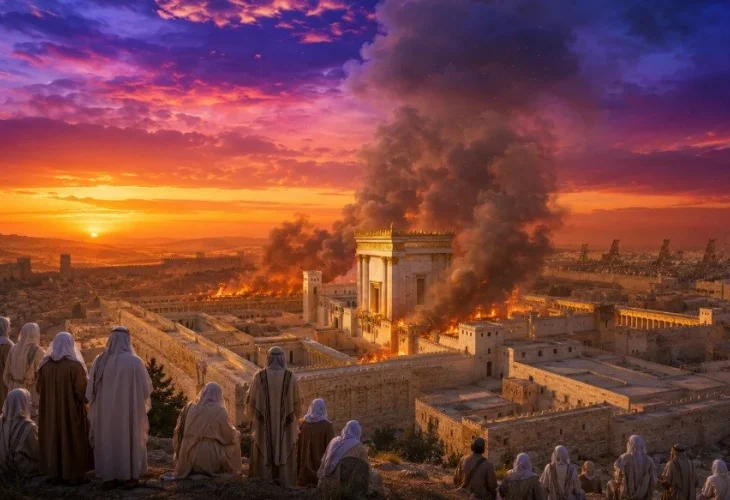
Tisha B'Av (the Ninth of Av) is the saddest day in the Jewish calendar — a 25-hour fast commemorating the destruction of both the First Temple (586 BCE) and Second Temple (70 CE) in Jerusalem, along with many other tragedies in Jewish history including the expulsions from England (1290) and Spain (1492). Five prohibitions are observed: no eating or drinking, no bathing, no anointing, no leather shoes, and no marital relations. In 2026, Tisha B'Av begins at sundown on Wednesday, July 22, and ends at nightfall on Thursday, July 23.
What is Tisha B'Av?
Tisha B'Av — literally "the ninth of Av" in Hebrew — is the most solemn fast day in the Jewish calendar, marking the anniversary of the destruction of both the First and Second Temples in Jerusalem. It is observed for 25 hours, from sundown to nightfall the following day, with five prohibitions that parallel those of Yom Kippur in their severity.
Unlike Yom Kippur, which is a fast of atonement and spiritual elevation, Tisha B'Av is a fast of mourning and grief. The day is spent sitting on low chairs, reading Lamentations (Eicha) and Kinot (liturgical dirges), and contemplating the chain of catastrophes that befell the Jewish people on this calendar date across the centuries.
The Mishnah (Ta'anit 4:6) declares: "Five calamities befell our ancestors on the seventeenth of Tammuz and five on the ninth of Av." The ninth of Av has become the focal point of Jewish national mourning — the day on which the accumulated grief of exile, expulsion, and destruction is given voice.
The Meaning of "Tisha B'Av"
Tisha (תִּשְׁעָה) means "nine" in Hebrew. B'Av (בְּאָב) means "in Av" — referring to the Hebrew month of Av, the fifth month of the Jewish calendar, which falls in July or August. Together, Tisha B'Av simply means "the ninth day of the month of Av." The name carries no additional symbolic meaning in Hebrew — the date itself is what gives it its weight.
In English, the day is also referred to as the Ninth of Av or the 9th of Av. The spelling "Tisha BAv" (without apostrophe) is also widely used in English, particularly in search contexts.
Why It's Called "The Saddest Day in Judaism"
The Talmud (Ta'anit 29a) states: "When Av begins, we reduce our joy." No other date in the Jewish calendar carries this designation. Tisha B'Av is called the saddest day in Judaism because it is the date on which:
- Both Temples in Jerusalem were destroyed — five centuries apart, yet on the same date.
- Both major exiles began — the Babylonian exile (586 BCE) and the Roman exile (70 CE).
- The most devastating expulsions in medieval Jewish history occurred.
- Multiple modern catastrophes have fallen on or near this date.
The Talmud (Yoma 9b) notes that the Second Temple was destroyed not because of military failure alone, but because of sinat chinam — baseless hatred among Jews. This moral diagnosis gives the day a dimension that extends beyond historical mourning into a call for ongoing spiritual repair.
Tisha B’Av: A World We’ve Never Seen
When is Tisha B'Av 2026?
Tisha B'Av 2026 begins at sundown on Wednesday, July 22, 2026 and ends at nightfall on Thursday, July 23, 2026. The fast lasts approximately 25 hours.
Tisha B'Av Dates for the Coming Years
| Year | Hebrew Year | Begins | Ends | Day | Note |
|---|---|---|---|---|---|
2026 | 5786 | Sunset Wed, Jul 22 | Nightfall Thu, Jul 23 | Wed–Thu | Standard |
| 2027 | 5787 | Sunset Wed, Aug 11 | Nightfall Thu, Aug 12 | Wed–Thu | Standard |
| 2028 | 5788 | Sunset Sun, Jul 30 | Nightfall Mon, Jul 31 | Sun–Mon | Postponed (Shabbat) |
| 2029 | 5789 | Sunset Sat, Jul 21 | Nightfall Sun, Jul 22 | Sat–Sun | After Shabbat |
| 2030 | 5790 | Sunset Tue, Aug 6 | Nightfall Wed, Aug 7 | Tue–Wed | Standard |
Note: All dates verified against Hebcal. Local start and end times vary by location — see fast times by city below.
When Tisha B'Av Falls on Shabbat — The Postponed Fast
When the ninth of Av falls on Shabbat — as it will in 2028 — the fast is postponed to the tenth of Av, the following day (Sunday). This is because fasting on Shabbat (other than Yom Kippur) is prohibited; Shabbat must be honored in its full joy.
When Tisha B'Av is postponed in this way, several details change:
- The seudah hamafseket (pre-fast meal with mourning restrictions) is not observed on Shabbat — one eats normally on Shabbat, but stops eating before sunset.
- The five prohibitions begin only at nightfall of Shabbat (Saturday night), when Shabbat ends.
- Some mourning customs of the Nine Days are adjusted — for example, bathing is permitted on Shabbat itself.
This rule is codified in the Shulchan Aruch (Orach Chayim 554:19) and applies whenever the ninth of Av falls on Shabbat.
Fast Times by Location (NY, NJ, FL, TX, LA, Toronto)
Fast start and end times vary significantly by geographic location, particularly for communities far north or south. The following times are approximate for 2026 — verify exact times with a local rabbi or at Hebcal.com before the fast.
| City | Fast Begins (Sunset) | Fast Ends (Nightfall) |
|---|---|---|
| Fast Ends (Nightfall) | ~8:13 PM | ~9:17 PM |
New Jersey | ~8:14 PM | ~9:18 PM |
Miami, FL | ~7:58 PM | ~8:51 PM |
Dallas, TX | ~8:22 PM | ~9:12 PM |
Los Angeles, CA | ~7:52 PM | ~8:52 PM |
Toronto, Canada | ~8:41 PM | ~9:52 PM |
Times are for Wednesday, July 22, 2026. Always verify with a local Jewish calendar source.
The Historical Tragedies of Tisha B'Av
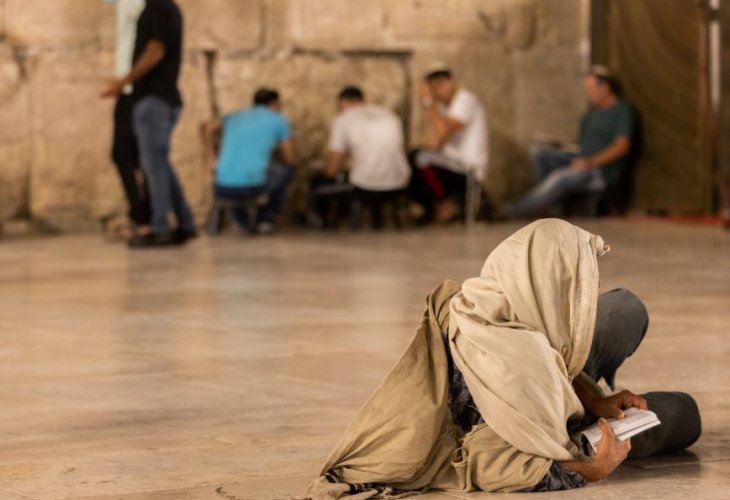 Tisha B’Av night at the Western Wall. (Photo: Yonatan Sindel, Flash90)
The ninth of Av is not the anniversary of a single catastrophe — it is the date on which Jewish history has repeatedly encountered its darkest moments. The Mishnah (Ta'anit 4:6) and Talmud (Ta'anit 29a–b) record the core tragedies; subsequent Jewish history added more.
Destruction of the First Temple (586 BCE)
The First Temple — the Beit HaMikdash built by King Solomon, which housed the Ark of the Covenant and served as the center of divine service for over 400 years — was destroyed by Nebuchadnezzar, King of Babylon, on the ninth of Av in 586 BCE. The Babylonian army breached Jerusalem's walls (on the seventeenth of Tammuz, three weeks earlier — [Internal link: 17th of Tammuz]), advanced through the city, and on the ninth of Av set the Temple ablaze.
The Talmud (Ta'anit 29a) records that the fire burned through the ninth and tenth of Av. The destruction sent the Jewish people into the Babylonian exile — the first great exile of Jewish history — and the prophet Jeremiah composed the Book of Lamentations (Megillat Eicha) in its wake, giving voice to the grief of a people who had lost their land, their Temple, and their king.
Destruction of the Second Temple (70 CE)
The Second Temple — rebuilt after the return from Babylonian exile and expanded magnificently by Herod the Great — was destroyed by the Roman army under Titus on the ninth of Av in 70 CE. The uncanny repetition of the date — the same day, five centuries later — deeply impressed itself on Jewish consciousness and established the ninth of Av as a day of cosmic significance in the Jewish calendar.
The Roman siege of Jerusalem (described in detail by the historian Josephus Flavius in The Jewish War) lasted months. The city's walls were breached on the seventeenth of Tammuz [Internal link: 17th of Tammuz], and the fighting advanced toward the Temple Mount. On the ninth of Av, the Temple was set ablaze. The Talmud (Yoma 9b) attributes the destruction not to Roman military superiority alone, but to sinat chinam — baseless hatred among Jews — which had divided and weakened the city from within.
The destruction of the Second Temple began the exile in which we still live — the longest and most far-reaching exile in Jewish history, now spanning nearly 2,000 years.
The Fall of Betar and Bar Kokhba Revolt (135 CE)
Sixty-five years after the Temple's destruction, the Jews of Judea rose in revolt against Rome under the leadership of Shimon Bar Kokhba, whom Rabbi Akiva identified as a potential messianic figure. The Bar Kokhba revolt (132–135 CE) initially succeeded in recapturing Jerusalem and establishing an independent Jewish state for approximately three years.
The crushing Roman counteroffensive under Emperor Hadrian culminated in the fall of the city of Betar — the last stronghold of the Jewish revolt — on the ninth of Av, 135 CE. The Talmud (Ta'anit 29a) describes the slaughter as catastrophic, the streets of Betar flowing with blood. Rabbi Akiva himself was executed shortly after. Following the defeat, Hadrian expelled the Jews from Judea entirely, renamed the land "Palestine," and renamed Jerusalem "Aelia Capitolina" — an attempt to erase Jewish connection to the land.
The Talmud adds that on this same day, Hadrian plowed over Jerusalem and the Temple Mount — fulfilling the prophecy of Micah (3:12): "Zion shall be plowed as a field."
Jewish Expulsion from England (1290)
On the ninth of Av, 1290, King Edward I of England issued the Edict of Expulsion, ordering all Jews to leave England by November 1 of that year. England thus became the first major European country to expel its Jewish population — approximately 16,000 Jews were forced to leave a country in which Jews had lived for over 200 years. The expulsion was total; Jews would not officially return to England until 1656, under Oliver Cromwell.
Jewish Expulsion from Spain (1492)
The most devastating expulsion in medieval Jewish history fell, by royal decree, on the ninth of Av, 1492 — the same summer that Christopher Columbus sailed for the New World. King Ferdinand and Queen Isabella signed the Alhambra Decree ordering all Jews who refused to convert to Christianity to leave Spain within four months.
Approximately 200,000 Jews were expelled from Spain — one of the largest, most prosperous, and most intellectually distinguished Jewish communities in the world, which had flourished for over 1,500 years. The expulsion shattered the Golden Age of Spanish Jewry and sent communities scattering across North Africa, the Ottoman Empire, the Netherlands, and beyond. The date of the decree's implementation — the deadline for departure — coincided with the ninth of Av.
World War I and the Warsaw Ghetto Connection
On August 1, 1914 — the ninth of Av on the Hebrew calendar — Germany declared war on Russia, setting in motion the chain of events that would become World War I. Many Jewish historians and rabbis have noted this coincidence as another expression of the ninth of Av's recurring role in Jewish catastrophe. World War I itself set the geopolitical stage for the rise of Nazism and the Holocaust that followed.
On July 23, 1942 — also the ninth of Av on the Hebrew calendar — the mass deportation of Jews from the Warsaw Ghetto to the Treblinka extermination camp began. On that single day, approximately 6,000 Jews were taken from the ghetto. The deportations continued for weeks, ultimately resulting in the murder of approximately 265,000 Warsaw Jews at Treblinka.
Holocaust Connection — Treblinka and Beyond
The connection between Tisha B'Av and the Holocaust is not merely calendar coincidence — it has been understood by rabbinic authorities as part of the long arc of Jewish historical suffering centered on this date. Rabbi Moshe Feinstein and other major halachic authorities of the twentieth century ruled that the martyrs of the Holocaust are to be included in the mourning of Tisha B'Av, and that the day's lamentations encompass their memory.
The Kinot (liturgical dirges) recited on Tisha B'Av morning have been expanded in many communities to include contemporary elegies for the six million — extending the ancient mourning form into living memory.
The Five Prohibitions of Tisha B'Av
Five Prohibitions: On Tisha B'Av, five activities are prohibited: (1) eating and drinking, (2) washing and bathing, (3) anointing with oils or cosmetics, (4) wearing leather shoes, (5) marital relations. These are the same five prohibitions as Yom Kippur, but observed in a spirit of mourning rather than atonement.
The five prohibitions of Tisha B'Av are codified in the Shulchan Aruch (Orach Chayim 554) and derive from their parallel application on Yom Kippur. Unlike the minor fasts (17th of Tammuz, Fast of Gedaliah, 10th of Tevet, Fast of Esther) — which prohibit only eating and drinking — Tisha B'Av carries the full set of five restrictions, reflecting its status as a major fast comparable to Yom Kippur in severity.
1. Eating and Drinking
All food and drink — including water — are prohibited from sunset on the eve of Tisha B'Av until nightfall the following day (approximately 25 hours). This is identical to the Yom Kippur fast in its scope and duration.
Unlike the minor fasts, which begin at dawn (alot hashachar), the Tisha B'Av fast begins at sunset — the same as Yom Kippur.
2. Washing and Bathing
Bathing and washing the body for pleasure are prohibited. This includes showering, swimming, and bathing. Washing hands for cleanliness (netilat yadayim upon waking, before prayer, or after using the bathroom) is permitted — but only the fingers, not the full hands. Washing for medical necessity is permitted.
3. Anointing with Oils or Cosmetics
Applying creams, lotions, perfumes, deodorants, or cosmetics for pleasure is prohibited. Medical ointments and medications applied to the skin for health reasons are permitted.
4. Wearing Leather Shoes
Wearing shoes or sandals made of leather is prohibited. Non-leather footwear — canvas, rubber, cloth, synthetic materials — is permitted. This prohibition has its roots in the ancient association between leather shoes and comfort and status; on a day of mourning, one walks humbly.
In many Orthodox communities, one can see people walking to and from synagogue on Tisha B'Av in cloth sneakers or canvas shoes.
5. Marital Relations
Marital relations are prohibited on Tisha B'Av, as on Yom Kippur. The prohibition also extends to physical affection between husband and wife, in the same manner as the restrictions observed during the period of niddah.
Why We Mourn the Temple Every Year: The Hidden Hope of the Three Weeks
How to Observe Tisha B'Av
The Pre-Fast Meal (Seudah Hamafseket)
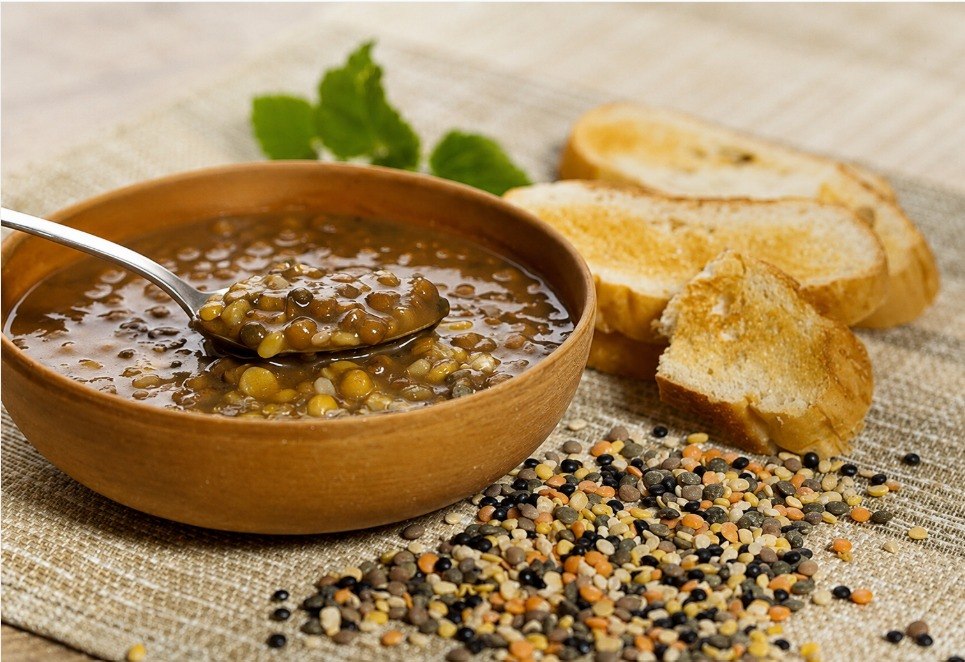 Traditional seudah hamafseket meal
The seudah hamafseket (סְעוּדָה הַמַּפְסֶקֶת — "the meal that interrupts") is the last meal eaten before the Tisha B'Av fast begins. Unlike the festive meal before Yom Kippur, the seudah hamafseket is a meal of mourning with specific restrictions:
- Eaten alone — not with others, to emphasize the personal nature of mourning.
- Only one cooked dish is served — reflecting the mourning practice of abstaining from elaborate food.
- A hard-boiled egg and bread dipped in ashes are the traditional foods — the egg as a symbol of mourning (round, like the wheel of fortune that turns), the ashes as a symbol of the Temple's destruction.
- No meat, no wine (which have already been restricted since Rosh Chodesh Av or the week of Tisha B'Av, depending on community custom).
- Eaten sitting on the floor or on a low stool, adopting the posture of mourning.
Timing of the seudah hamafseket: The meal is eaten in the late afternoon before sunset — ideally beginning after mincha gedolah (approximately 30 minutes after midday) and completing well before sunset. One should plan to finish eating and drinking before sunset so the fast begins on time. After completing the meal, many have the custom to remove their leather shoes before going to synagogue for the evening service.
Important note for 2026: On Wednesday, July 22, 2026, the seudah hamafseket should be completed before approximately 8:13 PM in New York (local sunset time). Plan accordingly and check local times.
When Tisha B'Av is postponed (falls on Shabbat): The seudah hamafseket is not observed on Shabbat. Instead, one eats normally on Shabbat — including meat and wine at the Shabbat meals. One stops eating before sunset on Shabbat, and the five prohibitions begin only at nightfall when Shabbat ends.
The 25-Hour Fast Schedule
The complete Tisha B'Av observance spans from sunset to nightfall the following evening — approximately 25 hours. Here is the structure of the day:
Eve of Tisha B'Av:
- Seudah hamafseket eaten in the afternoon
- Shoes removed before entering the synagogue
- Ma'ariv (evening prayer) followed by the chanting of Megillat Eicha (Book of Lamentations)
- Kinot (dirges) recited
- No greeting others; no socializing
Tisha B'Av Day:
- Shacharit (morning prayer) without tallit and tefillin (worn later at Mincha)
- Kinot recited at length — communities may spend one to three hours on kinot
- Torah study restricted to permitted topics (laws of Tisha B'Av, Book of Job, Lamentations, etc.)
- Sitting on low chairs throughout the morning
- Mincha (afternoon prayer): tallit and tefillin worn; Nachem prayer added; Torah reading and Haftarah
- Fast ends at nightfall
Sitting on Low Stools — Mourning Customs
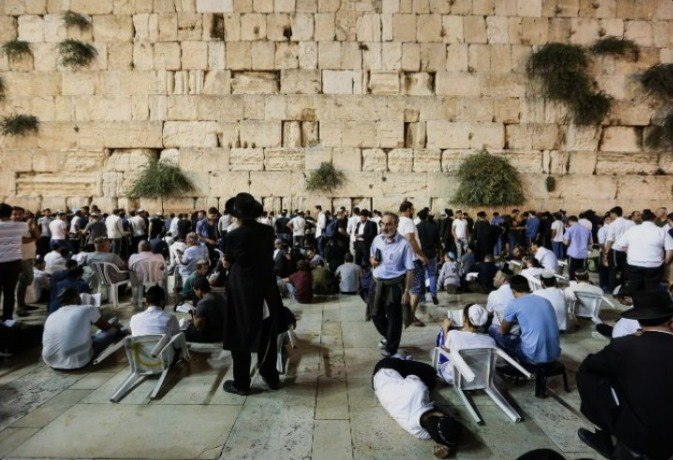 Jewish men sitting on low stools reading Kinot on Tisha B'Av
 One of the most distinctive customs of Tisha B'Av is sitting on the floor or on low chairs throughout the morning service and during much of the day. This custom derives from the mourning practices described in the Book of Job and mirrors the behavior of a mourner (avel) during the seven days of shiva. The lowered position physically expresses the humbled, grief-stricken state of the day.
Other mourning customs observed on Tisha B'Av:
- No greeting — one does not say "shalom" or "good morning" to another person. If greeted, one may respond quietly but does not initiate.
- No Torah study — except for permitted topics (see below). Torah study brings joy, which is inappropriate on this day.
- No music — no listening to music throughout the day.
- No work — while technically permitted by halacha, many communities have the custom to avoid work on Tisha B'Av, particularly in the morning.
- No bathing — as noted in the five prohibitions.
Restrictions on Torah Study
The prohibition on Torah study on Tisha B'Av is unusual — Torah study is one of the greatest mitzvot and is normally encouraged at every opportunity. However, because Torah study brings joy and spiritual elevation, it is restricted on this day of mourning.
Permitted topics for Torah study on Tisha B'Av:
- Megillat Eicha (the Book of Lamentations) and its commentaries
- The Book of Job
- The laws of Tisha B'Av itself
- The sad sections of Jeremiah and the other prophetic laments
- Midrash Eichah Rabbah
- Laws of mourning
Prohibited: Mishnah, Gemara, halacha, Chumash with Rashi — any study that would bring the usual joy of learning.
Breaking the Fast
At nightfall on the tenth of Av, the fast ends with nightfall (tzeit hakochavim). Many people have the custom to make Havdalah (the ceremony marking the end of a fast day) — though the Havdalah of Tisha B'Av is shortened, omitting the spices (besamim) and the flame blessing (since Tisha B'Av is not Shabbat).
Many communities have the custom to refrain from eating meat and drinking wine even after the fast until noon of the tenth of Av — in memory of the fact that the Temple continued burning into the tenth.
Keeping Kids Engaged on Tisha B'Av: 5 Meaningful Ideas
Tisha B'Av Prayers and Synagogue Services
Reading the Book of Lamentations (Eicha)
The Book of Lamentations — Megillat Eicha (מְגִלַּת אֵיכָה) — is chanted publicly in the synagogue at the Ma'ariv service on the night of Tisha B'Av, after nightfall. Composed by the prophet Jeremiah in the immediate aftermath of the destruction of the First Temple, Eicha consists of five chapters of intense poetic grief — beginning with the Hebrew word אֵיכָה (Eicha), meaning "How?" or "Alas."
The chanting of Eicha is done in a distinctive mournful melody — one of the most haunting and recognizable in the entire Jewish liturgical tradition. The congregation sits on low chairs or the floor in the dimmed light of the synagogue, listening to the prophet's lament as if experiencing the destruction themselves.
Eicha is also read privately during the day by many individuals who wish to connect more deeply to the day's themes.
Megillat Eicha — Chapter 1: Hebrew Text & English Translation
The first chapter of Eicha — the one chanted first on Tisha B'Av night — consists of 22 verses, one for each letter of the Hebrew alphabet (an alphabetical acrostic). It opens with the famous cry: "Eicha — How?" — and proceeds to paint Jerusalem as a widow, abandoned and weeping, searching for comfort and finding none.
אֵיכָה יָשְׁבָה בָדָד הָעִיר רַבָּתִי עָם הָיְתָה כְּאַלְמָנָה רַבָּתִי בַגּוֹיִם שָׂרָתִי בַּמְּדִינוֹת הָיְתָה לָמַס:
בָּכוֹ תִבְכֶּה בַּלַּיְלָה וְדִמְעָתָהּ עַל לֶחֱיָהּ אֵין לָהּ מְנַחֵם מִכָּל אֹהֲבֶיהָ כָּל רֵעֶיהָ בָּגְדוּ בָהּ הָיוּ לָהּ לְאֹיְבִים:
גָּלְתָה יְהוּדָה מֵעֹנִי וּמֵרֹב עֲבֹדָה הִיא יָשְׁבָה בַגּוֹיִם לֹא מָצְאָה מָנוֹחַ כָּל רֹדְפֶיהָ הִשִּׂיגוּהָ בֵּין הַמְּצָרִים:
דַּרְכֵי צִיּוֹן אֲבֵלוֹת מִבְּלִי בָּאֵי מוֹעֵד כָּל שְׁעָרֶיהָ שׁוֹמֵמִין כֹּהֲנֶיהָ נֶאֱנָחִים בְּתוּלֹתֶיהָ נּוּגוֹת וְהִיא מַר לָהּ:
הָיוּ צָרֶיהָ לְרֹאשׁ אֹיְבֶיהָ שָׁלוּ כִּי יְהוָה הוֹגָהּ עַל רֹב פְּשָׁעֶיהָ עוֹלָלֶיהָ הָלְכוּ שְׁבִי לִפְנֵי צָר:
וַיֵּצֵא מִן בַּת צִיּוֹן כָּל הֲדָרָהּ הָיוּ שָׂרֶיהָ כְּאַיָּלִים לֹא מָצְאוּ מִרְעֶה וַיֵּלְכוּ בְלֹא כֹחַ לִפְנֵי רוֹדֵף:
זָכְרָה יְרוּשָׁלַיִם יְמֵי עָנְיָהּ וּמְרוּדֶיהָ כֹּל מַחֲמֻדֶיהָ אֲשֶׁר הָיוּ מִימֵי קֶדֶם בִּנְפֹל עַמָּהּ בְּיַד צָר וְאֵין עוֹזֵר לָהּ רָאוּהָ צָרִים שָׂחֲקוּ עַל מִשְׁבַּתֶּהָ:
חֵטְא חָטְאָה יְרוּשָׁלַיִם עַל כֵּן לְנִידָה הָיָתָה כָּל מְכַבְּדֶיהָ הִזִּילוּהָ כִּי רָאוּ עֶרְוָתָהּ גַּם הִיא נֶאֶנְחָה וַתָּשָׁב אָחוֹר:
טֻמְאָתָהּ בְּשׁוּלֶיהָ לֹא זָכְרָה אַחֲרִיתָהּ וַתֵּרֶד פְּלָאִים אֵין מְנַחֵם לָהּ רְאֵה יְהוָה אֶת עָנְיִי כִּי הִגְדִּיל אוֹיֵב:
יָדוֹ פָּרַשׂ צָר עַל כָּל מַחֲמַדֶּיהָ כִּי רָאֲתָה גוֹיִם בָּאוּ מִקְדָּשָׁהּ אֲשֶׁר צִוִּיתָה לֹא יָבֹאוּ בַקָּהָל לָךְ:
כָּל עַמָּהּ נֶאֱנָחִים מְבַקְּשִׁים לֶחֶם נָתְנוּ מַחֲמַדֵּיהֶם בְּאֹכֶל לְהָשִׁיב נָפֶשׁ רְאֵה יְהוָה וְהַבִּיטָה כִּי הָיִיתִי זוֹלֵלָה:
לוֹא אֲלֵיכֶם כָּל עֹבְרֵי דֶרֶךְ הַבִּיטוּ וּרְאוּ אִם יֵשׁ מַכְאוֹב כְּמַכְאֹבִי אֲשֶׁר עוֹלַל לִי אֲשֶׁר הוֹגָה יְהוָה בְּיוֹם חֲרוֹן אַפּוֹ:
מִמָּרוֹם שָׁלַח אֵשׁ בְּעַצְמֹתַי וַיִּרְדֶּנָּה פָּרַשׂ רֶשֶׁת לְרַגְלַי הֱשִׁיבַנִי אָחוֹר נְתָנַנִי שֹׁמֵמָה כָּל הַיּוֹם דָּוָה:
נִשְׁקַד עֹל פְּשָׁעַי בְּיָדוֹ יִשְׂתָּרְגוּ עָלוּ עַל צַוָּארִי הִכְשִׁיל כֹּחִי נְתָנַנִי אֲדֹנָי בִּידֵי לֹא אוּכַל קוּם:
סִלָּה כָל אַבִּירַי אֲדֹנָי בְּקִרְבִּי קָרָא עָלַי מוֹעֵד לִשְׁבֹּר בַּחוּרָי גַּת דָּרַךְ אֲדֹנָי לִבְתוּלַת בַּת יְהוּדָה:
עַל אֵלֶּה אֲנִי בוֹכִיָּה עֵינִי עֵינִי יֹרְדָה מַּיִם כִּי רָחַק מִמֶּנִּי מְנַחֵם מֵשִׁיב נַפְשִׁי הָיוּ בָנַי שׁוֹמֵמִים כִּי גָבַר אוֹיֵב:
פֵּרְשָׂה צִיּוֹן בְּיָדֶיהָ אֵין מְנַחֵם לָהּ צִוָּה יְהוָה לְיַעֲקֹב סְבִיבָיו צָרָיו הָיְתָה יְרוּשָׁלַיִם לְנִדָּה בֵּינֵיהֶם:
צַדִּיק הוּא יְהוָה כִּי פִיהוּ מָרִיתִי שִׁמְעוּ נָא כָל עַמִּים וּרְאוּ מַכְאֹבִי בְּתוּלֹתַי וּבַחוּרַי הָלְכוּ בַשֶּׁבִי:
קָרָאתִי לַמְאַהֲבַי הֵמָּה רִמּוּנִי כֹּהֲנַי וּזְקֵנַי בָּעִיר גָּוָעוּ כִּי בִקְשׁוּ אֹכֶל לָמוֹ וְיָשִׁיבוּ אֶת נַפְשָׁם:
רְאֵה יְהוָה כִּי צַר לִי מֵעַי חֳמַרְמָרוּ נֶהְפַּךְ לִבִּי בְּקִרְבִּי כִּי מָרוֹ מָרִיתִי מִחוּץ שִׁכְּלָה חֶרֶב בַּבַּיִת כַּמָּוֶת:
שָׁמְעוּ כִּי נֶאֱנָחָה אָנִי אֵין מְנַחֵם לִי כָּל אֹיְבַי שָׁמְעוּ רָעָתִי שָׂשׂוּ כִּי אַתָּה עָשִׂיתָ הֵבֵאתָ יוֹם קָרָאתָ וְיִהְיוּ כָמֹנִי:
תָּבֹא כָל רָעָתָם לְפָנֶיךָ וְעוֹלֵל לָמוֹ כַּאֲשֶׁר עוֹלַלְתָּ לִי עַל כָּל פְּשָׁעָי כִּי רַבּוֹת אַנְחֹתַי וְלִבִּי דַוָּי:
- How does she sit alone — the city once so full of people! She has become like a widow, she who was great among nations; a princess among provinces has become a vassal.
- She weeps bitterly in the night, and her tears are on her cheeks; she has none to comfort her among all who loved her. All her friends have betrayed her — they have become her enemies.
- Judah has gone into exile because of affliction and great servitude; she dwells among the nations but finds no rest; all her pursuers overtook her in the straits.
- The roads to Zion are in mourning, with no one coming to the appointed feasts. All her gates are desolate, her priests groan, her young women are afflicted, and she herself is bitter.
- Her enemies have become her masters, her foes prosper — for the Lord has afflicted her for the multitude of her transgressions. Her children have gone away, captive before the enemy.
- And all the glory has departed from the daughter of Zion; her princes have become like deer that find no pasture — they fled without strength before the pursuer.
- Jerusalem remembered in the days of her affliction and wandering all the precious things that were hers from days of old; when her people fell into the enemy's hand, with none to help — the enemies saw her and mocked at her downfall.
- Jerusalem sinned greatly — therefore she became an object of scorn. All who honored her despise her, for they have seen her nakedness. She herself groans and turns away.
- Her uncleanness was in her skirts; she did not consider her future. Her fall was astonishing — she has no comforter. "See, O Lord, my affliction, for the enemy has triumphed!"
- The enemy has spread his hands over all her precious things; for she has seen the nations enter her sanctuary — those whom You commanded should not enter Your congregation.
- All her people groan as they search for bread; they give their treasures for food to restore their strength. "See, O Lord, and look, for I have become worthless."
- "Is it nothing to you, all you who pass by? Look and see — is there any sorrow like my sorrow, which was dealt to me, which the Lord inflicted on the day of His burning anger?"
- "From on high He sent fire; it entered my bones. He spread a net for my feet; He turned me back. He has left me desolate and faint all day long."
- "The yoke of my transgressions was bound by His hand — they are knit together — they have come upon my neck. He made my strength fail; the Lord has given me into the hands of those I cannot withstand."
- "The Lord rejected all my mighty men in my midst; He called an assembly against me to crush my young warriors. The Lord has trodden the virgin daughter of Judah as in a winepress."
- "For these things I weep — my eyes, my eyes overflow with water — because a comforter is far from me, one to restore my soul. My children are desolate, for the enemy has prevailed."
- Zion stretched out her hands, but there is none to comfort her. The Lord has commanded against Jacob that his neighbors should be his foes; Jerusalem has become a thing unclean among them.
- "The Lord is righteous, for I have rebelled against His commandment. Hear, all peoples, and see my pain. My young women and my young men have gone into captivity."
- "I called to my lovers, but they deceived me; my priests and my elders perished in the city, while they sought food to revive their strength."
- "See, O Lord, for I am in distress — my stomach churns, my heart is turned within me, because I have been very rebellious. Outside the sword bereaves; inside it is like death."
- "They heard how I was groaning, with no one to comfort me. All my enemies heard of my trouble; they are glad that You have done it. Bring on the day You have announced — let them be as I am."
- "Let all their evil come before You, and deal with them as You have dealt with me because of all my transgressions. For my groans are many, and my heart is faint."
Kinot — Liturgical Dirges of Mourning
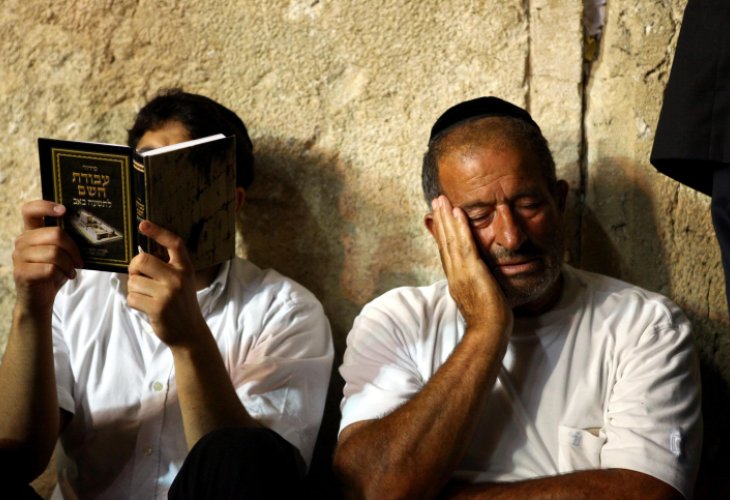 Photo: Abir Sultan, FLASH90.
The Kinot (קִינוֹת — "Dirges") are liturgical poems of mourning recited at the Shacharit morning service on Tisha B'Av. The recitation of Kinot may last anywhere from one to three hours, depending on the community. They span more than 1,500 years of Jewish history — from ancient elegies over the Temple's destruction, through medieval laments over Crusade massacres, to contemporary poems mourning the Holocaust.
The Kinot are printed in special books (Kinnot books) with commentary. Many synagogues have developed the practice of providing explanatory commentary or translation alongside the chanting, to help worshippers connect to the ancient texts.
The Nachem Prayer at Mincha (Hebrew & English)
At the Mincha (afternoon) service, a special prayer called Nachem (נַחֵם — "Comfort") is inserted into the Amidah, within the blessing for the rebuilding of Jerusalem. Nachem is a prayer for the comforting and rebuilding of Jerusalem and the Temple, acknowledging the city's desolation and pleading for its restoration.
The Nachem prayer is unique to Tisha B'Av and is one of the most theologically charged prayers in the Jewish liturgy — simultaneously expressing grief over the present and hope for the future. Sephardic communities recite Nachem at all three prayer services; Ashkenazi communities recite it only at Mincha.
Hebrew (Nachem — Ashkenazi Nusach):
נַחֵם יְהוָה אֱלֹהֵינוּ אֶת אֲבֵלֵי צִיּוֹן וְאֶת אֲבֵלֵי יְרוּשָׁלַיִם, וְאֶת הָעִיר הָאֲבֵלָה וְהַחֲרֵבָה וְהַבְּזוּיָה וְהַשּׁוֹמֵמָה. הָאֲבֵלָה מִבְּלִי בָּנֶיהָ, וְהַחֲרֵבָה מִמְּעוֹנוֹתֶיהָ, וְהַבְּזוּיָה מִכְּבוֹדָהּ, וְהַשּׁוֹמֵמָה מֵאֵין יוֹשֵׁב. וְהִיא יוֹשֶׁבֶת וְרֹאשָׁהּ חָפוּי כְּאִשָּׁה עֲקָרָה שֶׁלֹּא יָלָדָה. וַיְבַלְּעוּהָ לְגִיוֹנוֹת וַיִּירָשׁוּהָ עוֹבְדֵי זָרָה, וַיַּטִּילוּ אֶת עַמְּךָ יִשְׂרָאֵל לֶחָרֶב וַיַּהַרְגוּ בְּזָדוֹן חֲסִידֵי עֶלְיוֹן. לָכֵן צִיּוֹן בְּמַר תִּבְכֶּה וִירוּשָׁלַיִם תִּתֵּן קוֹלָהּ. לִבִּי לִבִּי עַל חַלְלֵיהֶם, מֵעַי מֵעַי עַל חַלְלֵיהֶם. כִּי אַתָּה יְהוָה בָּאֵשׁ הִצַּתָּהּ, וּבָאֵשׁ אַתָּה עָתִיד לְבַנּוֹתָהּ, כַּאֲמוּר: וַאֲנִי אֶהְיֶה לָהּ נְאֻם יְהוָה חוֹמַת אֵשׁ סָבִיב, וּלְכָבוֹד אֶהְיֶה בְתוֹכָהּ. בָּרוּךְ אַתָּה יְהוָה מְנַחֵם צִיּוֹן וּבוֹנֶה יְרוּשָׁלָיִם.
Comfort, O Lord our God, the mourners of Zion and the mourners of Jerusalem — and the city that is mournful, ruined, despised and desolate: mournful without her children, ruined in her dwellings, despised in her glory, and desolate without inhabitants. She sits with her head covered, like a barren woman who has not given birth. Legions devoured her and idol worshippers took possession of her; they put Your people Israel to the sword and killed with wickedness the devout servants of the Most High. Therefore Zion weeps bitterly and Jerusalem raises her voice. My heart, my heart — for their slain! My innards, my innards — for their slain! For You, O Lord, set her alight with fire, and with fire You will rebuild her in the future, as it is written: "And I will be for her, says the Lord, a wall of fire around her, and I will be the glory within her" (Zechariah 2:9). Blessed are You, O Lord, who comforts Zion and builds Jerusalem.
Torah Reading and Haftarah
Shacharit Torah Reading: Deuteronomy 4:25–40 — Moses' warning about exile if Israel abandons God's commandments.
Shacharit Haftarah: Jeremiah 8:13–9:23 — the prophet's lament over the impending destruction of Jerusalem.
Mincha Torah Reading: Exodus 32:11–14 and 34:1–10 — the same Vayechal Moshe portion read on all fast days [Internal link: 17th of Tammuz — Torah Reading].
Mincha Haftarah (Ashkenazi): Isaiah 55:6–56:8 — "Seek the Lord while He may be found" — the same Haftarah read on all minor fasts and on Yom Kippur Mincha.
Removing Tefillin and Tallit Customs
One of the most distinctive liturgical customs of Tisha B'Av concerns tallit and tefillin:
- At Shacharit, tallit and tefillin are not worn — because these are described as "glory" (pe'er) and it is inappropriate to wear items of glory and beauty on a day of acute mourning.
- At Mincha, tallit and tefillin are worn — because by afternoon, the intensity of the mourning has somewhat passed (the Temple fire was set at night and the height of the burning was the previous evening).
This reversal of the normal pattern — wearing tallit and tefillin at Mincha rather than Shacharit — is unique to Tisha B'Av and one of its most distinctive halachic features.
Who is Exempt from Fasting?
Unlike the minor fasts — which carry a lower threshold for exemption — Tisha B'Av is a major fast comparable to Yom Kippur in severity. Its exemptions are more limited than those of the minor fasts.
Pregnant and Nursing Women
The laws for pregnant and nursing women on Tisha B'Av are more stringent than on the minor fasts:
- Pregnant women: Are obligated to fast on Tisha B'Av in standard halacha, unless fasting poses a genuine medical risk. A woman who feels unwell, dizzy, or at risk should consult a rabbi — many authorities permit eating in small measured amounts (shiurim) in cases of genuine distress, similar to Yom Kippur rules.
- Nursing women: Are also generally obligated to fast, unless the fast would significantly harm their health or the health of their nursing infant.
- Any woman experiencing pregnancy complications or medical risk should consult both a doctor and a rabbi before deciding whether to fast.
The Sick and Elderly
A person who is seriously ill (choleh she'yesh bo sakana) is not only exempt from fasting but is obligated to eat if their life or health requires it. Even those who are ill without life-threatening danger may be exempt — consult a rabbi.
Very elderly individuals for whom fasting poses significant health risks are exempt.
Unlike on Yom Kippur — where even those who must eat are required to eat in small measured amounts (less than a certain volume at intervals) — on Tisha B'Av, those who are medically required to eat may eat normally.
Children Under Bar/Bat Mitzvah Age
Children below bar mitzvah age (13 for boys, 12 for girls) are not obligated to fast. Many parents have the custom of training older children (from age 10 or 11) to fast for part of the day — but this is a custom of chinuch (education), not a strict requirement.
Children should not be allowed to fast if it poses any health risk.
Tisha B'Av vs. Yom Kippur — Key Differences
Both Tisha B'Av and Yom Kippur are 25-hour fasts with the same five prohibitions. Yet they are profoundly different in spirit and practice:
| Feature | Tisha B'Av | Yom Kippur |
|---|---|---|
| Duration | ~25 hours (sunset to nightfall) | ~25 hours (sunset to nightfall) |
Five Prohibitions | ✅ Yes | ✅ Yes |
Spirit | Mourning and grief | Atonement and joy |
Work | Technically permitted | Prohibited (like Shabbat) |
Tallit/Tefillin at Shacharit | ❌ Not worn | ✅ Worn (white kittel) |
Tallit/Tefillin at Mincha | ✅ Worn | N/A |
Sitting on low chairs | ✅ Yes | ❌ No |
Reading Eicha | ✅ Yes | ❌ No |
Torah study restricted | ✅ Yes | ❌ No (encouraged) |
Greeting others | ❌ Avoided | ✅ Permitted |
Synagogue lighting | Dimmed | Bright and festive |
Overall atmosphere | National grief | Solemn joy |
The Talmud (Ta'anit 30b) states that in the future — after the Temple is rebuilt — Tisha B'Av will be transformed from a day of mourning into one of the greatest festivals. Yom Kippur, by contrast, will remain a sacred fast even in the messianic era.
Tisha B'Av and the Three Weeks
Connection to the 17th of Tammuz
Tisha B'Av does not arrive without warning. It is the culmination of a 22-day period of national mourning called The Three Weeks (Bein HaMetzarim), which begins on the [Internal link: 17th of Tammuz] — the day the walls of Jerusalem were breached by the Romans.
The progression from 17 Tammuz to 9 Av mirrors the historical progression of 70 CE: walls breached on 17 Tammuz, city fought through for three weeks, Temple destroyed on 9 Av. The Jewish calendar preserves this entire arc of catastrophe, not just its endpoint.
The Nine Days of Mourning
Within the Three Weeks, the period from Rosh Chodesh Av (the first of Av) through Tisha B'Av — known as the Nine Days — carries intensified mourning restrictions:
- No meat or wine (except on Shabbat) — Ashkenazi custom; Sephardic custom varies.
- No new clothing purchased or worn.
- No bathing for pleasure (no swimming, no recreational bathing).
- No laundering clothing for pleasure.
- No construction projects that bring joy (home renovations, etc.).
These restrictions intensify further in the week of Tisha B'Av itself (from the Sunday before Tisha B'Av), when even haircuts and changing to freshly laundered clothes are restricted.
Shabbat Nachamu — The Sabbath of Comfort
The Shabbat immediately following Tisha B'Av is called Shabbat Nachamu — "the Shabbat of Comfort" — named for the Haftarah reading from Isaiah 40: "Nachamu nachamu ami" — "Be comforted, be comforted, My people." This is the first of the seven Haftarot of Consolation (sheva d'nechemta) that are read on the seven Shabbatot between Tisha B'Av and Rosh Hashanah — a deliberate liturgical arc from the depths of mourning on Tisha B'Av to the hope and renewal of the High Holiday season.
Shabbat Nachamu carries a palpably different atmosphere from the preceding weeks. Communities often celebrate with additional singing, festive meals, and a conscious shift from grief to comfort.
The Spiritual Meaning — Mourning 2,000 Years Later
Sinat Chinam — Baseless Hatred
The most searching question about Tisha B'Av is the one the Talmud itself raises and answers: why was the Second Temple destroyed?
The First Temple fell because of three cardinal sins — idolatry, sexual immorality, and bloodshed. The Second Temple — which stood in an era of Torah learning and observance — fell for a different reason. The Talmud (Yoma 9b) states clearly: sinat chinam — baseless hatred between Jews.
Sinat chinam does not mean ordinary disagreement or conflict. It means hatred without justification — the kind of animosity that sees another Jew as an enemy, as less than human, as deserving of contempt. The Talmud is making a profound claim: Rome did not destroy the Temple. The internal hatred of Jews toward one another did. Rome was merely the instrument.
The implication for us — 2,000 years later — is direct: the Temple has not been rebuilt because sinat chinam has not been repaired. The Talmud (Yoma 9b) states that any generation in which the Temple is not rebuilt is as if it destroyed it. This is not a statement of blame but of responsibility.
Tisha B'Av, therefore, is not only a day of historical mourning. It is a day of moral reckoning — a call to examine where in our lives, our communities, and our relationships we harbor groundless judgment, unnecessary division, or contempt for other Jews.
The Future Redemption (Zechariah 8:19)
The prophet Zechariah, speaking after the destruction of the First Temple, looked forward to a day of redemption and declared (8:19):
"Thus says the Lord of Hosts: The fast of the fourth month [17 Tammuz], and the fast of the fifth [Tisha B'Av], and the fast of the seventh [Fast of Gedaliah], and the fast of the tenth [10th of Tevet] shall be joy and gladness and happy festivals for the house of Judah — so love truth and peace."
This prophecy — which forms the scriptural basis for the existence of these fasts and also for their ultimate abolition — teaches that the fast days of the Jewish calendar are not permanent. They are responses to specific historical catastrophes, and when those catastrophes are repaired — when the Temple is rebuilt and the exile ends — these days of mourning will be transformed into days of celebration.
The condition Zechariah attaches is telling: "love truth and peace." The transformation of Tisha B'Av into joy is not a magical event but a moral one — it happens when Jews choose truth over falsehood and peace over division.
Messiah Born on Tisha B'Av — A Message of Hope
One of the most striking and consoling teachings in all of Jewish tradition is found in the Jerusalem Talmud (Berachot 2:4) and Midrash Eichah Rabbah (1:51):
The Messiah is born on Tisha B'Av.
The Midrash describes a man plowing his field on Tisha B'Av. His ox stumbles and falls. An Arab passing by says to him: "Untie your ox, untie your plow — for today the Temple of the Jews was destroyed." The ox stumbles again. The Arab says: "Tie your ox, tie your plow — for today the savior of Israel is born." The man goes to a certain city and finds a woman with an infant. She says: "Today he was born — but because of the sins of Israel, I cannot raise him. He will eventually redeem Israel."
The theological statement is precise and deliberate: destruction and redemption are born on the same day. The lowest point in Jewish history is simultaneously the birthplace of its ultimate reversal. The day the Temple was destroyed is the day the seed of its rebuilding was planted.
This is not consolation that minimizes grief — it is consolation that transforms grief into hope without denying the reality of loss. On Tisha B'Av, we are permitted to mourn fully, because we know that mourning is not the final word. The Messiah was born on this day. The same fire that destroyed will one day be replaced by the light of redemption.
The great Rabbi Abraham Isaac Kook (Rav Kook) wrote that the darkness of Tisha B'Av contains within it a light that cannot yet be seen — and that the task of the generation of redemption is to begin to perceive that hidden light even in the midst of mourning.
Tisha B'Av in American Jewish Communities
In the United States, Tisha B'Av occupies a significant place in the calendar of observant Jewish communities, though its profile varies considerably across denominations and communities.
In Orthodox communities across New York, New Jersey, Chicago, Los Angeles, Baltimore, Miami, and Toronto, Tisha B'Av is observed with full halachic rigor. Synagogues hold the full Eicha service on the eve of the fast, Kinot services in the morning (often lasting 2–3 hours), and Mincha with Nachem in the afternoon. Many Orthodox Jews spend the day studying the permitted topics, attending synagogue, and abstaining from entertainment and work in the spirit of the day.
At the Kotel (Western Wall) in Jerusalem, Tisha B'Av night draws tens of thousands of Jews for the public reading of Eicha — one of the most powerful collective Jewish experiences of the year, with the ancient lament chanted before the last remaining wall of the Temple complex. The Western Wall plaza fills with worshippers sitting on the ground or on low chairs, many in stocking feet (having removed their leather shoes), many weeping — all facing the stones of the Wall that stood through the Temple's destruction and have absorbed the prayers of the Jewish people for nearly 2,000 years since. Many American Jews travel to Jerusalem specifically for this experience, and live broadcasts of the Kotel Eicha service are available online for communities worldwide.
In Conservative communities, Tisha B'Av is observed by traditionally inclined members, with Eicha often read in synagogue and the fast observed. The level of adherence to all five prohibitions varies widely.
In Reform and Reconstructionist communities, Tisha B'Av has seen a revival of interest in recent decades, with many congregations reintroducing Eicha readings and the fast, recognizing the day's power as a vehicle for Jewish historical consciousness.
Jewish summer camps — particularly Orthodox and traditional camps — observe Tisha B'Av as a major educational moment. Programming often includes dramatic readings from Eicha, presentations on the destruction of the Temple, and structured periods of quiet reflection.
[Internal link: 17th of Tammuz] | [Internal link: Three Weeks] | [Internal link: Psalms / Tehillim]
Watch: Tisha B'Av Video Library
Hidabroot's Tisha B'Av video library brings together teachings on the meaning of the destruction, classes on Eicha and Kinot, explanations of the five prohibitions, classes on sinat chinam and the path to redemption, and content for families and children.
Sources & References
Classical Sources:
- Mishnah, Tractate Ta'anit 4:6 — the five tragedies of Tisha B'Av.
- Babylonian Talmud, Ta'anit 29a–b — elaboration on the tragedies; the Temple fires.
- Babylonian Talmud, Yoma 9b — sinat chinam as the cause of the Second Temple's destruction.
- Talmud Yerushalmi, Berachot 2:4 — the Messiah born on Tisha B'Av.
- Shulchan Aruch, Orach Chayim 552–557 — comprehensive laws of Tisha B'Av.
- Rambam (Maimonides), Mishneh Torah, Hilchot Ta'aniyot, Chapter 5.
- Megillat Eicha (Book of Lamentations) — composed by the prophet Jeremiah.
- Midrash Eichah Rabbah 1:51 — the Messiah and Tisha B'Av.
- Zechariah 8:19 — the prophetic vision of the transformation of the four fasts.
- Rulings of Rabbi Ovadia Yosef ZT"L — on fasting obligations for women and the sick.
Historical Sources:
- Josephus Flavius, The Jewish War (De Bello Judaico) — the Roman siege and destruction of 70 CE.
- Alhambra Decree (1492) — the Spanish Expulsion decree.
- Edict of Expulsion, England (1290).
Contemporary References:
- Chabad.org — comprehensive articles on Tisha B'Av laws, customs, and meaning.
- Orthodox Union (OU.org) — practical halacha on Tisha B'Av.
- Sefaria (sefaria.org) — full text of Eicha, Kinot, Talmud Ta'anit, and classical commentaries.
- Hebcal (hebcal.com) — verified dates for Tisha B'Av 2026–2030.
- Encyclopaedia Judaica — entries on Tisha B'Av, the Temple destructions, Bar Kokhba revolt, and sinat chinam.
- Rabbi Abraham Isaac Kook (Rav Kook), Orot HaTeshuvah — on the hidden light of Tisha B'Av.
For practical halachic guidance on individual situations — illness, pregnancy, or specific Tisha B'Av questions — consult a qualified Orthodox rabbi.
Questions & Answers
+What is Tisha B'Av and why is it important?
+When is Tisha B'Av 2026?
+How long is the Tisha B'Av fast?
+What are the five prohibitions of Tisha B'Av?
+Why do we read the Book of Lamentations on Tisha B'Av?
+What's the difference between Tisha B'Av and Yom Kippur?
+What happens when Tisha B'Av falls on Shabbat?
+Who is exempt from fasting on Tisha B'Av?
+Can I work on Tisha B'Av?
+What is Sinat Chinam?
+Is Tisha B'Av a major Jewish holiday?
+What do you say to someone observing Tisha B'Av?

