

Explanations of Prayer
From Corruption to Redemption: A Fresh Reading of Psalm 14
Psalm 14 begins with humanity's failures and ends with hope for redemption. Explore the full chapter with commentary and fascinating Torah insights.
- Yonatan HaLevi
- | Updated
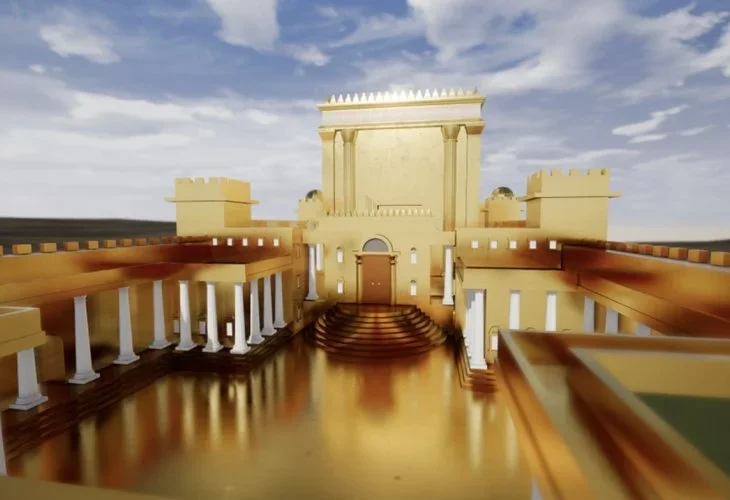 The Beit HaMikdash (Photo: shutterstock)
Psalm 14 offers a powerful reflection on the consequences of turning away from Hashem and the hope of Israel's ultimate redemption. Alongside the full chapter, this commentary explores classic explanations from leading Torah commentators and shares fascinating Midrashic insights into the psalm's closing verse.
The Full Chapter, With Commentary
(1)For the conductor. Of David. The scoundrel says in his heart, "There is no Hashem." They have become corrupt, they have done abominable deeds; there is none who does good.
According to the sages, King David composed this psalm through prophetic inspiration about Nebuchadnezzar, who would one day destroy the First Temple.
(2)Hashem looked down from heaven upon mankind to see whether there was anyone of understanding, anyone who seeks Hashem.
Rasag explains that Hashem searched among the wicked but did not find even one righteous person in their midst.
(3)All have turned aside; together they have become foul; there is none who does good, not even one.
Sforno explains the repetition in this verse by noting that the first half refers to the general population, while the second half refers even to those who were expected to uphold the Torah.
The Fate of the Wicked
(4)Do all the workers of iniquity not know, those who eat up My people as they eat bread? They do not call upon Hashem.
According to the commentators, this refers to the descendants of Nebuchadnezzar, including Belshazzar and his companions, who fell while feasting and eating bread.
(5)There they were seized with terror, for Hashem is with the generation of the righteous.
The commentators offer several explanations for this verse:
- Rasag: "There" refers to the World to Come.
- Rashi: The verse refers to Belshazzar, who was overcome with fear before losing his kingdom.
- Meiri: It also refers to Nebuchadnezzar, who temporarily lost his kingdom.
- Sforno: The verse speaks about the Jewish people, who feared the nations that oppressed them but remained confident that Hashem would ultimately help them because righteous people still lived among them.
- Rid: The verse refers to Sennacherib.
(6)You shame the counsel of the poor, but Hashem is his refuge.
The nations mocked the advice of the poor and downtrodden people of Israel because they continued to trust in Hashem. From their perspective, Hashem had not yet come to Israel's rescue, so they viewed that faith as foolish. Yet the verse teaches that Hashem truly is their refuge.
A Promise of Redemption
(7)Oh, that Israel's salvation would come from Zion! When Hashem restores His people's captivity, Jacob will rejoice, Israel will be glad.
The psalm concludes with a hopeful vision of redemption. One day, salvation will come from Zion. Hashem will redeem the Jewish people and return them to their land. When that day arrives, Jacob, another name for the people of Israel, will rejoice, and all of Israel will be filled with gladness.
3 Fascinating Things to Know About the Chapter's Final Verse
1. It Is Part of the Prayer After Completing Psalms
The final verse of Psalm 14 is recited in the prayer traditionally said after completing the Book of Psalms:
"Oh, that Israel's salvation would come from Zion! When Hashem restores His people's captivity, Jacob will rejoice, Israel will be glad."
It is followed by additional verses asking Hashem for protection and salvation.
2. Every Blessing Comes From Zion
Midrash Shocher Tov comments on the words:
"Oh, that Israel's salvation would come from Zion."
Rabbi Levi teaches that every blessing Hashem bestows upon Israel comes from Zion. The Midrash lists many examples:
- Torah comes from Zion: "For Torah shall go forth from Zion."
- Blessing comes from Zion: "May Hashem bless you from Zion."
- Divine revelation comes from Zion: "From Zion, perfect in beauty, Hashem appeared."
- Help comes from Zion: "May He support you from Zion."
- Life comes from Zion: "For there Hashem commanded the blessing, life forevermore."
- Greatness comes from Zion: "Hashem is great in Zion."
- Salvation comes from Zion: "Oh, that Israel's salvation would come from Zion."
3. Why Does Jacob Rejoice?
The Midrash also explains the closing words:
"Jacob will rejoice, Israel will be glad."
It asks why the verse mentions Jacob rather than Abraham or Isaac.
Rabbi Shimon ben Lakish explains that when the Jewish people suffer, Jacob feels their pain even from the Cave of Machpelah. Likewise, when redemption comes, Jacob rejoices more than any of the other patriarchs.
Rav illustrates this idea with a parable. When a daughter is married, no one rejoices more than her father. In the same way, when redemption comes to Israel, Jacob experiences greater joy than all the other patriarchs. That is why the verse specifically says:
"Jacob will rejoice, Israel will be glad."
Conclusion
Psalm 14 reminds us that while evil may seem powerful for a time, Hashem never abandons the righteous. It calls us to seek Him with sincerity, remain faithful even in difficult times, and place our hope in His promise of redemption. The psalm closes with a vision of salvation from Zion, reminding us that one day the people of Israel will rejoice as Hashem brings complete redemption and restores His people.

