

Raising Children
How Learning Torah with Your Child Can Strengthen Your Bond for Life
Discover how the timeless Jewish tradition of chavruta can transform parent child relationships, deepen faith, build confidence, and create meaningful family memories through shared Torah learning
- Yonatan HaLevi
- | Updated
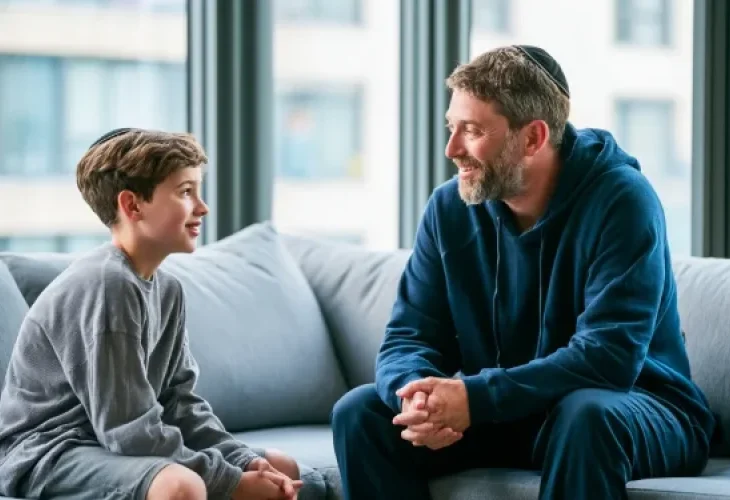
In today's demanding world, genuine quality time with our children has become increasingly rare. The good news is that you do not need to leave home or spend a single dollar to create moments of deep connection that your children will remember for the rest of their lives.
One of the greatest opportunities for meaningful connection is already within our reach. It is found in one of the oldest and most beautiful traditions of the Jewish people: chavruta, learning Torah together.
Shared learning between parents and children holds enormous potential. What may begin as an educational responsibility can become the highlight of the week, a special time when barriers disappear and all that remains is closeness, conversation, and the joy of learning together.
So how do we transform formal study, which can sometimes feel tiring or obligatory, into a family experience that everyone looks forward to? Here is a practical guide to changing the way we think about learning together.
1. Become Partners, Not Teacher and Student
One of the most common mistakes parents make is stepping into the role of the lecturer. The moment a parent becomes the examiner or the one who always has the answers, the child often responds with boredom or defensiveness.
The secret lies in partnership. The word chavruta comes from the Hebrew word for friendship. The goal is not simply for your child to master information, but for the Torah's values and ideas to enter the heart.
Ask open ended questions instead of giving lectures. Rather than saying, "Now let's learn what the Midrash says," try saying, "Look at this interesting question in the verse. What do you think it means?"
Give your child the opportunity to lead the discussion, ask questions, and discover the answers together with you.
2. The Atmosphere Matters
If you want learning to feel like quality time, it must feel completely different from doing homework. The physical environment has a direct impact on a child's emotional readiness to learn.
Choose a regular time each week, perhaps after the Shabbat meal or during a quiet half hour on a weekday evening. Find a comfortable place in your home, whether it is on the living room rug or in a cozy corner that becomes your family's special learning space.
Never underestimate the power of a simple treat. A homemade pastry, a warm drink, or a favorite snack reserved specifically for chavruta time makes the experience feel warm, welcoming, and memorable.
3. Choose Content That Speaks to Real Life
The Torah is a guide for life, and that is exactly how it should be presented.
Whether you choose stories from the weekly Torah portion, practical Jewish law, or ethical teachings, the key is connecting the material to your child's everyday experiences.
Think about the values you hope to instill based on your child's age. Better yet, involve your child in deciding what to learn together.
Then connect the lesson to real life. If you are learning about generosity or helping others, relate it to something that happened at school or at home during the past week. When children see that Torah helps them understand their own lives, their curiosity grows naturally.
4. Listen More Than You Speak
Chavruta offers a unique opportunity to discover your child's inner world.
While discussing a biblical character or a particular character trait, your child may unexpectedly reveal fears, dreams, or thoughts that might never emerge during an ordinary conversation.
Make sure your child feels heard and respected. Even if a question seems simple or unrelated, embrace it.
Saying something as simple as, "That is an excellent question. I had never thought about it that way," builds confidence and strengthens your child's connection to learning.
What Children Will Remember Most
Your children will probably not remember every detail of what you studied together.
But they will remember sitting with their mother or father at eye level. They will remember being listened to, encouraged, and invited into the spiritual treasures of the Jewish people.
Learning Torah together becomes an anchor of stability. It creates a family tradition that can be passed from one generation to the next while giving children a foundation that will accompany them throughout their lives.
There is no better time to begin than this week.

