

Magazine
From Soviet Refusenik to Chabad Emissary: Ella Vorzov's Extraordinary Journey of Faith
Born behind the Iron Curtain, Ella Vorzov's family endured years of persecution before reaching Israel. Today, she has returned to Russia as a Chabad emissary, inspiring a new generation of Jews.
- Michal Arieli
- | Updated
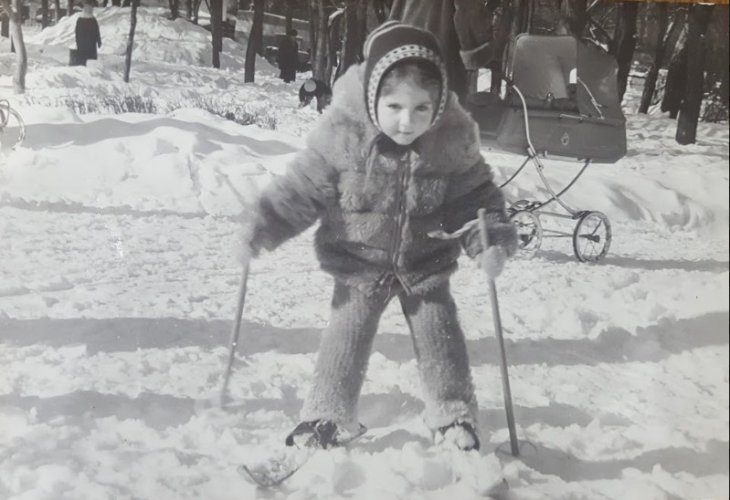 Ella as a child
Some life stories are so remarkable that they leave a lasting impression. Such is the story of Ella Vorzov, who spent her early childhood behind the Iron Curtain in the Soviet Union, where her family endured eight long years as refuseniks while waiting for permission to immigrate to Israel.
Today, Ella once again lives in Russia, but under vastly different circumstances. No longer a persecuted Jewish child, she serves as a Chabad emissary, educating Jewish children, publishing Jewish literature, and dedicating her life to strengthening Jewish identity and spreading the light of Torah.
Born Against All Odds
"I was born to my parents after they had waited ten years to have children," Ella begins. "At that time, like many Jews in the Soviet Union, my parents knew they were Jewish, but they knew very little about what Judaism required and did not observe the mitzvot."
During those difficult years, Ella's maternal grandmother, a senior surgeon at a hospital, sent the couple to specialists throughout Russia. Every doctor delivered the same heartbreaking verdict.
"'You will never have children,' they were told.
"My parents hoped for a miracle. They possessed the simple faith of Jews who barely knew about the existence of the Creator. They prayed, pleaded, and waited. Then, after ten years, the miracle happened. I was born."
Ella came into the world during a period when restrictions in the Soviet Union had begun to ease slightly.
"Three months after I was born, my parents submitted an application to immigrate to Israel," she recalls. "They had every reason to believe it would be approved because everyone who had applied that year had received permission."
Confident they would soon leave, both parents resigned from their prestigious positions.
"They reasoned that if permission was granted, they would no longer need their jobs. If permission was denied, they would almost certainly lose them anyway because anyone who applied to leave the Soviet Union was viewed as a traitor."
Instead of approval, however, the family received a refusal. "We were officially labeled 'refuseniks,' and for the next eight years we lived under that status."
The consequences were immediate and severe. Her parents could no longer return to their former careers.
"My father stood on street corners for hours selling watermelons from a roadside stand. My mother shoveled snow from residential courtyards just to help support the family."
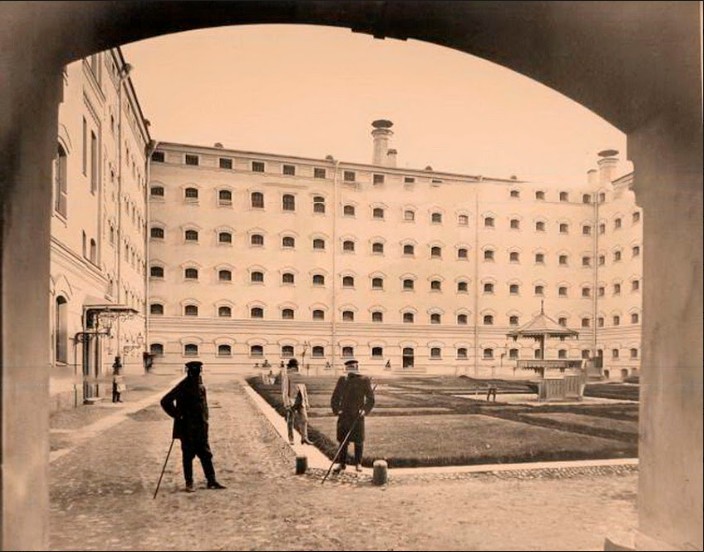 The prison where Ella's father was held
A Miraculous Escape from the KGB
In the summer of 1981, when Ella was two years old, her parents were secretly attending underground classes on Jewish history.
One day, while participating in a lesson on the laws of Shabbat in a private home, the KGB suddenly raided the gathering.
"There was a loud knock at the door, and KGB officers burst inside. They arrested many of those present, including my father. My mother followed them to the police station."
Most of those arrested were eventually released, but three remained in custody: the organizer of the class, the homeowner, and Ella's father, who had already been under close surveillance.
"My mother immediately understood that if she did nothing, she might not see my father again for a very long time."
She rushed toward the officers and created a dramatic scene. "'What are you doing?' she shouted. 'Can't you see he's seriously ill? Look at him! Call an ambulance immediately! If you take him now, you'll be responsible for whatever happens to him!'"
The officers reluctantly summoned an ambulance. After examining Ella's father, the doctor immediately ordered that he be taken to the hospital.
"The police had no choice but to release him. He was placed on a stretcher and loaded into the ambulance, with my mother beside him."
After driving for about half an hour, the doctor suddenly instructed the driver to stop. "'That's it,' he said. 'You can both go home now.'"
From that day onward, Ella's parents realized they were living under constant surveillance.
"My father never left the house without my mother, not even to walk to the store. The police avoided confronting him whenever she was present. They simply didn't want to deal with her."
Eventually, however, circumstances forced her father to leave home alone.
"He was arrested immediately." Yet another miracle followed.
"Because the authorities believed he had serious health problems, he received a prison sentence of less than one month. The two other men arrested with him spent several years behind bars."
Less than a year later, the family experienced another extraordinary blessing.
"My parents received compensation beyond anything they could have imagined. My little brother Daniel was born. Like me, he was a miracle child, a true gift from Heaven."
Freedom at Last
Ella attended first grade in St. Petersburg for only six months. "I was the only openly Jewish child in the school. My teacher was openly antisemitic."
She vividly remembers how punishments were directed exclusively at her.
"One snowy winter day the teacher called me over, pointed at one of my shoes, ordered me to remove it, and told me to throw it out the window and search for it in the snow. It was pure humiliation."
She never returned for second grade.
"When I was eight years old, we suddenly received the long awaited permission to leave. It happened in a completely miraculous and unexpected way."
Even more remarkable was the timing. After more than eight years of waiting, we received our exit permit during Passover, the Festival of Freedom."
The family was instructed to leave the Soviet Union within one month or forfeit the opportunity forever. "The date of our immigration was also special. We left on the eighteenth of Iyar, Lag BaOmer."
Their entire family immigrated together, including Ella's grandparents and her ninety one year old great grandmother, who celebrated her birthday while the family was literally between heaven and earth aboard the airplane.
"I will never forget watching my mother and grandmother cry tears of joy before we landed in Israel. Their emotion overwhelmed me, and I began crying as well."
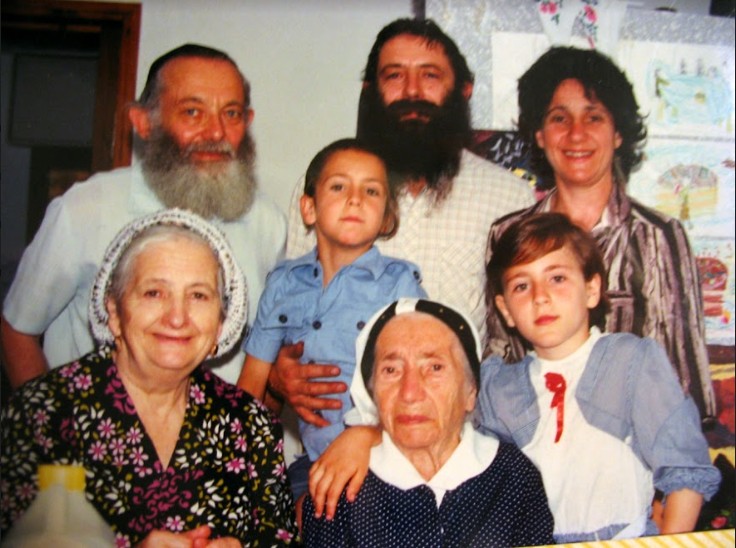 Ella's family a year after moving to Israel
A New Beginning in Jerusalem
After arriving in Israel, the family was housed at the Ramat Tamir Hotel in Jerusalem's Ezrat Torah neighborhood.
"We stayed there for an entire month together with other immigrant families."
Ella enrolled in the Beit Yaakov Ezrat Torah school, where she received a reception unlike anything she had ever experienced.
"I was the first immigrant in the school's history to arrive from behind the Iron Curtain."
Every recess became a celebration. "The girls danced around me every day. They carried me on their shoulders, lifted me while I sat on a chair, and celebrated my arrival with incredible joy."
At first, she admits, she was embarrassed. "But very quickly I found myself swept into their excitement."
For the first time in her life, school became a place she loved.
"I couldn't wait to wake up each morning and go to school. All the warmth and attention I received felt like complete compensation for the painful months I had spent in my previous school in Leningrad."
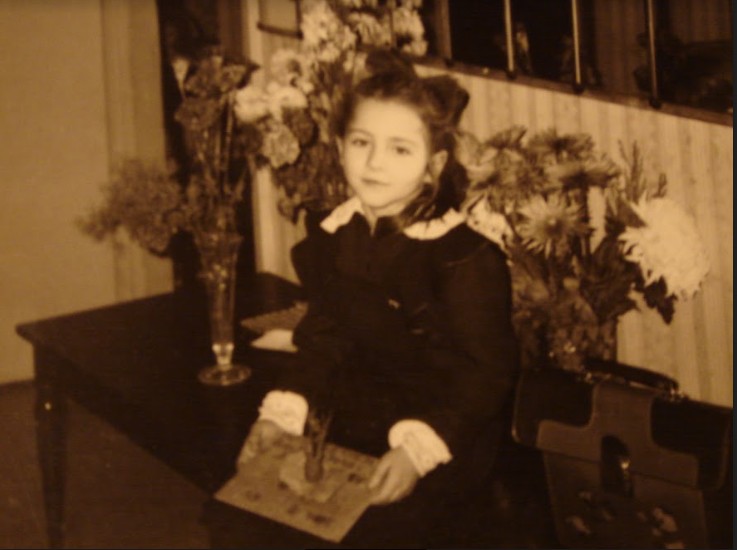 Ella in First Grade
Returning to Russia with a Mission
Years later, after the collapse of the Soviet Union, Ella began returning to Russia to teach in Jewish schools and work in summer camps.
"I felt that this was truly my mission. I was able to give Jewish children what I myself had never been able to receive openly as a child."
In 1999, she married her husband, who had also immigrated from the Soviet Union as a young child.
"When our oldest son was one year old, we became Chabad emissaries." The decision, she says, felt completely natural. "We always knew we would return to Russia. We speak the language and understand the mentality."
Although her parents found it difficult to see them leave Israel, they nevertheless encouraged the decision wholeheartedly.
"I remain deeply grateful that they not only allowed us to go but supported us every step of the way."
Continuing the Rebbe's Mission
Looking back, Ella sees a beautiful circle completing itself.
"Many of the people who brought our family closer to Judaism in Leningrad were emissaries of the Lubavitcher Rebbe."
Today, she and her husband continue that same mission in Moscow. "Our goal is to spread light under circumstances completely different from those in which I grew up."
Her younger brother Daniel has completed a similar journey. "Today he and his family serve as Chabad emissaries in St. Petersburg, formerly Leningrad."
Building Jewish Identity for a New Generation
Today, Ella teaches the upper grades in the local Jewish community school.
In addition to teaching, she has devoted recent years to publishing Jewish children's and young adult books as part of a project initiated by Russia's Chief Rabbi, Rabbi Berel Lazar. "Our books cover Jewish life in a comprehensive way, including Shabbat, the Jewish holidays, and many other aspects of Judaism."
Her husband, Rabbi Yosef, serves as director of the prestigious kashrut department of the Chief Rabbinate of Russia under Rabbi Lazar.
Ella also collaborates with her friend Chana Oirechman, a Chabad emissary in Florida, on a popular children's series titled Children on Shlichut.
"In each book, a real child tells authentic stories from life as the child of Chabad emissaries in the country where they live. The language is engaging, and the photographs are genuine and beautiful."
Whenever possible, Ella also travels throughout Russia and neighboring countries, sharing her personal story with Jewish women who understand firsthand the world from which she came.
"I try to strengthen them and convey one simple message," she says. "Today we live in a completely different era. Every Jew in Russia has the opportunity to reconnect with their roots, study Judaism openly, observe mitzvot, and live proudly as a Jew. We must recognize this incredible gift, make full use of these opportunities, and continue growing ever higher."

