

Evolution
Could DNA Have Formed by Chance? A Mathematical Perspective
Can statistics help answer one of humanity's biggest questions? Explore the mathematical case presented against the random formation of DNA.
- El HaMekorot
- | Updated
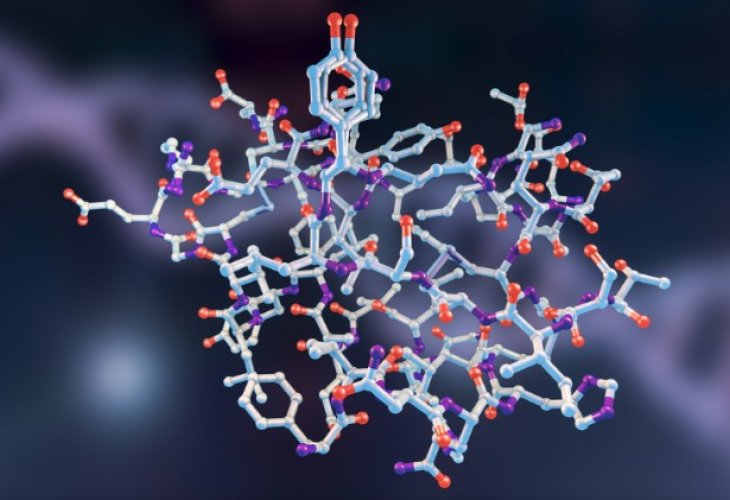 (Photo: shutterstock)
What are the chances that a DNA molecule could have formed entirely by chance?
Before exploring that question, it's helpful to understand what DNA actually is.
DNA is a remarkably complex chemical molecule made up of a long sequence of smaller building blocks called nucleotides. Each nucleotide consists of a sugar, a phosphate group, and one of several nitrogenous bases. Together, these nucleotides function like the letters of an alphabet, storing the genetic information needed to build and operate every living organism.
Scientists have deciphered this genetic code, revealing that it contains the instructions for assembling amino acids, the building blocks of proteins. Proteins are essential for virtually every function of a living cell, including its structure, operation, repair, and reproduction.
The process of reading and translating this information is extraordinarily precise. It involves messenger RNA, transfer RNA, ribosomes, enzymes, minerals, energy sources, and numerous other components working together in perfect coordination.
For the purposes of this discussion, however, we will focus on just one question: What is the probability that such an information rich sequence could arise through random processes alone?
A Code of Extraordinary Complexity
Researchers estimate that the human genome contains between 3.5 and 6 billion DNA base pairs.
For comparison, a single volume of an encyclopedia contains roughly 1.2 million letters.
Even a tiny alteration in one DNA "letter" can sometimes disrupt the genetic instructions, resulting in faulty proteins and impaired cellular function.
To illustrate the challenge statistically, imagine placing thousands of letters into a box, randomly drawing them one by one, and hoping they eventually form a meaningful encyclopedia page.
The probability is extraordinarily small.
Now imagine repeating that process until you have produced an entire 600 page encyclopedia.
Then imagine creating an 800 volume encyclopedia the same way.
Even that enormous collection would contain only about one billion letters—still fewer than the billions of base pairs found in the DNA of a single human cell.
More Than a Simple Sequence
According to the article's argument, DNA contains far more than a straightforward sequence of genetic information.
Researchers have identified additional layers of complexity, including overlapping genes, information that can be read in multiple ways, and other mechanisms that significantly increase the amount of information stored within the genome.
Because of this complexity, the author argues that calculating the probability of DNA arising through random processes becomes even more challenging.
The Statistical Argument
Supporters of this perspective argue that random mutations alone cannot adequately explain the origin of such an information rich system.
The article raises an additional question: if countless unsuccessful genetic combinations supposedly occurred over immense periods of time before a functional genome emerged, what became of those failed attempts?
The author presents this as a challenge for theories proposing that genetic complexity developed through undirected processes.
How Small Is the Probability?
At a conference bringing together mathematicians and biologists in Chicago, researchers discussed the statistical aspects of random molecular formation.
The article cites French mathematician Professor Emile Borel, who suggested that events with probabilities smaller than one divided by a number containing 50 zeros are, for all practical purposes, impossible.
To illustrate, such odds would be far less likely than winning the grand prize in a one million ticket lottery eight weeks in a row.
The article then cites Professor Marcel-Paul Schützenberger, who estimated the probability of DNA forming randomly as approximately one divided by a number containing 1,000 zeros.
According to this comparison, the odds would be similar to rolling the same number on a die 1,500 consecutive times or winning a one million ticket lottery every week for three straight years.
Would More Time Solve the Problem?
Some argue that given enough time, even extremely unlikely events can eventually occur.
The article challenges this idea with a thought experiment.
Suppose every atom in the observable universe interacted with every other atom one trillion times every second over a period of 15 billion years.
Even under those extraordinary assumptions, the total number of possible interactions would still be dramatically smaller than the number of combinations required by the statistical estimates presented.
Based on this reasoning, the article concludes that random formation remains mathematically implausible.
Creation or Chance?
The discussion ultimately raises a broader philosophical question.
If statistical calculations suggest that the random formation of DNA is extraordinarily unlikely, should intentional design be considered a more reasonable explanation?
To illustrate this debate, the article quotes Nobel Prize winning biologist Professor George Wald, who acknowledged the immense complexity of living organisms while nevertheless accepting spontaneous origin as his conclusion.
It also cites British astronomer Professor Fred Hoyle, who famously compared the spontaneous formation of life to "the chance that a tornado sweeping through a junkyard might assemble a Boeing 747 from the materials therein."
A Question That Extends Beyond Mathematics
The article concludes that the discussion is not solely about biology or probability.
Rather, it argues that one's answer to the question of life's origin shapes a person's broader worldview and understanding of humanity's place in the universe.
Whether one attributes the origin of DNA to intentional creation or to natural processes, the article maintains that the question deserves careful thought, intellectual honesty, and serious consideration.

